DNREC Menu

The horseshoe crab plays a prominent role in the ecology and fisheries of Delaware Bay. The DNREC Division of Fish and Wildlife monitors Delaware’s horseshoe crab population using multiple methods.
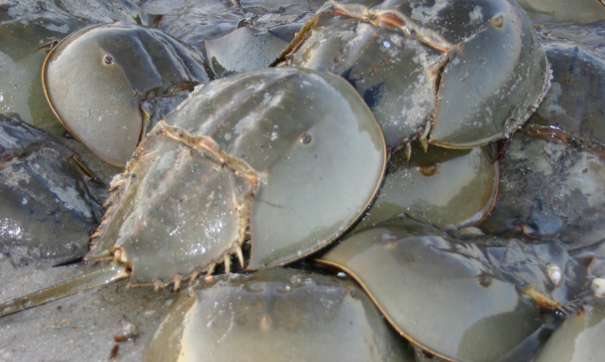
The crabs are huge feeders on marine worms and bivalves. Their eggs serve as a primary food source for migratory shorebirds, juvenile fish and a variety of crabs. Juvenile and adult crabs are fed upon by sea turtles and sharks.
Horseshoe crabs also serve as the primary bait used in the American eel and whelk pot fisheries and their blood is used in the manufacture of Limulus Amoebocyte Lysate (LAL) – the worldwide standard for testing virtually all pharmaceuticals for the presence of endotoxins.
In partnership with Limuli Labs, the New Jersey Department of Environmental Protection, the U.S. Fish and Wildlife Service, DNREC’s Delaware Coastal Programsv and numerous volunteers, the division annually funds and participates in the Delaware Bay Horseshoe Crab Spawning Survey.
The survey is conducted around the new and full moons each May and June, when spawning activity peaks. Results from the survey provide managers with the best available tool to monitor the Delaware Bay horseshoe crab spawning population.
Division personnel monitor the commercial horseshoe crab fishery through a mandatory reporting system and check stations. Information on the number, size, sex composition and location of the harvest is collected to ensure regulatory compliance.
Juvenile and adult horseshoe crab populations are also monitored through Delaware’s ongoing trawl surveys. These surveys, though not designed specifically to monitor horseshoe crabs, are useful for monitoring long-term trends in the population.
The Division has provided support for a number of additional horseshoe crab projects related to such things as age and growth, fecundity, genetics, migration and artificial bait research.
The attention horseshoe crabs receive is well justified given their particular importance to the Delaware Estuary and its people.
For more information on Delaware’s horseshoe crabs, contact DNREC Fisheries Biologist Jordan Zimmerman at 302-735-2960 or Jordan.zimmerman@delaware.gov.
Related Topics: dfw, fish and wildlife, fisheries, fishing, horseshoe crabs, outdoors, outdoors and recreation, recreation, research
Delaware's Governor
State Agencies
Elected Officials
General Assembly
Delaware Courts
State Employees
Cities & Towns
Delaware State Code
State Regulations
Business First Steps
Phone Directory
Locations Directory
Public Meetings
Voting & Elections
Transparency
Health Insurance
Tax Center
Personal Income Tax
Privacy Policy
Weather & Travel
Contact Us
Corporations
Franchise Tax
Gross Receipts Tax
Withholding Tax
Delaware Topics
Help Center
Mobile Apps
E-mail / Text Alerts
Social Media


Built by the Government Information Center
©MMXXVI Delaware.gov