DNREC Menu

The DNREC Division of Fish and Wildlife monitors the status of a wide variety of marine finfish and shellfish populations in the Delaware Estuary and Inland Bays through its bottom trawl survey program.
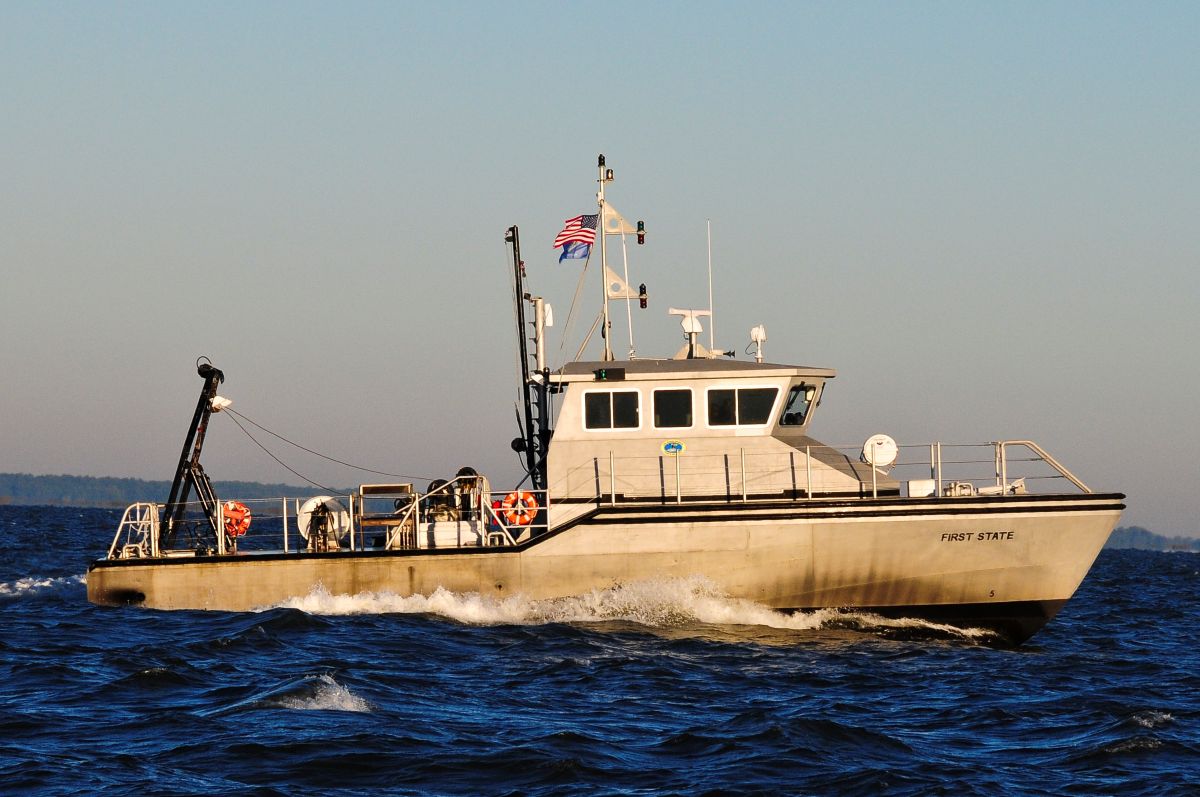
The Division’s trawl surveys are among the longest-running state surveys on the East Coast.
A 30-foot trawl survey was initiated in 1966 and is primarily used to monitor sub-adult and adult fish abundance.
The 16-foot trawl has been conducted since 1980 and is used to monitor juvenile fish and crab abundance.
For more information, or to request data, please contact Trawl and Oyster Projects Leader Audrey Ostroski, at Audrey.Ostroski@delaware.gov or 302-735-2967.
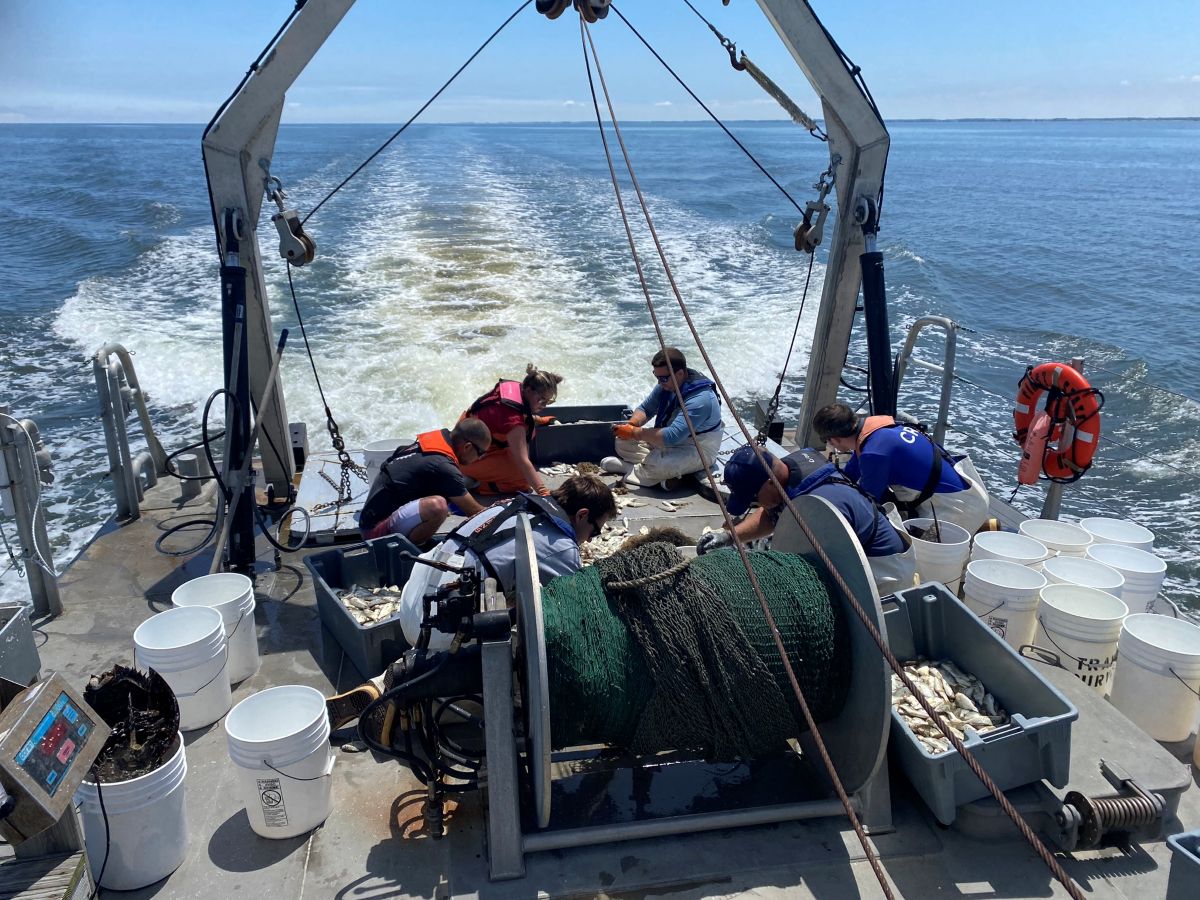
To take a survey, a trawl net is towed for a specified time at a number of fixed sites. After the tow, the net is hauled up and emptied on the deck.
The sample is sorted by species and the fish are measured and weighed. Scale and/or otolith (ear bone) samples are removed from a portion of the Weakfish, Northern Kingfish, Striped Bass, Summer Flounder and Atlantic Menhaden catches to determine the age of the fish.
Over 160 species of marine finfish and invertebrates have been recorded in survey catches since their inception. Survey catches are typically dominated by species such as Bay Anchovy, Hogchokers, Weakfish, Atlantic Croaker and Spot.
Data from both surveys are used to generate statistical measures of relative abundance that fisheries managers can use to monitor population trends. Used in conjunction with data from other state and federal surveys, this information helps managers develop coast-wide stock assessments and fishery management plans.
The surveys also serve as important platforms for collecting specimens for research into subjects such as genetics, contamination by pollutants, age and growth of fish and fish movements, through tagging.
The surveys are an indispensable part of Delaware’s marine fisheries program.
Related Topics: fish anc wildlife, fisheries, research, trawl
Delaware's Governor
State Agencies
Elected Officials
General Assembly
Delaware Courts
State Employees
Cities & Towns
Delaware State Code
State Regulations
Business First Steps
Phone Directory
Locations Directory
Public Meetings
Voting & Elections
Transparency
Health Insurance
Tax Center
Personal Income Tax
Privacy Policy
Weather & Travel
Contact Us
Corporations
Franchise Tax
Gross Receipts Tax
Withholding Tax
Delaware Topics
Help Center
Mobile Apps
E-mail / Text Alerts
Social Media


Built by the Government Information Center
©MMXXVI Delaware.gov