DNREC Menu

Although many Delawareans may find them unappealing, American Eel (Anguilla rostrata) support a major fishery in Delaware.
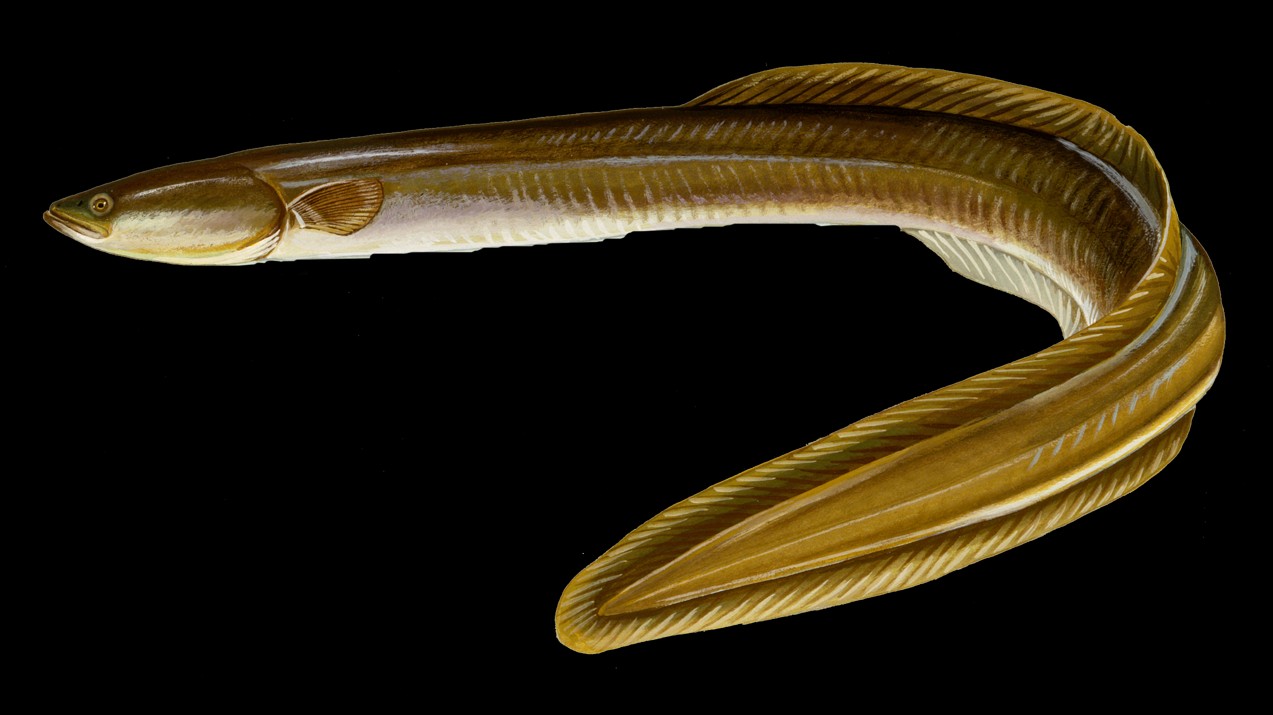
American Eels are mostly sold live for bait and exported as a food fish. Historically, Delaware landed over 100,000 pounds of eels annually. The eels were often in the top three in both pounds landed and value among all Delaware fish.
Delaware’s landings have dropped to a much lower number in recent years, primarily due to bait shortages and market considerations. However, Delaware is still typically among the top three states in American Eel landings. Coast-wide, American Eel landings have dropped significantly from their peak in the 1970s, prompting concern that the eel population is in decline.
This perceived decline led the Atlantic States Marine Fisheries Commission to pass an American Eel management plan in 2000 that requires all Atlantic states to monitor glass eels entering state waters and gather population information (lengths, weights and ages) from commercially-caught eels.
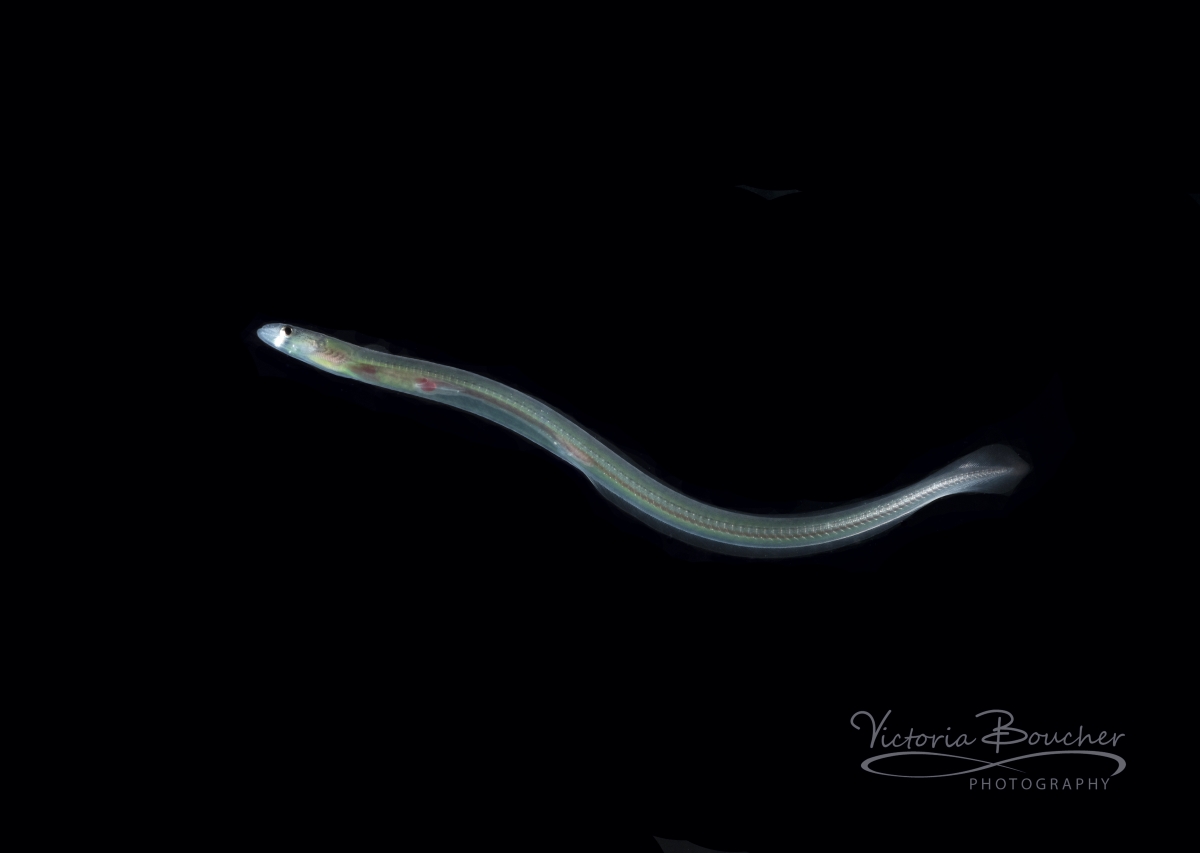
Young-of-the-year American Eels, called Glass Eels because they lack pigment and are thus transparent, enter Delaware waters from the ocean during January through May.
Glass Eels are attracted to freshwater flow and find areas in which the freshwater flow is in close proximity to the ocean particularly attractive.
The DNREC Division of Fish and Wildlife has monitored a spot in Delaware’s Inland Bays for six weeks annually since 2000. Glass Eel catches are often very high in that spot. The six-week annual total has ranged from 32,000 in 2009 to 797,000 in 2013. The daily catch has been as high as 300,000.
Eels large enough to be caught in commercial eel gear (mostly traps called eel pots) are called Yellow Eels for the characteristic yellowish tinge to their pigmentation.
A representative sample of these eels is collected from commercial eelers by the Division.
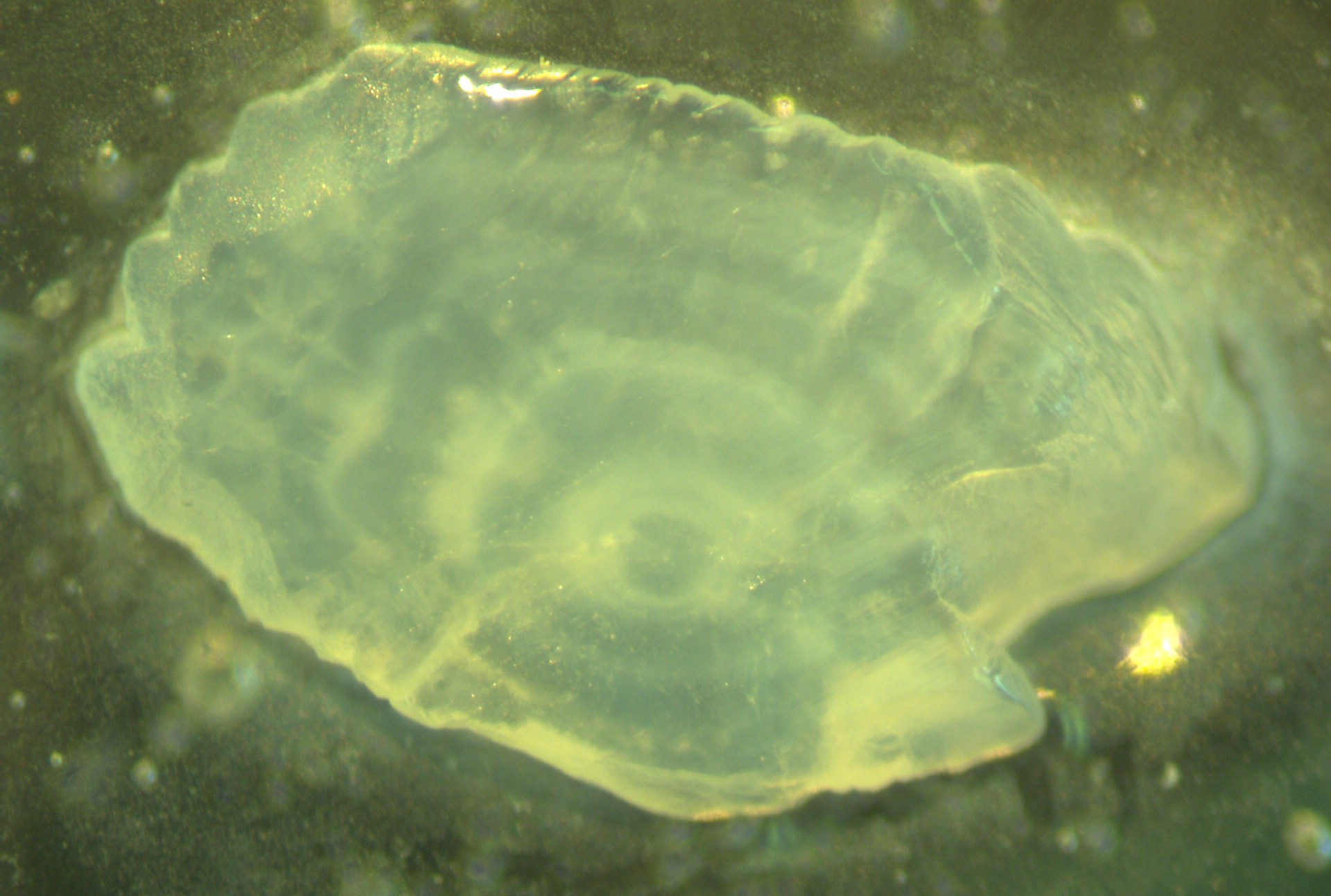
These eels are measured, weighed and aged from a hard structure called an otolith. The resulting data is used to estimate the population structure of commercially caught American Eels in Delaware.
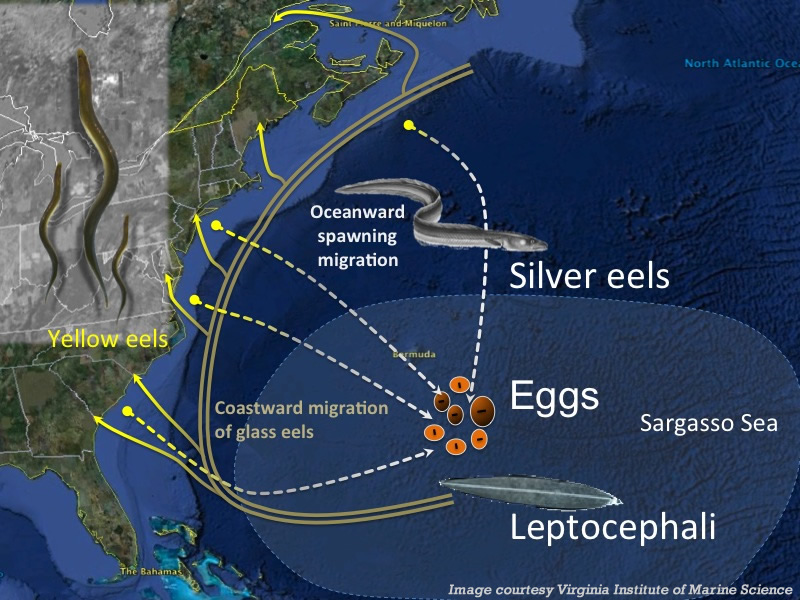
American Eel undertake the longest migration of any Delaware fish, coming to Delaware from the Sargasso Sea in the Atlantic Ocean as Glass Eels then returning as mature adults or silver eels to spawn and die. American Eels reside in Delaware waters from 4 to 20 years before leaving to spawn.
For more information on the American Eel Monitoring Project, contact DNREC Fisheries Biologist Jordan Zimmerman at 302-735-2960 or Jordan.zimmerman@delaware.gov.
Related Topics: american eel, dfw, fish and wildlife, fisheries, fishing, outdoors, outdoors and recreation, recreation, research
Delaware's Governor
State Agencies
Elected Officials
General Assembly
Delaware Courts
State Employees
Cities & Towns
Delaware State Code
State Regulations
Business First Steps
Phone Directory
Locations Directory
Public Meetings
Voting & Elections
Transparency
Health Insurance
Tax Center
Personal Income Tax
Privacy Policy
Weather & Travel
Contact Us
Corporations
Franchise Tax
Gross Receipts Tax
Withholding Tax
Delaware Topics
Help Center
Mobile Apps
E-mail / Text Alerts
Social Media


Built by the Government Information Center
©MMXXVI Delaware.gov