DNREC Menu

The Delaware Bay hosts the world’s largest concentration of spawning horseshoe crabs. People come from all over the world to view the spawning crabs and the associated migratory shorebirds. Horseshoe crabs can be viewed on several Delaware Bay beaches and from DNREC’s DuPont Nature Center.
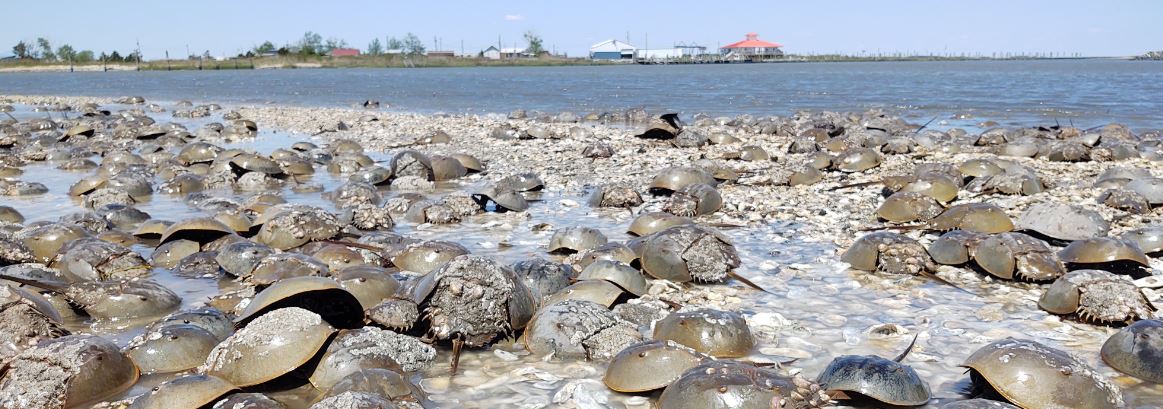
The bulk of annual spawning typically occurs in May and June and is usually highest around the new and full moons. Spawning coincides with the daily high tides. Often, the highest numbers are present during the nighttime high tide. Choosing to view the crabs at night allows the shorebirds to feed undisturbed during the day.
It is important to remember that horseshoe crabs will delay spawning in rough surf, to avoid being stranded.
Males can be distinguished from females by their typically smaller size and the presence of a clasper (a boxing glove-like structure) on their first pair of walking legs.
When engaged in spawning, the female may bury herself to an extent that only the males are apparent.
Males often greatly outnumber females on the beaches.
Slaughter Beach
DuPont Nature Center (Mispillion)
Bowers Beach
Pickering Beach
A few things to keep in mind when going to view the crabs (particularly at night).
For more information on Delaware’s horseshoe crabs, contact DNREC Fisheries Biologist Jordan Zimmerman at 302-735-2960 or Jordan.zimmerman@delaware.gov.
Related Topics: dfw, fish and wildlife, fisheries, fishing, horseshoe crabs, outdoors, outdoors and recreation, recreation, research
Delaware's Governor
State Agencies
Elected Officials
General Assembly
Delaware Courts
State Employees
Cities & Towns
Delaware State Code
State Regulations
Business First Steps
Phone Directory
Locations Directory
Public Meetings
Voting & Elections
Transparency
Health Insurance
Tax Center
Personal Income Tax
Privacy Policy
Weather & Travel
Contact Us
Corporations
Franchise Tax
Gross Receipts Tax
Withholding Tax
Delaware Topics
Help Center
Mobile Apps
E-mail / Text Alerts
Social Media


Built by the Government Information Center
©MMXXVI Delaware.gov