DNREC Menu
Since 2010, the DNREC Division of Fish and Wildlife has used an annual, volunteer-based survey to record observations of wild turkeys across the state during the months of July and August.
The survey generates an index of annual turkey productivity and recruitment (the ratio of young birds to adult females). The survey also helps track the health and distribution of the turkey population and evaluate potential regional differences in reproductive success within Delaware.
For more information, please contact Turkey, Quail and Upland Game Biologist Jenna Brown at Jenna.Brown@delaware.gov or 302-735-8670.
For the 2026 turkey productivity survey, Delaware moved to an online survey form following a standard protocol developed by the National Wild Turkey Federation Technical Committee. The survey was open from July through August for volunteers to enter their turkey observations.
State biologists thank all those who participated in this year’s survey. Every observation is vital in monitoring the health and trends of Delawares wild turkey population.
There were a total of 376 observations entered into the survey. Of these, 79 were filtered, primarily due to duplication, leaving 297 observations to be analyzed.
The poult per hen (PPH) ration statewide after data filtering was 1.27 PPH. A healthy ratio is 2 poults per hen, which would be a hen producing one bird to take her place on the landscape, and an additional bird to take the place of a harvested bird.
While the results of this summer’s survey are below that of a stable population, biologists note that is just one data point in what will be a long-term survey project. This was the first year using a new survey method and all-volunteer observers. As new data are added, from year-round observations by state biologists and future summer surveys, a more complete picture of the health of Delaware’s wild turkey population will emerge.
Read more in the 2026 Brood Survey Analysis Report.
The information below is derived from a Guide to Identifying Wild Turkeys for Summer Turkey Survey from the Maryland Department of Natural Resources. The different groupings of wild turkeys are identified by size, body color, head coloration, beard length and behavior.
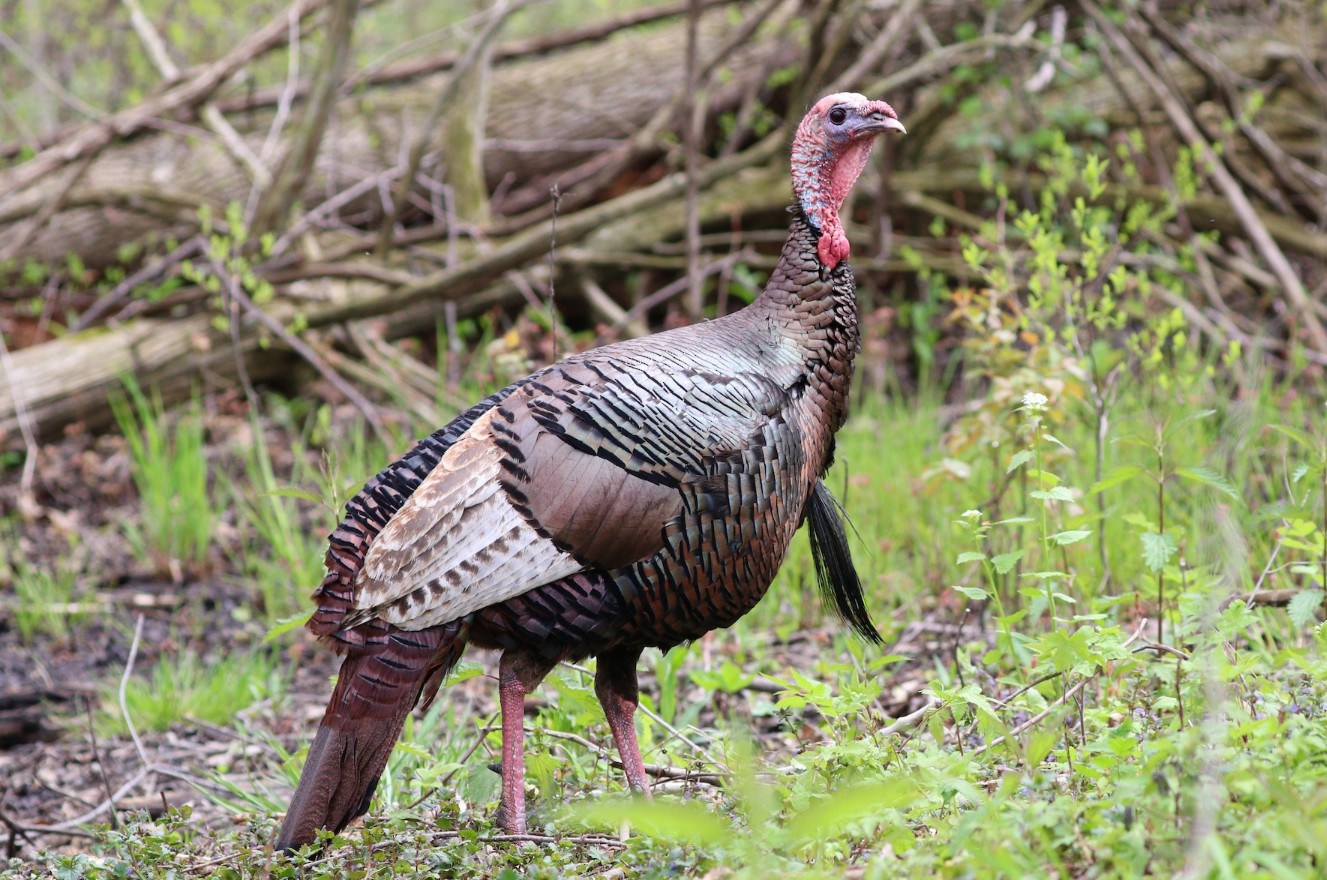
The body of an adult male (gobbler) appears black. In sunlight, there is a noticeable metallic iridescence.
The head is brightly colored but variable, with red, white and blue.
Gobblers have a beard of protruding six inches or more from their chest.
During summer, gobblers do not typically display with tail fan open.
They often travel alone or in bachelor groups with other gobblers in summer.
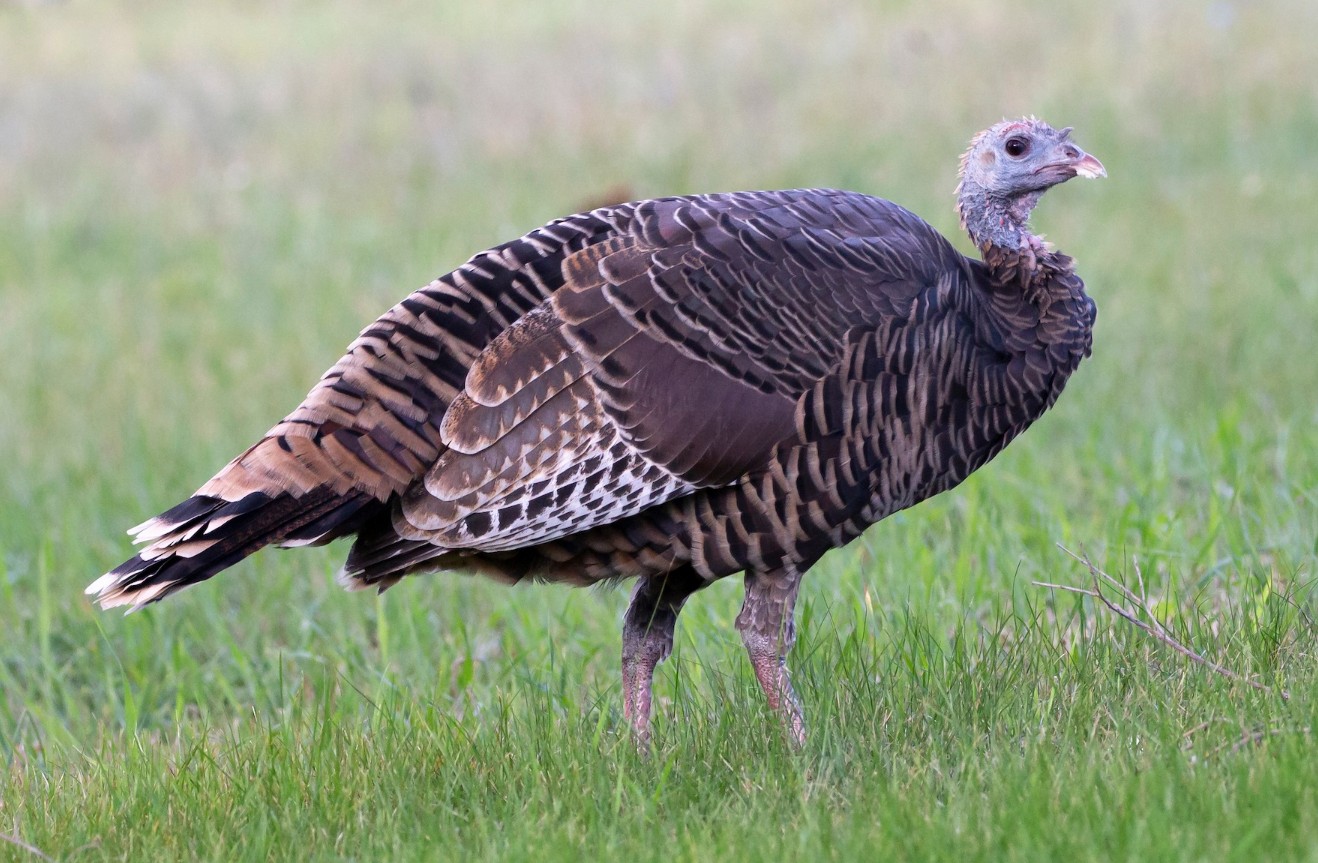
A body of an adult female (hen) is brown and tan. It is duller than a gobbler’s.
The head is gray or pale blue, sometimes with light pink evident.
Hens typically are beardless, but some have a thin beard.
They are smaller than gobblers, but usually larger than poults.
Several hens (with or without young) will often travel together in summer.
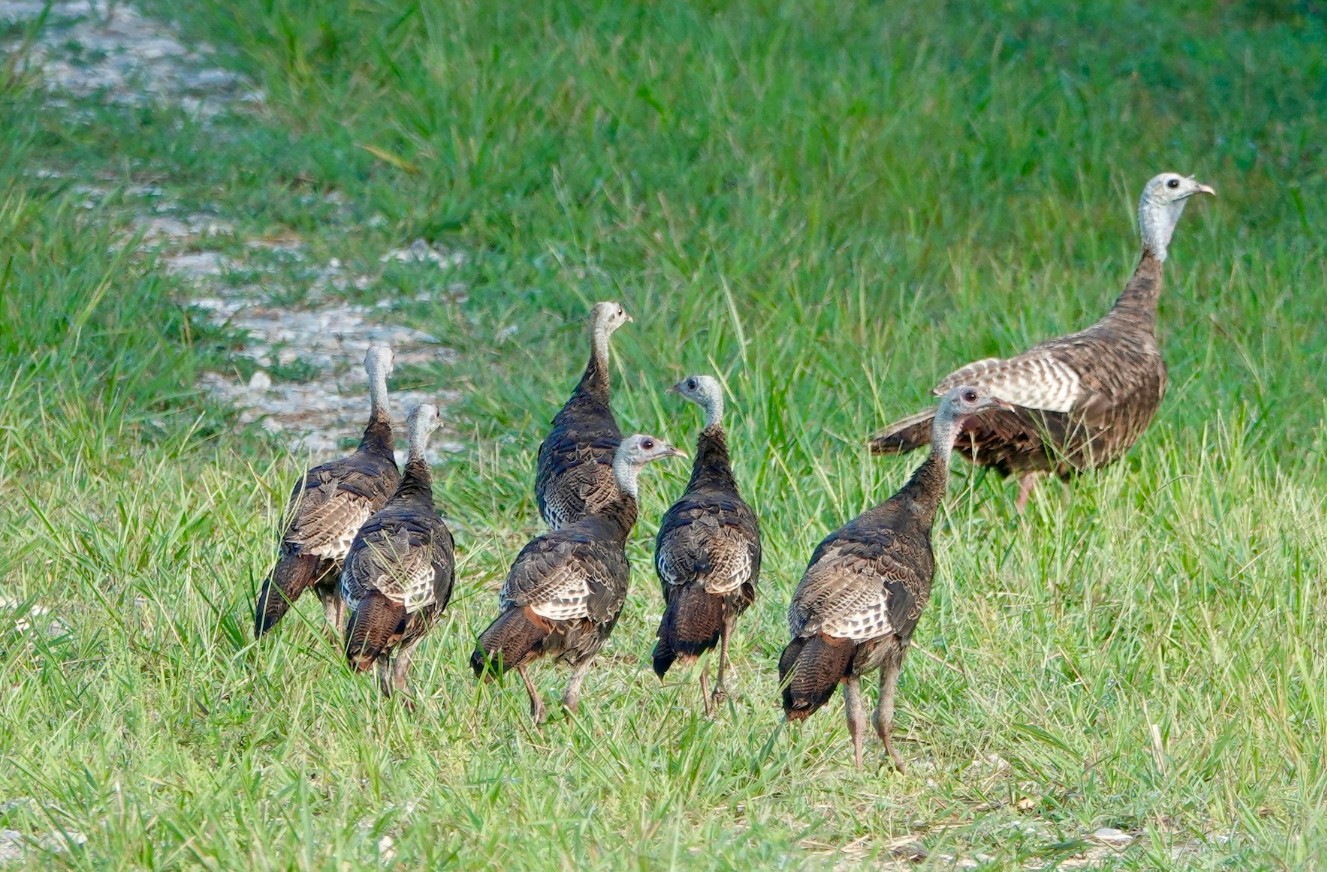
Young wild turkeys (poults) can vary in size from baseball-sized to almost full grown. Size difference is the best way to identify poults.
They will almost always be seen with one or more adult hens.
The sex of a poult is not discernable. They have no visible beard.
Older poults can be similar in size to adult hens, especially in late summer.
Related Topics: conservation, fish and wildlife, outdoors and recreation, survey, turkey, turkey hunting, volunteer, wild turkey, wildlife
Delaware's Governor
State Agencies
Elected Officials
General Assembly
Delaware Courts
State Employees
Cities & Towns
Delaware State Code
State Regulations
Business First Steps
Phone Directory
Locations Directory
Public Meetings
Voting & Elections
Transparency
Health Insurance
Tax Center
Personal Income Tax
Privacy Policy
Weather & Travel
Contact Us
Corporations
Franchise Tax
Gross Receipts Tax
Withholding Tax
Delaware Topics
Help Center
Mobile Apps
E-mail / Text Alerts
Social Media


Built by the Government Information Center
©MMXXVI Delaware.gov