DNREC Menu
The DNREC Division of Fish and Wildlife works with public and private landowners to study and conserve Delaware’s population of American Barn Owls.
The American Barn Owl is listed as a Tier 2 Species of Greatest Conservation Need in Delaware. This Tier, describing Species of Moderate Conservation Concern, means this species has uncommon breeding populations within the state, with broad distributions threatened by a variety of factors including climate change, habitat loss and human interaction, of which Delaware has a high responsibility to preserve.
These owls are threatened by the loss of suitable hunting and nesting habitat. The agricultural land that American Barn Owl depend on for hunting, as well as suitable trees and buildings for nesting, are quickly being converted into urban development.
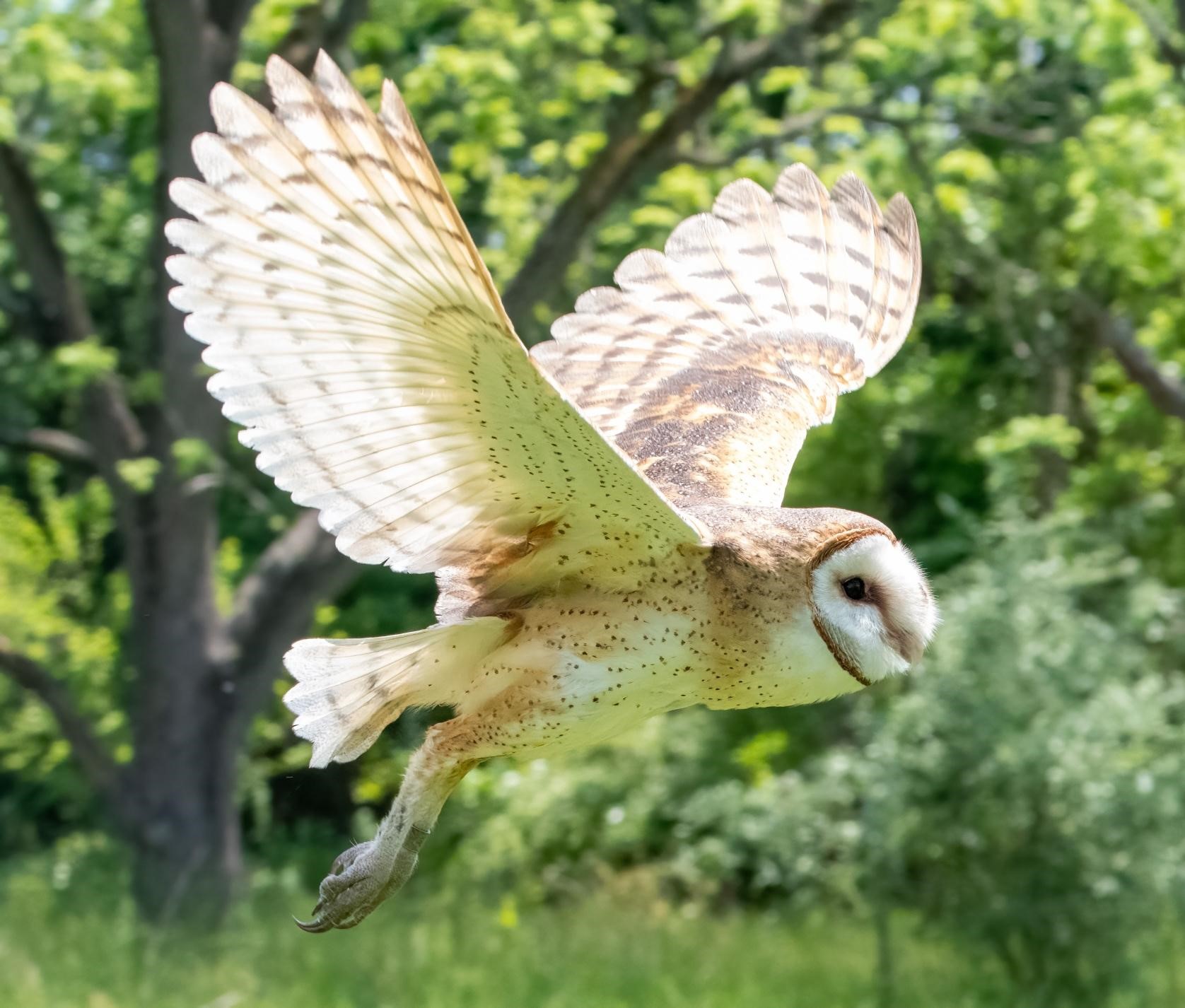
Barn Owls are also impacted by rodenticides, which they ingest by eating contaminated rodents, one of their main food sources. These impacts are often fatal.
It can be difficult to accurately estimate American Barn Owl populations because of their nocturnal activity and secretive lifestyle. DFW works to study the trends of Delaware’s American Barn Owl population by maintaining artificial nest boxes, monitoring nest productivity, and collecting valuable data through banding efforts.
Barn owls, found in all continents but Antarctica, are now split into three species: American Barn Owls, Eastern Barn Owls and Western Barn Owls.
American Barn Owls (Tyto furcata) are widespread throughout North and South America. They use a variety of semi-open habitat to hunt, such as farmland, fields, meadows and marshes, often with margins of trees and hedgerows on which to perch. As their name suggests, American Barn Owls are often found around barns and other rural, man-made structures which they use to roost and nest.
American Barn Owls birds are nocturnal hunters who feed almost exclusively on small rodents such as voles, shrews, mice and rats. They will also hunt bats, insects and frogs on rare occasion.
Barn Owls hunt with precision, often in complete darkness, using their incredible sense of hearing, low-light vision and silent flight. In one breeding season, a breeding pair can catch more than 3,000 rodents for themselves and their chicks.
Barn Owls are an excellent natural pest control, which is especially useful in agricultural fields, benefitting farmers by increasing yield.
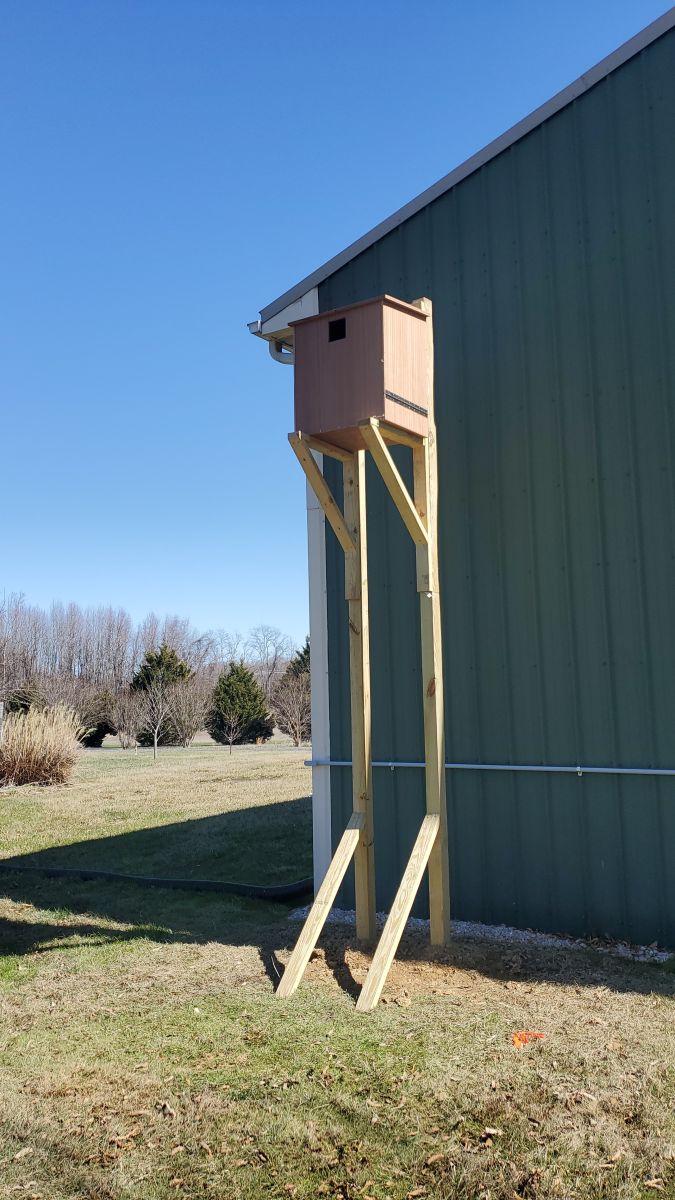
American Barn Owls are cavity nesters, using tree cavities and cliff crevices, as well as a variety of rural, man-made structures such as barn lofts, silos, deer-stands, steeples and abandoned buildings.
Artificial nest boxes are also great for Barn Owls, increasing nesting habitat and aiding in their reproductive success. Unlike other birds, who create nests with gathered material, Barn Owls use their regurgitated pellets as a soft carpet where they lay their eggs.
An average clutch size consists of three to eight eggs and takes approximately 32 days to hatch. American Barn Owls can nest multiple times a year and often have one nest in the Spring and another in the Fall, if resources allow.
If you think you may have American Barn Owls on your property, you can check for regurgitated owl pellets — small balls of undigested fur and bone — under suspected roost sites. You may also hear Barn owl vocalizations after dark, which, unlike the typical “hoot” of most owl species, is a harsh and eerie screech, shriek or hiss.
State Biologists have been monitoring American Barn Owls in Delaware since 1996. The Division of Fish and Wildlife works with partners and private landowners to install and maintain artificial nest boxes throughout the state. Many of these nest boxes have had multiple years successfully fledging chicks.
Biologists often band or “ring” birds with unique aluminum USGS leg bands to better understand avian migration and longevity across species. DNREC Biologists band adult and juvenile American Barn Owls in the Spring and Fall. Individuals that are recaptured by DNREC or other biologists in Delaware and surrounding states, provide information on how these owls disperse, such as if adults return to the same nest year after year, or where juveniles travel after they fledge.
Deceased individuals are also reported which helps biologists determine lifespan and potentially cause of death. Multiple “foreign” American Barn Owls have been recaptured in Delaware who were originally be banded in New Jersy or Maryland.
If you find a bird deceased bird with a USGS leg band, you can report it to the USGS Bird Banding Lab. If you find an injured American Barn Owl, please call Tri-State Bird Rescue at 302-737-9543.

Division of Fish and Wildlife biologists record detailed measurements of American Barn Owl adults and chicks during the banding process. Barn owls are also identified on a color scale, since adult plumage can vary significantly from a pale white to dark, rusty orange.
Cumulative records of measurements and observations can provide insight into American Barn Owl populations and biology. These records contribute not only to state datasets of American Barn Owls, but to a global database for other biologists to use in research and conservation efforts.
Funding for this project is provided by the State Wildlife Grant and Wildlife Restoration Grant programs through the U.S. Fish and Wildlife Service Office of Conservation Investment.
During the Spring and Fall 2024 season, state biologists, with the help of landowners, monitored 24 American Barn Owl nest boxes.
A total of 18 boxes were active during the Spring, meaning that the box had eggs and/or chicks present at some point throughout the breeding season. Four of these boxes were unsuccessful; either attached by predators or abandoned for unknown reasons.
Because American Barn Owls can nest multiple times a year, state biologists conduct a second round of nest surveys in the Fall.
Five boxes were active with new eggs and/or chicks during the Fall season. When DNREC staff returned to band chicks, they found that four of the five nests had failed.
It is common for the Fall season to be less productive than the Spring, due to limited resources and harsher weather.
Twenty-one adult American Barn Owls were captured during the 2024 season. Of these, eight were new, unbanded individuals, three were “foreign” re-captures, previously banded by a different program, and 10 were local re-captures previously banded by DNREC staff.
A total of 40 American Barn Owl chicks were banded in 2024. All nesting, fledging, mortality and banding data is crucial to our understanding of Barn Owl reproduction in Delaware.
As we continue to collect data on these important birds, we hope to share this data regionally and help to identify causes of decline in Delaware’s population of American Barn Owls so we can implement better management strategies in the future.
Related Topics: barn owls, conservation, fish and wildlife, raptors, wildlife
Delaware's Governor
State Agencies
Elected Officials
General Assembly
Delaware Courts
State Employees
Cities & Towns
Delaware State Code
State Regulations
Business First Steps
Phone Directory
Locations Directory
Public Meetings
Voting & Elections
Transparency
Health Insurance
Tax Center
Personal Income Tax
Privacy Policy
Weather & Travel
Contact Us
Corporations
Franchise Tax
Gross Receipts Tax
Withholding Tax
Delaware Topics
Help Center
Mobile Apps
E-mail / Text Alerts
Social Media


Built by the Government Information Center
©MMXXVI Delaware.gov