DNREC Menu

Delaware is home to a wide variety of mammals. DFW serves as an important source of information about mammal populations hunted in the state. Species managed by the agency and hunted or trapped, including Coyote, Beaver, and White-tailed Deer, are monitored through DFW’s management programs. Population and harvest data on many hunted, trapped, and other common mammal species are collected and evaluated annually to effectively monitor and manage these important, more common species in Delaware. The most current data available on Delaware’s mammals was reviewed to determine those Species in Greatest Conservation Need. Sixty species are native to Delaware, including 38 terrestrial and 16 marine mammals. Six species have been extirpated and five species are considered non-native or invasive to the state.
Mammal SGCN (26 species) include one small mammal, seven bats, and seven marine mammals. An additional eleven species are considered Assessment Priority species, four carnivores, six small mammals, and one bat. One species, Bobcat, is also considered Extirpated. Of Delaware’s designated SGCN, fifteen are designated as RSGCN in the Northeast.
Delaware’s mammal SGCN include five species of high regional responsibility and eight species with very high regional concern. High-priority mammals and many of the other mammal SGCN are threatened by residential and commercial development causing forest habitat conversion and by predation by domestic pets and subsidized predators.
| Common Name | Scientific Name | Tier |
|---|---|---|
| American Mink | Mustela vision | Assessment Priority |
| Gray Fox | Urocyon cinereoargenteus | Assessment Priority |
| Long-tailed Weasel | Mustela frenata | Assessment Priority |
| Bobcat | Lynx rufus | Extirpated |
Carnivore guilds in eastern North America are taxonomically and functionally depleted when compared to the 17th and early 18th centuries, and even more so when compared with the Late Pleistocene (Dalerum et al. 2009). Ecologically functional populations of apex carnivores provide critical ecosystem services including herbivore and mesopredator suppression via trophic cascades. In Delaware, the native apex carnivores were likely one or more species of wolves (Canis sp.), the Eastern Cougar (Puma concolor couguar), and to a lesser extent, the Black Bear (Ursus americanus). Both wolves and cougars were extirpated from the state in the 1700s. Recently, Eastern Coyotes (Canis latrans), a mesopredator in areas with wolf populations, are colonizing the state and may assume an apex predator role in the near future. Delaware remains the only state in the continental U.S. without a population of bobcat (Lynx rufus), although this species occurs across the Delaware Bay in New Jersey and suitable habitat is present, especially in southern Delaware.
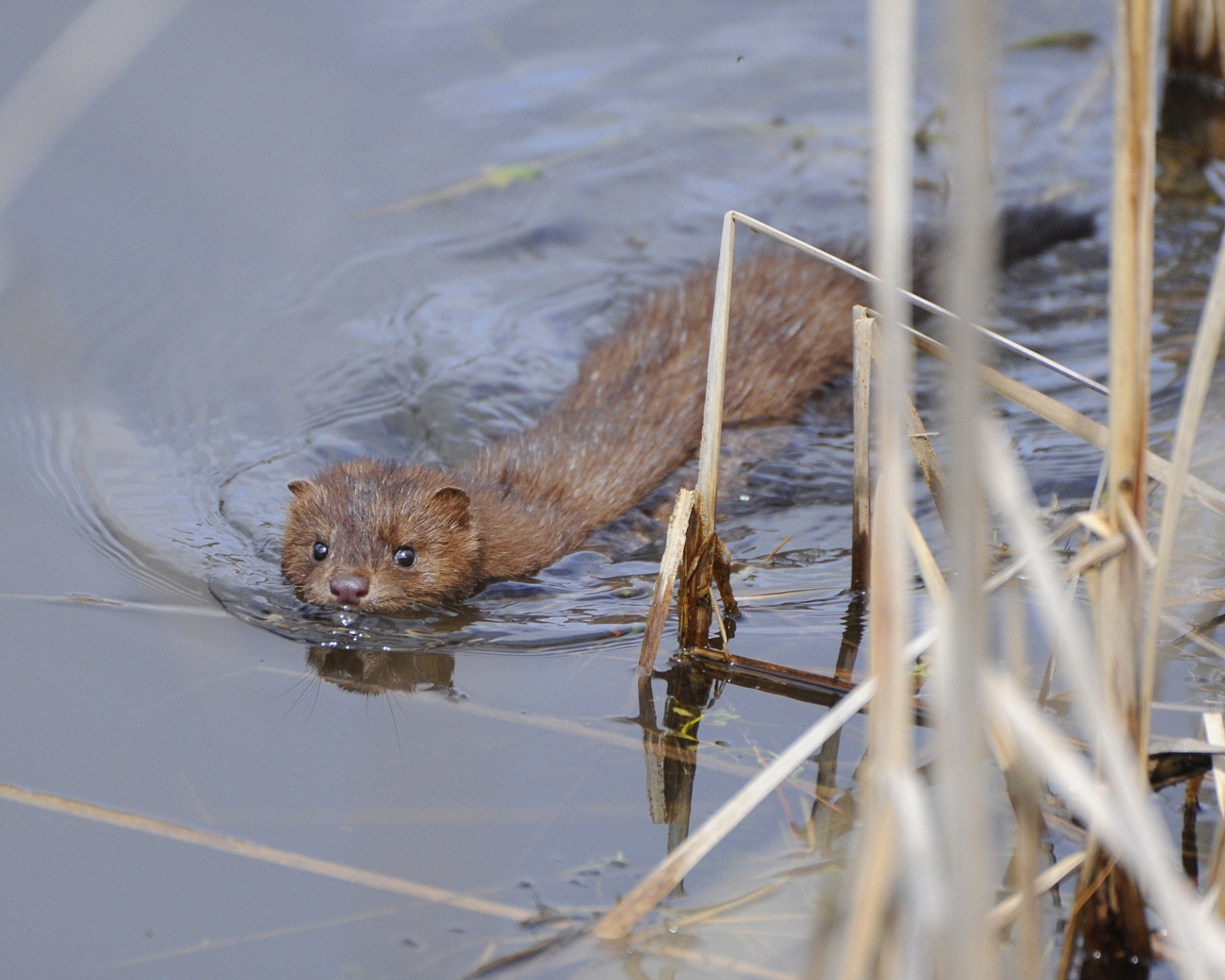
Mustelids (mink and weasels) now appear uncommon in Delaware. In 1942, state wildlife managers noted that Mink (Neovison vison) were “restricted by intensive trapping to a point of extinction” in the state, with “only a very few places in Delaware where they are to be found” (Delaware Board Game and Fish Comm. 1942). The same report refers to the Long-tailed Weasel (Mustela frenata, at the time called Mustela noveboracensis) as “not considered scarce” in Delaware, being found in New Castle and scattered areas of Kent and Sussex counties in “open mixed forests adjoining farm communities where streams are numerous”. Both reports suggest mustelids declined significantly in Delaware during the 20th century. Studies in the southeast suggest that environmental contaminants may play an important role in mustelid population declines, especially on the coastal plain (Osowski et al. 1995).
| Common Name | Scientific Name | Tier |
|---|---|---|
| Least Shrew | Cryptotis parvus | Assessment Priority |
| Marsh Rice Rat | Oryzomys palustris | Assessment Priority |
| Maryland Shrew | Sorex fontinalis | Assessment Priority |
| Masked Shrew | Sorex cinereus | Assessment Priority |
| Meadow Jumping Mouse | Zapus hudsonius | Assessment Priority |
| Star-nosed Mole | Condylura cristata | Assessment Priority |
| Delmarva Fox Squirrel | Sciurus niger cinereus | Tier 1 |
The conservation status of many small mammals in Delaware is poorly known, and further survey work is warranted. Several species appear restricted to the Piedmont, but their population status there is uncertain. Increased survey efforts are needed to determine SGCN abundance and distributions, including species whose conservation status is less well known. Four small mammal species are considered SGCN.
The Delmarva Fox Squirrel (Sciurus cinereus niger), once found in mature mixed oak-pine forests throughout the Delmarva Peninsula, was listed as Endangered by the U.S. Fish and Wildlife Service (USFWS) in 1967, at which time the range had been reduced to 10% of the original size. The species had been extirpated from Delaware prior to 1920 (USFWS 2012). Between 1984 and 1987, translocated populations were established at two sites in Sussex County, Delaware (Prime Hook National Wildlife Refuge and Assawoman Wildlife Area) and the Delaware Assawoman population was designated a nonessential experimental population (USFWS 1993). The Prime Hook population has persisted without supplementation, while the Assawoman population has been lost (USFWS 2012). By 2007, a new population was identified in the Nanticoke Wildlife Management Area in southwestern Sussex County. This was the first population found in Delaware since the time of listing that was not a result of a translocation (USFWS 2007).
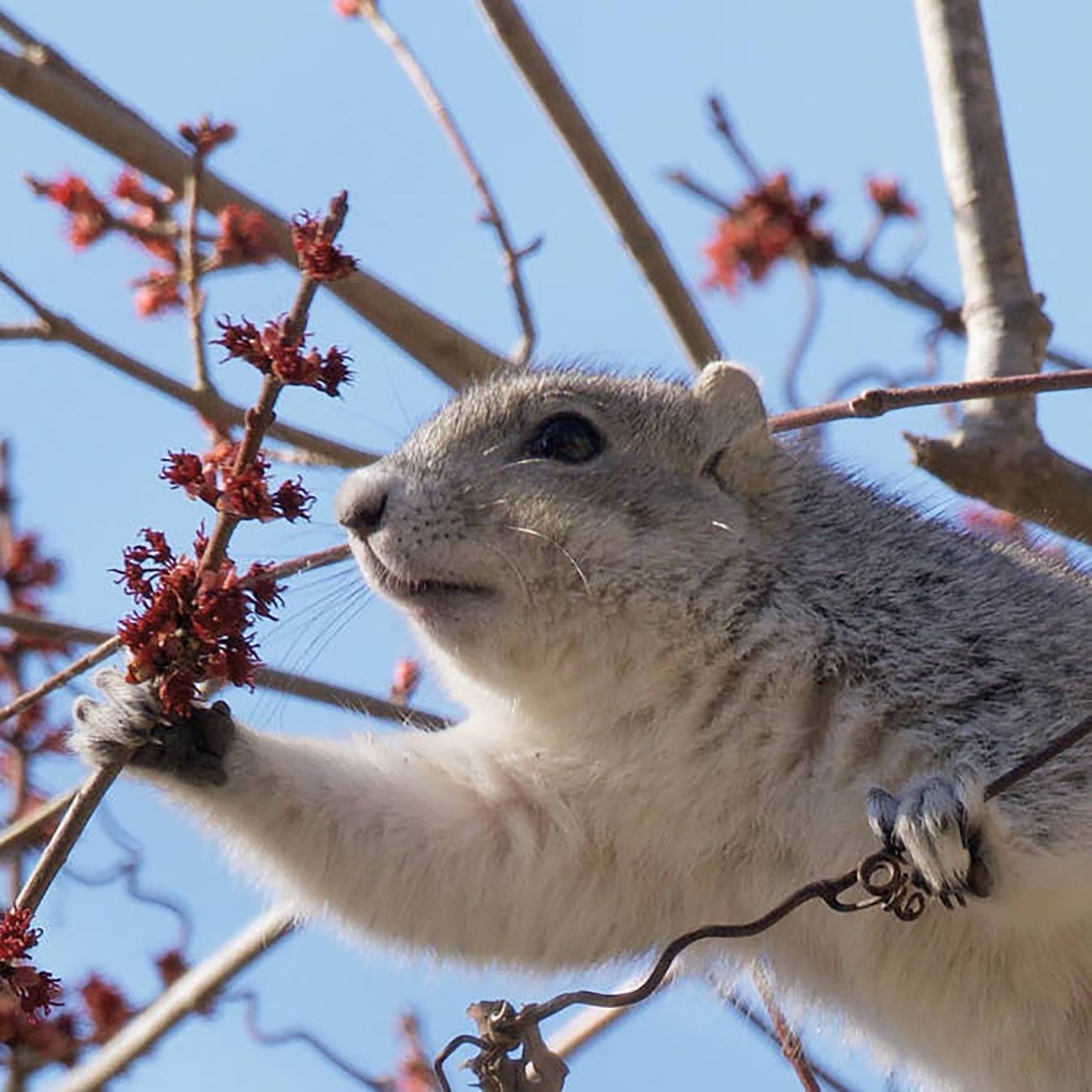
The Delmarva fox squirrel was proposed to be removed from the Endangered Species Act (ESA) in 2014, and a Post Delisting Monitoring Plan (USFWS 2014) was completed. In 2015, the Delmarva fox squirrel was removed from protection under the ESA. Although the species has largely recovered at the federal level, the Delmarva fox squirrel is still rare in Delaware and remains on the State Endangered species list. DFW prepared a Delaware Delmarva Fox Squirrel Conservation Plan (DFW 2014) to enhance populations and restore this species as part of the forested landscape in Sussex County. As a part of this plan, a total of 123 squirrels were translocated from robust source populations in Maryland to three additional sites in Delaware (Assawoman Wildlife Area, Redden State Forest, and Trap Pond State Park) from 2020-2024. The translocations have been successful, with reproduction and dispersal documented at all three sites. Following translocation, DNREC will monitor those populations to determine their long-term persistence, improve habitat within and between existing sites to help the populations thrive, and gather reports of sightings from the public as the squirrels disperse into the landscape.
| Common Name | Scientific Name | Tier |
|---|---|---|
| Evening Bat | Nycticeius humeralis | Assessment Priority |
| Eastern Small-footed Myotis | Myotis leibii | Tier 1 |
| Hoary Bat | Lasiurus cinereus | Tier 1 |
| Little Brown Bat | Myotis lucifugus | Tier 1 |
| Northern Long-eared Bat | Myotis septentrionalis | Tier 1 |
| Silver-haired Bat | Lasionycteris noctivagans | Tier 1 |
| Tricolored Bat | Perimyotis subflavus | Tier 1 |
| Eastern Red Bat | Lasiurus borealis | Tier 3 |
Delaware’s SGCN bats are divided into two main groupings based on life history. “Cave bats” spend their winters hibernating in caves and often form colonies to roost and raise their young in the summer. Colonies occur in hollow trees, buildings, and other man-made structures. “Tree bats” are generally more solitary in nature, roost under bark alone or in small groups and forage in and near forests, making them difficult to study. Nine bat species are considered SGCN in Delaware.
Seven of the nine species of bats listed as northeast RSGCN occur in Delaware. Many of the northeastern species of bats are acutely threatened by white-nose syndrome (WNS), a fungal disease discovered in North America in 2006. WNS alters the torpor cycle and metabolism of overwintering bats and leads to significant mortalities. The rapid spread of the disease and associated mortality prioritized the need to understand population trends. Bats hibernating at Fort Delaware and Fort DuPont State Parks were confirmed with WNS in 2012 and the fungus that causes the disease was documented in bats returning to summer sites in 2010.
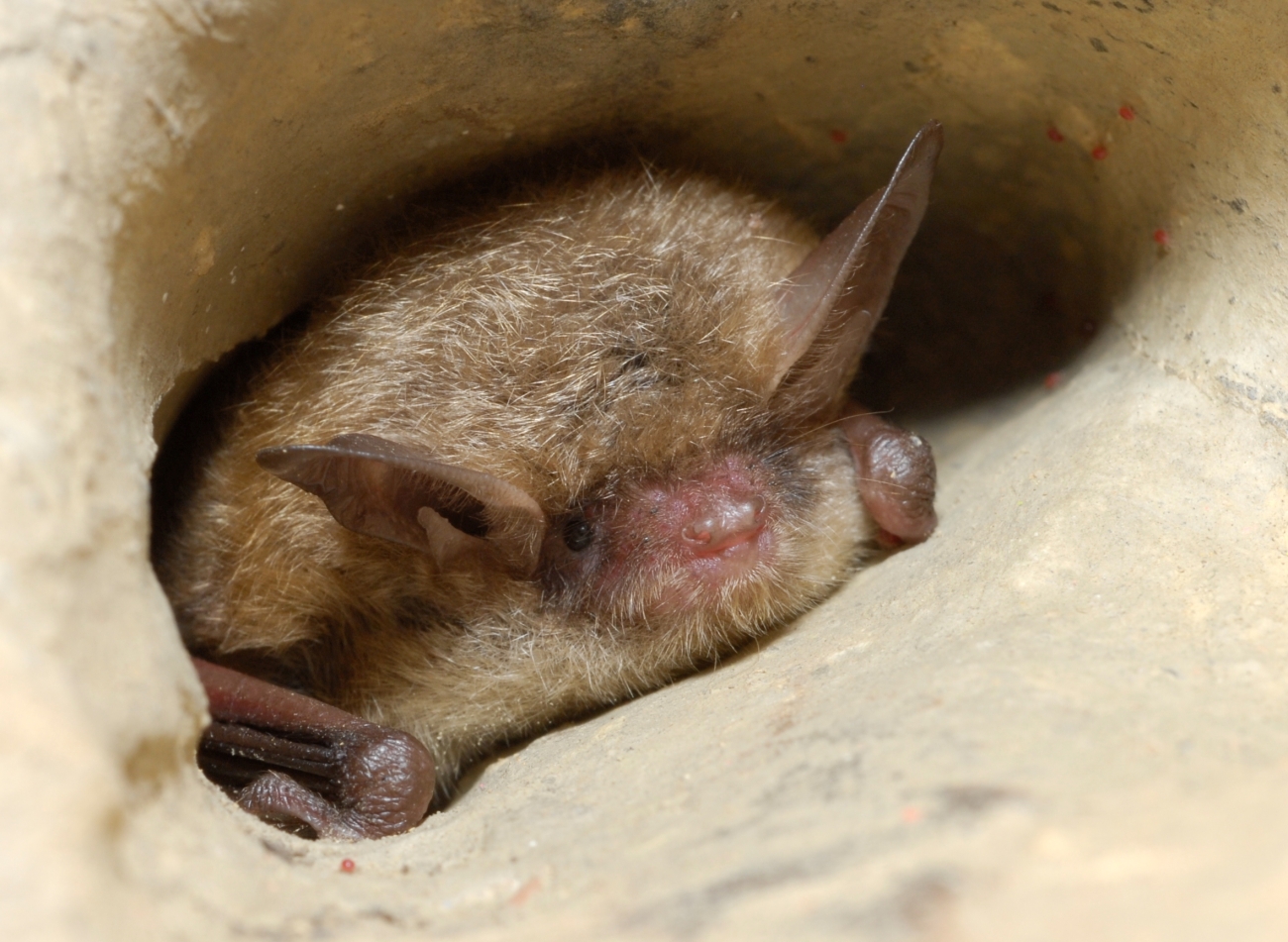
The Northern Long-eared Bat (Myotis septentrionalis) and Tricolored Bat (Perimyotis subflavus) are two species most impacted by WNS. Due to declines caused by the disease and the continued spread of WNS, the Northern Long-eared Bat was listed as Threatened under the Endangered Species Act in 2015 (USFWS 2015) and reclassified as Endangered in 2022 (USFWS 2022). The Tricolored Bat was proposed to be listed as Endangered under the Endangered Species Act in 2022. Delaware lists the Northern Long-eared Bat, Little Brown Bat (Myotis lucifugus), and Tricolored Bat as state Endangered.
DFW is monitoring WNS in Delaware and collecting information on bats and their distribution across the state. Monitoring is accomplished through annual maternity colony emergence counts conducted by volunteer “Bat Spotters” program, catching bats at maternity colonies and hibernacula, hibernacula surveys, and stationary and mobile acoustic monitoring. Delaware also contributes data to the North American Bat Monitoring Program (NABat), a coordinated program made up of an extensive community of partners across North America who use standardized protocols to gather data to assess bat population status and trends, inform responses to stressors and sustain viable populations.
| Common Name | Scientific Name | Tier |
|---|---|---|
| Blue Whale | Balaenoptera musculus | Tier 1 |
| Fin Whale | Balaenoptera physalus | Tier 1 |
| Humpback Whale | Megaptera novaeangliae | Tier 1 |
| North Atlantic Right Whale | Eubalaena glacialis | Tier 1 |
| Sei Whale | Balaenoptera borealis | Tier 1 |
| Sperm Whale | Physeter macrocephalus | Tier 1 |
| Harbor Porpoise | Phocoena phocoena | Tier 3 |
Seven of the 16 species of marine mammals occurring in Delaware are considered SGCN, including six species of whales and Harbor Porpoise (Phocoena phocoena). Whale conservation in the Northeast has been a significant concern since the depletion of local populations due to whaling by the late 19th century. North Atlantic Right Whale (Eubalaena glacialis) populations were decimated in the 17th and 18th centuries. Sperm whaling (Physeter macrocephalus) increased in the 18th century but became less economically viable by the second half of the 19th century when the focus of the New England whaling industry shifted to Blue (Balaenoptera musculus) and Fin Whales (Balaenoptera physalus).

Some northeastern whale species (e.g., Humpback, Fin) have shown signs of recovery since a global whaling ban was imposed in 1985, although the Humpback Whale population along the U.S. east coast has experienced an unexplained mortality event since 2016. In 1972, Canada stopped whaling, and the U.S. passed the Marine Mammal Protection Act, banning the take of marine mammals or importing marine mammal products. Other northeastern whales, such as the North Atlantic Right Whale, have recovered much more slowly from heavy harvest pressure. New potential threats include shipping activity, entanglement in fishing gear, and offshore energy development.
Multiple agencies have jurisdiction over the conservation of marine mammals, including DFW and the National Oceanographic and Atmospheric Administration (NOAA). Since whale populations range over such vast areas, the jurisdiction of any individual state comprises a very small proportion of a species’ range, making coordination between states, regions, and federal agencies critical to the conservation of the species in this group.
Related Topics: action plan, conservation, draft, fish and wildlife, habitat, plan, species, wildlife
Delaware's Governor
State Agencies
Elected Officials
General Assembly
Delaware Courts
State Employees
Cities & Towns
Delaware State Code
State Regulations
Business First Steps
Phone Directory
Locations Directory
Public Meetings
Voting & Elections
Transparency
Health Insurance
Tax Center
Personal Income Tax
Privacy Policy
Weather & Travel
Contact Us
Corporations
Franchise Tax
Gross Receipts Tax
Withholding Tax
Delaware Topics
Help Center
Mobile Apps
E-mail / Text Alerts
Social Media


Built by the Government Information Center
©MMXXVI Delaware.gov