DNREC Menu

The Delaware Estuary is one of the nation’s largest petrochemical centers, and the potential for spills is an ever-present threat to estuarine and wetland systems and the SGCN that rely on them. The port complex of the Delaware River and Bay is the second largest oil port in the United States, handling about 85% of the East Coast’s oil imports. The Athos I spill in 2004 near Philadelphia released some 265,000 gallons of heavy crude into the Delaware River. The cumulative effects of small spills are also of concern for SGCN.
Some of the largest direct threats from energy production in Delaware are associated with cooling water intakes and discharges (e.g., from power plants), pollution events, and other causes that are covered elsewhere in this chapter.
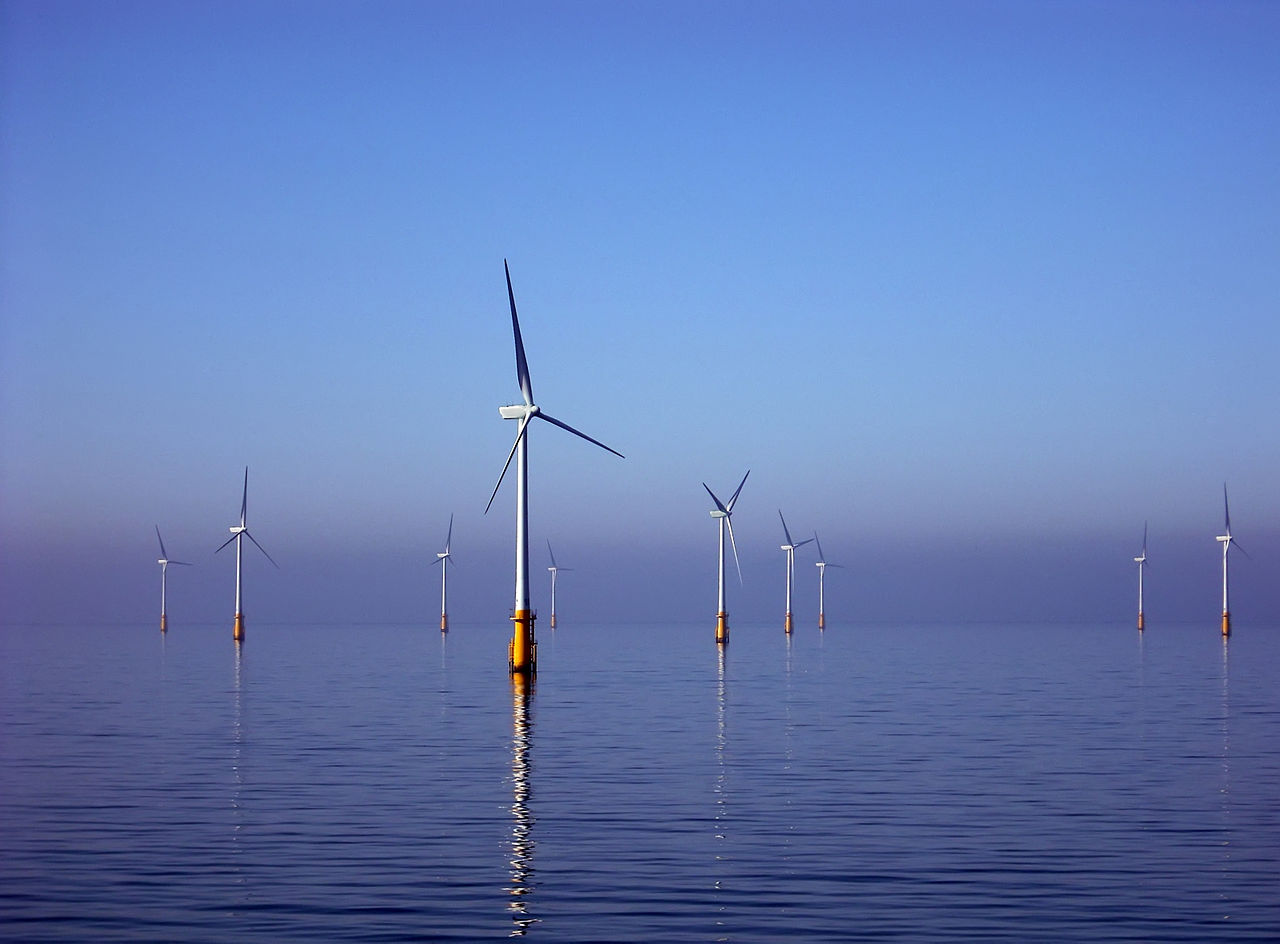
Renewable energy is not without risks to SGCN. There are many potential impacts of new energy development on wildlife within the Mid-Atlantic states, ranging from effects of hydraulic fracturing and offshore drilling on aquatic systems, the loss of habitat to biofuel production, the direct mortality of birds and bats from wind turbines along mountain and coastal flyways, and noise causing avoidance of marine life. Additionally, solar panels can be highly attractive traps for insects seeking to oviposit on the water’s surface, and design modifications are required to minimize this impact to groups like mayflies, and caddisflies (Horváth et al. 2010).
A Risk Assessment of Marine Birds in the Northwest Atlantic Ocean was completed through the North Atlantic Landscape Conservation Cooperative (NALCC) and partners which developed a series of maps depicting the distribution, abundance and relative risk to marine birds from offshore activities (e.g., offshore drilling and wind energy development; NALCC 2015). This can help document and predict areas of frequent use and aggregations of birds and the relative risk to marine birds along the coast. Delaware is currently evaluating the potential effects of wind energy leases in Delaware, including the effects on fish, wildlife and key habitats.
An estimated 140,000 and 328,000 birds are killed annually by collisions with monopole turbines in the contiguous U.S., with an increase in mortality with increasing turbine hub height (Loss et al. 2013). Large populations of migrating shorebirds, waterfowl, raptors and songbirds make Delaware Bay and its shoreline a high-risk location for wind turbine siting (Jenkins and Clark n.d.).
Energy transmission infrastructure in Delaware results in direct mortality of some SGCN, estimating that between 12 and 64 million birds are killed each year at U.S. power lines, with between 8 and 57 million birds killed by collision and between 0.9 and 11.6 million birds killed by electrocution (Loss et al. 2014). Utility companies are actively taking steps to minimize these effects by installing preventive devices on transmission lines and infrastructure in areas heavily used by wildlife, especially birds.
Sand and gravel quarries are prevalent in Delaware and typically result in irreversible destruction of habitat if they are located in areas not previously developed. While some SGCN, such as Bank Swallow (Riparia riparia), use active sand and gravel pits for nesting, these modified habitats have limited value for most SGCN. Sand and gravel mines covered over 6,000 acres in Delaware as of 2009 (Mackenzie 2009). Offshore sand mining occurs in the Delaware Bay and Atlantic Ocean and can have long term effects on benthic habitats. Offshore sand resources that have been historically harvested include sandy shoals and rocky substrate habitats in the nearshore Atlantic important for supporting fisheries and marine birds. Potential direct impacts to SGCN, including sturgeon, sea turtles, and sharks, are also of concern.
Related Topics: action plan, conservation, draft, fish and wildlife, habitat, plan, species, wildlife
Delaware's Governor
State Agencies
Elected Officials
General Assembly
Delaware Courts
State Employees
Cities & Towns
Delaware State Code
State Regulations
Business First Steps
Phone Directory
Locations Directory
Public Meetings
Voting & Elections
Transparency
Health Insurance
Tax Center
Personal Income Tax
Privacy Policy
Weather & Travel
Contact Us
Corporations
Franchise Tax
Gross Receipts Tax
Withholding Tax
Delaware Topics
Help Center
Mobile Apps
E-mail / Text Alerts
Social Media


Built by the Government Information Center
©MMXXVI Delaware.gov