DNREC Menu
Delaware’s plant species play a key role in supporting wildlife diversity. Although Delaware is small in land area, over 2400 species and varieties of plants have been documented for the state (1642 native species, and 799 non-native species). Delaware’s temperate climate, moderated by the Delaware Bay, the Atlantic Ocean, and the Chesapeake Bay, is one reason the state has a relatively diverse flora. Summers may at times be hot and humid, but winters are mild, precipitation is distributed evenly throughout the year, and collectively, these conditions are all favorable to plant growth. Additionally, Delaware’s geographic position within the eastern United States places it within a transition zone between the north and south, in which plant species of both southern and northern affinities occur. Twenty-seven percent of native plants in Delaware have a southern distribution, while 20 percent of native plants have a northern distribution. Though our native flora has a slightly more southern affinity, the meeting within the state of species from both the north and south creates a diverse and interesting area of study. Delaware’s native flora is highly threatened by the same stressors that affect wildlife species, and wildlife is highly dependent on Delaware’s native flora.
The Flora of Delaware Online Database (McAvoy 2024) is a web-based reference containing basic information on the status, habitat, and distribution of plants (native and non-native) in Delaware (https://delflora.org/flora/). The database contains a wealth of information about each species listed and is available to planners, wildlife and land managers, stewardship ecologists, restoration ecologists, research biologists, landscapers, naturalists, educators, and home gardeners.
Prior to European settlement, virtually all of Delaware’s land area was forested. Today, approximately 30% of the state remains in both upland and wetland forests (Brooks and DiGiovanni 1998). In the Piedmont, the upland forests are dominated by deciduous species, with the most common being oaks (Quercus spp.), American Beech (Fagus grandifolia) and Tuliptree (Liriodendron tulipifera). On the Coastal Plain, the composition of the upland forests changes as one moves from north to south. In the northern half of the state, from the Fall Line to central Kent County, the dominant upland tree species are usually the same as those in the Piedmont. From central Kent County southward, Loblolly Pine (Pinus taeda) becomes an important component in upland forests, along with several oak species, hickories (Carya spp.) and Sweetgum (Liquidambar styraciflua). Non-tidal, forested wetlands, or swamps are common and widespread throughout the Coastal Plain of Delaware. Forested wetlands typically support tree species such as Red Maple (Acer rubrum), American Holly (Ilex opaca), Pinus taeda, Swamp White Oak (Quercus bicolor), Swamp Chestnut Oak (Q. michauxii), Pin Oak (Q. palustris), and Willow Oak (Q. phellos).
Typically, plant species diversity is correlated with diversity of habitat types, and many rare plant species are associated with unusual or specialized habitats. Some of Delaware’s more important habitats for rare plants and high species diversity are characterized below and are also described in Delaware’s Wildlife Habitats.
Species become rare primarily due to the loss and degradation of habitat. Since the arrival of European settlers, Delaware has lost nearly all its forest cover to agriculture and development. Many of the forests that remain have been highly fragmented; many exist as isolated islands in a sea of cropland or subdivisions. In addition, thousands of acres of non-tidal wetlands have been either filled or drained for the tilling of crops and the construction of houses and buildings. Degradations such as these – and others – have taken a severe toll on Delaware’s native plant life. Today, 40 percent (659 species and varieties) of the state’s native plants are considered rare, and 76 species are known from only a single occurrence or populations. In addition, 15 percent (238 species) of the state’s native plants are thought to be either historical (190 species not seen for 20 or more years), or extirpated (48 species). If the destruction and degradation of habitat continues, many of the plants that are common today may become rare in the future.
Species rarity is not entirely due to the loss and degradation of habitat by humans; many species in Delaware are simply rare by their very nature and have always been rare in the state. Many state-rare species are very habitat-specific and require specialized environmental conditions, and many are near the edge of their natural distribution and thus are infrequent to rare in their occurrence. However, these rare species that require specialized habitats, or are rare because they are edge-of-range species, are usually the first to become threatened by human-caused changes to their environments.
Species rarity is also the result of native plants being over-matched and displaced by aggressive, non-native invasive plants. A non-native plant is one that did not exist in Delaware or North America prior to European settlement and is now well established in the natural landscape. Many of these plants arrived with the early settlers, either intentionally or unintentionally, or are modern-day introductions. Non-native invasive plants threaten the preservation of our native flora, particularly plant species that are rare or uncommon. To date, 799 species of non-native plants have been documented in Delaware. Of that number 174 are considered invasive (22% of the flora).
Over-browsing by deer also has a significant effect on our native flora, especially rare plants. Deer populations in Delaware are well beyond carrying capacity, which is a function of forest fragmentation. More and more deer are being crowded into smaller and smaller spaces, and deer will continue to breed regardless of the forest size. Continuous browsing of vegetation will weaken a plant, and if browsing continues for too long a period, that plant may eventually die. Rare plants are quite sensitive to over-browsing by deer and prolonged browsing will also greatly limit reproduction, thus reducing the number of plants within a population.
Delaware’s native flora and rare plants are also feeling the effects of climate change. As the icecaps melt, sea levels rise, and with rising sea-levels, saltwater flows into our freshwater estuaries and tributaries. Higher salinity levels in typical freshwater systems are causing a shift in plant species composition. Species-rich freshwater marshes are being converted to less diverse brackish and salt marshes, and rare plants are especially sensitive to higher salinity levels.
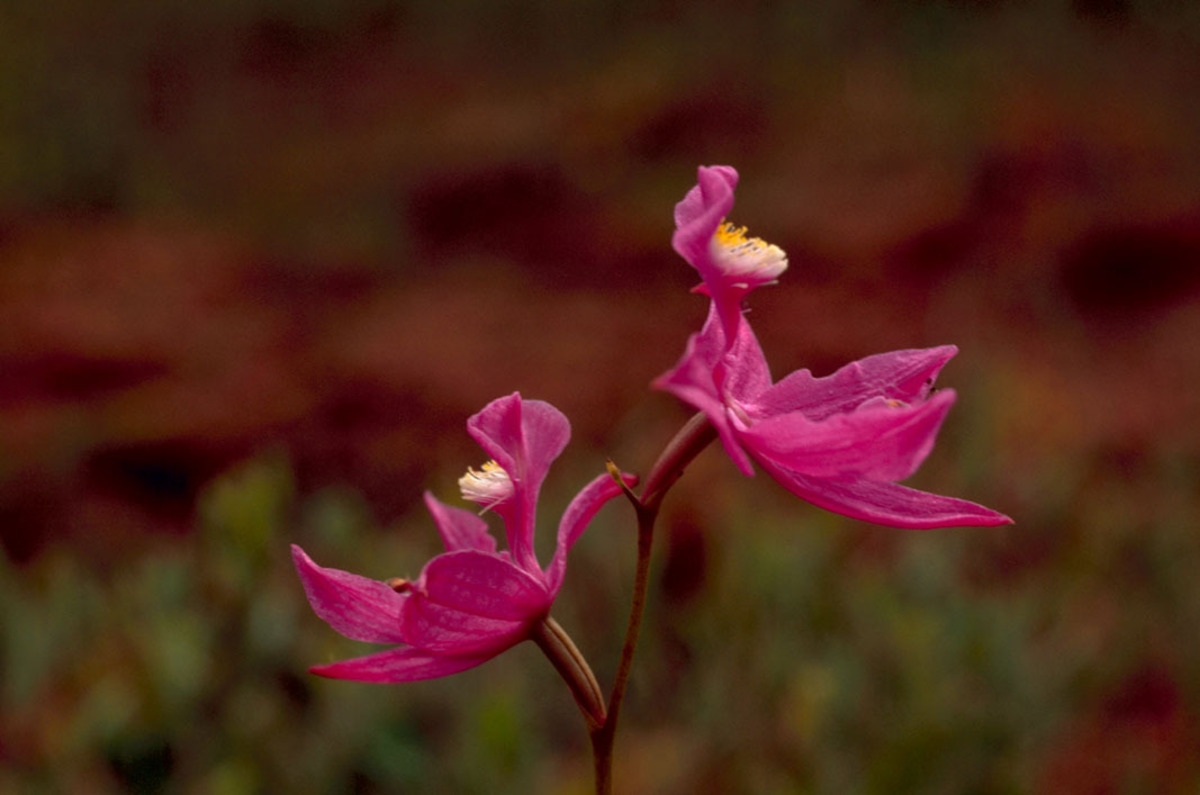
Atlantic White Cedar (Chamaecyparis thyoides) is an evergreen tree restricted to acidic swamps along the Atlantic and Gulf Coastal Plain, and Atlantic White Cedar is the dominant tree of these swamps, and it typically grows in dense, monotypic stands. Atlantic White Cedar swamps have been greatly reduced in extent since the time of European settlement through logging and conversion of swamps to other uses. Because of this loss, and because cedar swamps are habitats with unique characteristics of soil chemistry and community structure, many rare plant species are associated with these swamps. Some of these rare species are Grass-pink Orchid (Calopogon tuberosus), Coast Sedge (Carex exilis), and Bayonet Rush (Juncus militaris). Atlantic White Cedar swamps are an uncommon wetland type that occurs in both tidal and non-tidal situations, but they are most diverse in non-tidal habitats. The poorly drained soil in which it grows is extremely acidic. Because acidic soil conditions prevent most plants from taking up certain essential nutrients, Atlantic White Cedar swamps are often home to carnivorous plants, which obtain the nutrients they are unable to get from the soil by catching and digesting insects. Some of the state rare carnivorous plants that primarily occur in Atlantic White Cedar swamps include: the Purple Pitcher Plant (Sarracenia purpurea), and the Round-leaf Sundew (Drosera rotundifolia). One of the most spectacular plants of Delaware’s Atlantic White Cedar swamps is the Swamp Pink (Helonias bullata). The Swamp Pink typically blooms in early spring and has a wand-like cluster of bright pink flowers on a tall, leafless stem and is quite striking when encountered in flower. Swamp Pink is listed as threatened by the U.S. Fish and Wildlife Service (USFWS 1998).
Interdunal wetlands, or swales, occur as small depressions scattered amongst the inner dunes of the Atlantic Coast. Although they are very near the ocean, they are freshwater wetlands, primarily influenced by precipitation and to a lesser extent by groundwater. Interdunal wetlands are seasonally flooded and are often dry on the surface late in the growing season. They generally have a thin layer of acidic peat over sand. Because sand dunes are dynamic features, these wetlands can be buried by blowing sand in a relatively short period of time. However, they can also develop in the same way, where wind blows out enough sand to create a depression. These unique communities are home to such rare species as: white fringe-orchis (Platanthera blephariglottis), Rose Pogonia (Pogonia ophioglossoides), Twisted Ladies’-tresses (Spiranthes vernalis), and Southern Bladderwort (Utricularia juncea).
These freshwater wetlands typically occur at the base of steep slopes in the stream valleys of the Piedmont province and are fed by groundwater year-round. They can appear on the landscape under a shady canopy (seepage swamp), or in open, sunny conditions (seepage meadow). These wetlands can be quite variable in species composition based on whether they are in shade or sun, but typically include Pennsylvania Bittercress (Cardamine pensylvanica), Drooping Sedge (Carex prasina), Tussock Sedge (C. stricta), Golden Saxifrage (Chrysosplenium americanum), Spotted Jewelweed (Impatiens capensis), Sensitive Fern (Onoclea sensibilis), Hooked Buttercup (Ranunculus recurvatus), and Symplocarpus foetidus. There are several rare plants that inhabit these small wetlands, including: Marsh Bellflower (Campanula aparinoides), Roundleaf Water Cress (Cardamine rotundifolia), Rough Sedge (Carex scabrata), Hairy-fruit Sedge (C. trichocarpa), Log Wood-fern (Dryopteris celsa), and Meadow-sweet (Spiraea alba).
Tulip tree (Liriodendron tulipifera) is often well established in the canopy of this forest type, but other tree associates include Bitternut Hickory (Carya cordiformis), American Beech (Fagus grandifolia), and Northern Red Oak (Quercus rubra). The shrub layer ranges from moderately dense to sparse and frequently includes Flowering Dogwood (Cornus florida), Spice Bush (Lindera benzoin), and Black Haw Viburnum (Viburnum prunifolium). The soils are moist and rich in organic matter and nutrients. They are most notable for their diverse herbaceous layer, which often includes many spring ephemerals, such as Yellow Trout-lily (Erythronium americanum), Showy Orchis (Galearis spectabilis), Wild Geranium (Geranium maculatum), Roundlobed Hepatica (Hepatica americana), Violet Wood Sorrel (Oxalis violacea), Mayapple (Podophyllum peltatum), and Bloodroot (Sanguinaria canadensis).
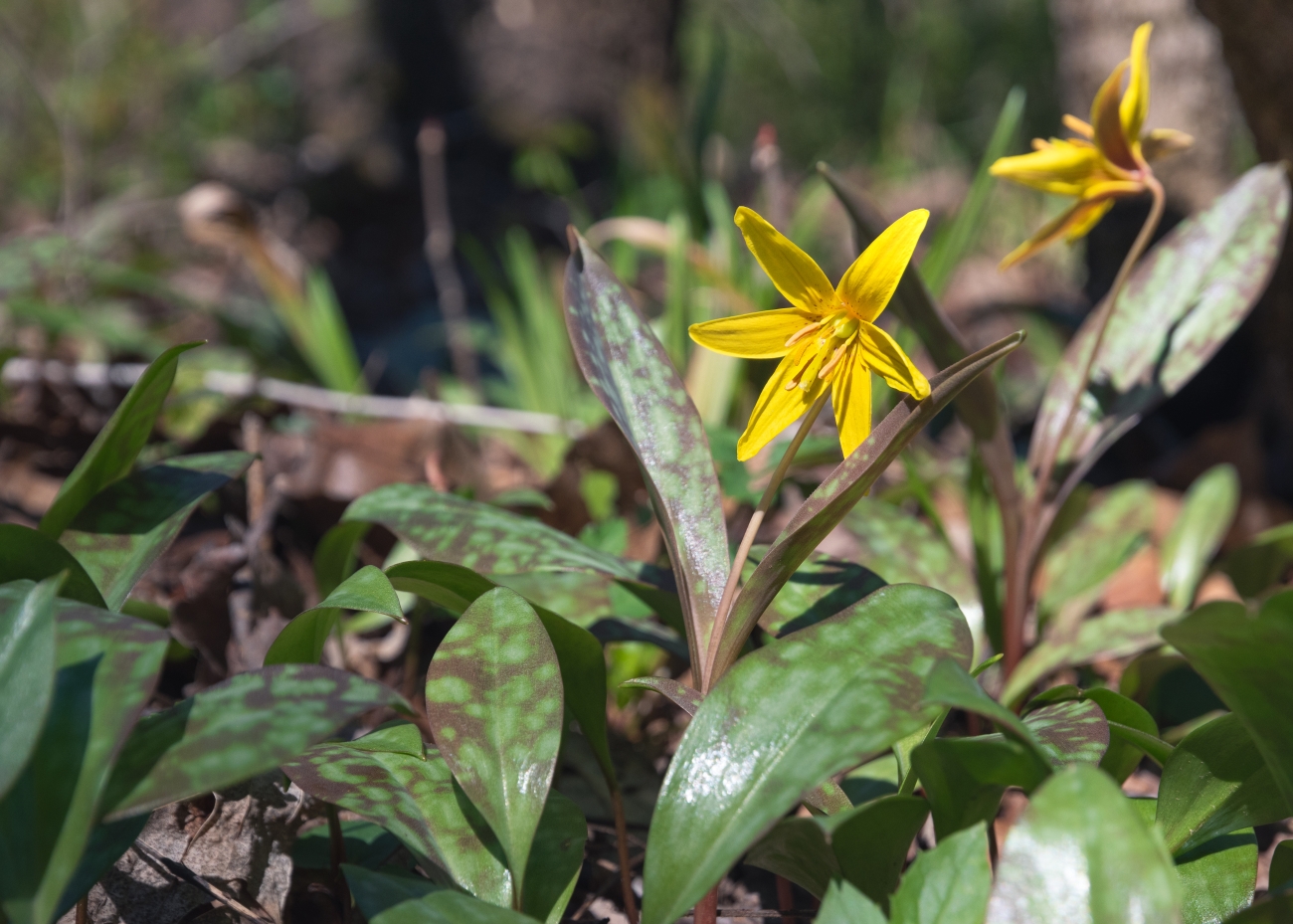
Several state rare species may also occur, such as White Baneberry (Actaea pachypoda), Golden-seal (Hydrastis canadensis), Green Violet (Hybanthus concolor), American Ginseng (Panax quinquefolius), and Ill-scented Trillium (Trillium erectum). Ferns are well represented in this habitat and include species such as Maidenhair Fern (Adiantum pedatum), Rattlesnake Fern (Botrypus virginianus), Broad-beech Fern (Phegopteris hexagonoptera), and Christmas Fern (Polysthicum acrostichoides). There are Piedmont and Coastal Plain variants of this forest type. The variations are found within the different soil types between the two provinces, which results in slight variations in plant species composition.
Also known as Delmarva bays, or vernal pools, Coastal Plain seasonal ponds are perhaps Delaware’s most unique and important non-tidal wetland resource. They occur as isolated depressions within forested areas and are not permanent bodies of water. They are typically flooded during the winter and spring when the groundwater table is high and draw down during the growing season as the groundwater table lowers and are usually dry by late summer/early fall. They are usually smaller than one acre in size (although they can be much larger) and are often elliptical in shape. There are particularly high concentrations of seasonal ponds in southwestern New Castle Co. and northeastern Kent Co. A great number of state rare species can be found in seasonal ponds, such as: Rose Coreopsis (Coreopsis rosea), Hirst’s Panic Grass (Dichanthelium hirstii), Harper’s Dwarf Fimbry (Fimbristylis perpusilla), Creeping St, John’s-wort (Hypericum adpressum), and Awned Meadow Beauty (Rhexia aristosa). In addition to supporting rare plant species, they serve as critical breeding areas for salamanders, frogs, and toads.
Bald cypress swamps occur on soils of varying compositions of silt and loam in seasonally flooded streamside wetlands that receive periodic overbank flooding. Bald Cypress (Taxodium distichum) is usually the dominant species in these forested wetlands, but Red Maple (Acer rubrum) and Swamp Black Gum (Nyssa biflora) are often co-dominants. Bald Cypress occurs at the extreme northern limit of its natural distribution in Delaware. Most of Delaware’s Bald Cypress occur in south-central Sussex County, but a few smaller populations are found a bit farther north in Kent County.
Inland xeric sand forests develop on dunes or ridges that are unique geologic features on the landscape and occur far inland from the Atlantic coast of Delaware. They are most prevalent in the west-central portion of Sussex Co., within the Nanticoke River watershed. They can be found along river corridors and on upland plains, either in groups or in isolation. Research has found that the dunes formed from wind-blown sediments from old floodplain deposits about 30,000 to 13,000 years ago during the last glaciation, when the climate was much colder and drier (Pleistocene). The dunes exhibit deposition patterns from winds that blew from the northwest and vary in shape from U-shaped – to mounds – to narrow linear ridges and vary in height from 10 ft. to 50 ft. and usually have gentle side slopes. The deposits that form the dunes are usually Evesboro Sand and Parsonsburg Sand, which are medium to fine grained sands, with quartz being the primary element of the sand. These soil types have a low pH, limited water holding capacity, and limited nutrients available for plants. The dunes are essentially sand with little organic matter, which can be a harsh environment for both flora and fauna. The forested plant communities that develop on inland sand dunes vary in species composition and percent cover.
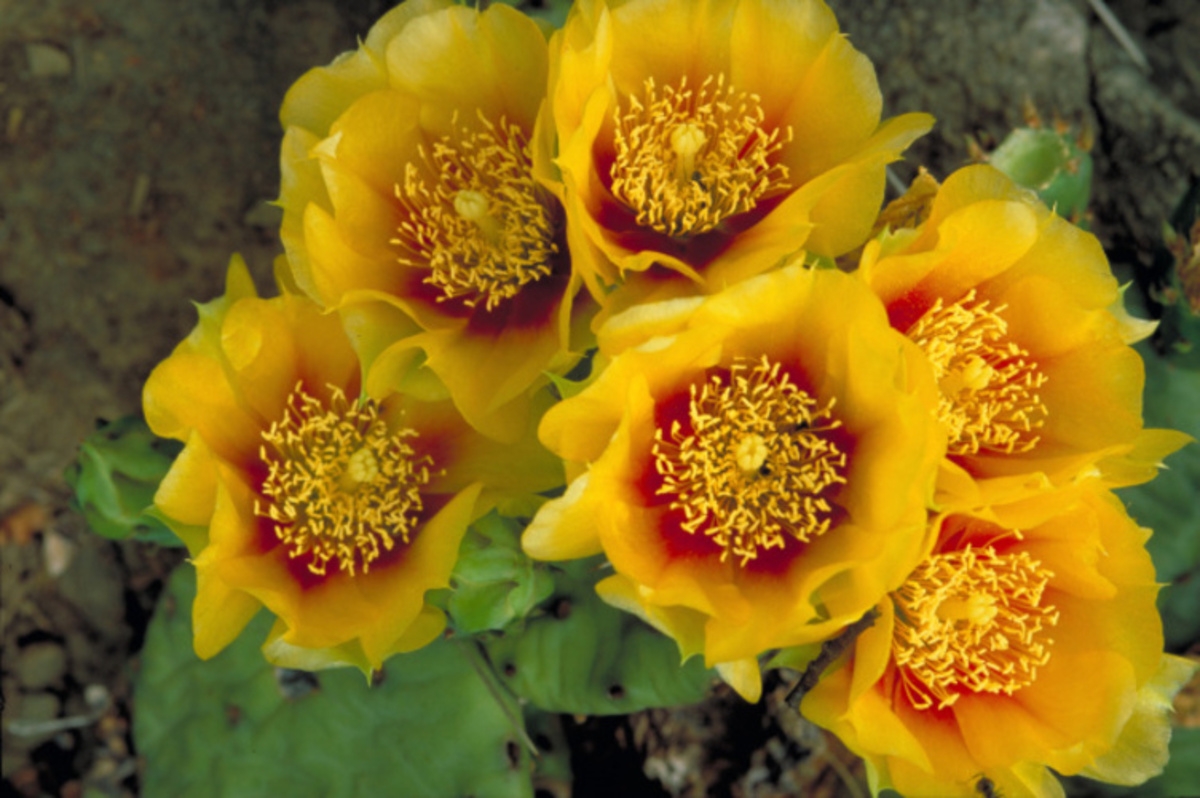
Canopy species can include Sand Hickory (Carya pallida), a variety of oaks (Quercus alba, Q. falcata, Q. marilandica, Q. montana, Q. nigra, and Q. stellata) and pines (Pinus echinata, P. taeda, and P. virginiana). The shrub layer is usually patchy and can be either sparse or dense and often consists of Black Huckleberry (Gaylussacia baccata), Lowbush Blueberry (Vaccinium pallidum) and Sand Blueberry (V. stamineum). Occasionally, One-flower Hawthorn (Crataegus uniflora) and Poison Oak (Toxicodendron pubescens) are present. The herbaceous flora of inland dune communities often includes grasses: Silver Bluestem (Andropogon ternarius), three-awn grasses (Aristida species), Wavy Hairgrass (Avenella flexuosa), dicanthelium grasses (Dichanthelium species), Big-top Love Grass (Eragrostis hirsuta), and Black-seed Needle Grass (Piptochaetium avenaceum); sedges: Black Edge Sedge (Carex nigromarginata), Pennsylvania Sedge (C. pensylvanica), Shaved Sedge (C. tonsa), and Slender Flat Sedge (Cyperus lupulinus); and broad-leaved herbs: Yellow Wild Indigo (Baptisia tinctoria), Canada Frostweed (Crocanthemum canadense), Variable-leaf Spurge (Euphorbia ipecacuanhae), Short-stalked Milkpea (Galactia brachypoda), Hairy Bedstraw (Galium pilosum), Hairy Hawkweed (Hieracium gronovii), Big-root Morning-glory (Ipomoea pandurata), Eastern Prickly-pear (Opuntia humifusa), and Forked Blue Curls (Trichostema dichotomum). Since European settlement, the inland dune plant communities, and the dunes themselves, have suffered from a variety of abuse and destructive activities, from clearing for timber, farming, grazing, sand mining, and residential housing.
Freshwater and oligohaline tidal marshes and shrublands typically occur along river systems that have salinity levels of 0 to 5 ppt. (oligohaline). These marshes and shrublands occur within the estuary of the Delaware Bay, but the state’s most extensive acreage of these habitats are found along the Nanticoke River in Sussex County. Freshwater and oligohaline tidal marshes and shrublands are floristically diverse and support plant species such as the shrubs Common Alder (Alnus serrulata), and Button Bush (Cephalanthus occidentalis), and the herbs Swamp Milkweed (Asclepias incarnata), River Bulrush (Bolboschoenus fluviatilis), Spotted Jewelweed (Impatiens capensis), Blue-flag Iris (Iris versicolor), Spatterdock (Nuphar advena), Arrow Arum (Peltandra virginica), Triangle-leaf Tearthumb (Persicaria arifolia), Arrowleaf Tearthumb (P. sagittata), Pickerelweed (Pontederia cordata), Broad-leaf Arrowhead (Sagittaria latifolia), Soft Stem Bulrush (Schoenoplectus tabernaemontani), Marsh Fern (Thelypteris palustris), Broadleaf Cattail (Typha latifolia) and Wild Rice (Zizania aquatica). With sea-level rise – a function of global warming –freshwater and oligohaline tidal marshes and shrublands are becoming increasingly rare. As sea levels rise, saltwater from the bays and ocean intrudes further up the tidal rivers and streams, increasing salinity levels and thus changing species composition and levels of diversity. The species diversity within freshwater marshes and shrublands is much higher than in brackish and salt marshes, so the loss of these marshes could be devastating to the wildlife that depend on them for survival.
The estuary quillwort tidal flats develop in areas below the banks of freshwater tidal streams and rivers that are alternately exposed and flooded on a diurnal or irregular basis. The substrate within these areas or zones is typically firm and consists of silty mud, sand, and gravel. Plant species within this zone are well adapted to the daily tides and many species grow nowhere else but within the intertidal zone. Species include Riverbank Quillwort (Isoetes riparia), American Waterwort (Elatine americana), Parker’s Pipewort (Eriocaulon parkerii), and Strap-leaf Arrowhead (Sagittaria subulata).
Aquatic vegetation of Delaware’s freshwater tidal and non-tidal rivers and streams consists of rooted-submergent plants, and floating-leaved plants. These species – known as SAV (submerged aquatic vegetation) – varies from stream-to-stream, and river-to-river. SAV is typically found in shallow water where sufficient light for photosynthesis can penetrate, and in slow-flowing, sandy or gravelly streams in both the Piedmont and Coastal Plain. SAV performs many important ecological functions in the aquatic environment, such as providing food and habitat for a variety of wildlife, both vertebrate and non-vertebrate species; producing oxygen in the water during photosynthesis; filtering and trapping sediment that can cloud the water and smother bottom-dwelling organisms, such as mussels; protecting shorelines from erosion by dampening wave action and binding the substrate; and removing excess nutrients, such as nitrogen and phosphorus, that could fuel the growth of algae in the surrounding waters. These ecological functions and values indicate that the presence of SAV within an aquatic system serves as an important environmental measure of water quality. The majority of Delaware’s SAV are found in freshwater systems and include species such as Large Water-starwort (Callitriche heterophylla), Coontail (Ceratophyllum demersum), Broad-leaved Waterweed (Elodea canadensis), Whorl-leaf Water Milfoil (Myriophyllum verticillatum), Threadfoot (Podostemum ceratophyllum), Longleaf Pondweed (Potamogeton nodosus), Greater Bladderwort (Utricularia macrorhiza), and Tape-grass (Vallisneria americana). SAV can also be found in brackish and saltwater systems and include Widgeon-grass (Ruppia maritima), Sago Pondweed (Stuckenia pectinata), and Eel-grass (Zostera marina).
Piedmont stream and river floodplains are flat, broad areas above streams, creeks and rivers. The vegetation of floodplains slow down and holds flood waters during storm events. As floodwaters are slowed down, silty, nutrient rich soils are deposited. These silty soils of the Piedmont stream valley floodplains are especially productive. A species rich flora often develops in the herbaceous layer and includes species such as Green-dragon (Arisaema dracontium), Eastern Springbeauty (Claytonia virginica), Lowland Bladder Fern (Cystopteris protrusa), False Mermaidweed (Floerkea proserpinacoides), Cow Parsnip (Heracleum maximum), Eastern Waterleaf (Hydrophyllum virginianum), Wood Nettle (Laportea canadensis), Brandywine Bluebells (Mertensia virginica), Greek Valerian (Polemonium reptans), Green-headed Coneflower (Rudbeckia laciniata), Three-leaf Stonecrop (Sedum ternatum), Broad-leaf Goldenrod (Solidago flexicaulis), and Fringed Loosestrife (Steironema ciliatum). Several non-native invasive species are often established on Piedmont floodplains, but one of the most troublesome is the Lesser Celandine (Ficaria verna), which is so aggressive that it can completely dominate an area of the floodplain to the exclusion of all native plants.
Related Topics: action plan, conservation, draft, fish and wildlife, habitat, plan, species, wildlife
Delaware's Governor
State Agencies
Elected Officials
General Assembly
Delaware Courts
State Employees
Cities & Towns
Delaware State Code
State Regulations
Business First Steps
Phone Directory
Locations Directory
Public Meetings
Voting & Elections
Transparency
Health Insurance
Tax Center
Personal Income Tax
Privacy Policy
Weather & Travel
Contact Us
Corporations
Franchise Tax
Gross Receipts Tax
Withholding Tax
Delaware Topics
Help Center
Mobile Apps
E-mail / Text Alerts
Social Media


Built by the Government Information Center
©MMXXVI Delaware.gov