DNREC Menu

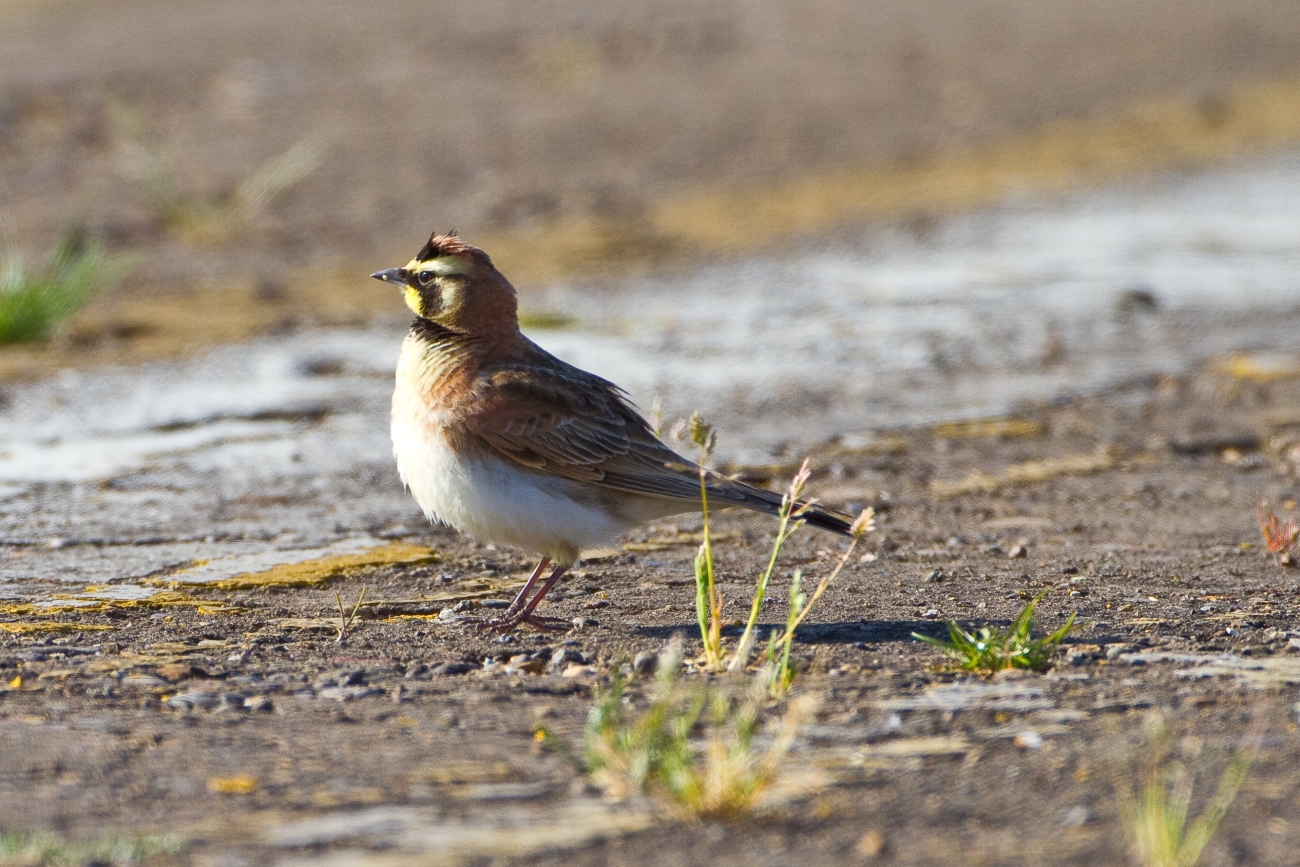
While best known for its waterbird habitat, Delaware also provides critical habitat for landbirds. Important groups for which Delaware has particularly high regional responsibility include neotropical migrant songbirds that use the state for stopover habitat, migrating and wintering raptors, breeding birds of agricultural habitats (including Horned Lark and Grasshopper Sparrow), early successional habitat breeding birds, and forest breeding birds of southern affinities that are at or near their northern range limit in Delaware.
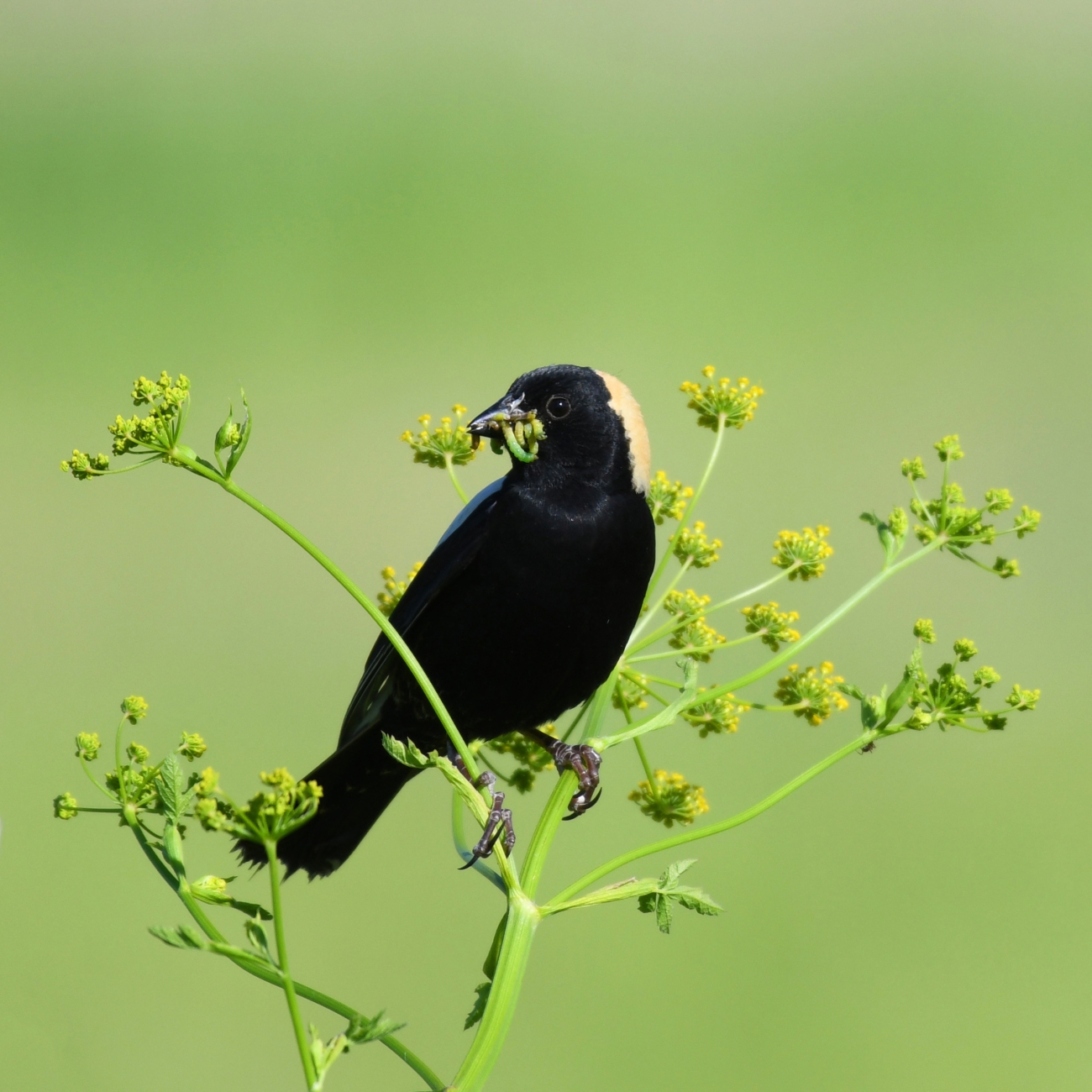
Eleven species of grassland birds were identified as SGCN in Delaware.
| Common Name | Scientific Name | Tier |
|---|---|---|
| American Kestrel | Falco sparverius | Tier 1 |
| Henslow's Sparrow | Centronyx henslowii | Tier 1 |
| Upland Sandpiper | Bartramia longicauda | Tier 1 |
| Bobolink | Dolichonyx oryzivorus | Tier 2 |
| Dickcissel | Spiza americana | Tier 2 |
| Eastern Meadowlark | Sturnella magna | Tier 2 |
| Grasshopper Sparrow | Ammodramus savannarum | Tier 2 |
| Horned Lark | Eremophila alpestris | Tier 2 |
| Loggerhead Shrike | Lanius ludovicianus | Tier 2 |
| Savannah Sparrow | Passerculus sandwichensis | Tier 2 |
| Vesper Sparrow | Pooecetes gramineus | Tier 3 |
The 2025 State of the Birds report concluded that grassland birds are among the fastest and most consistently declining groups of birds in North America, with a population decline of as much as 43% since 1970 (NABCI 2025). This trend probably reflects the expansion of these species’ habitat during the period of widespread farming and pasturing followed by agricultural abandonment and the return of the land to forest.
Just as many forest-dependent birds are area-sensitive, many grassland birds also require large, contiguous habitat patches to maintain viable breeding populations. Breeding Bird Surveys (BBS) conducted by the Biological Resource Division of USGS and volunteers throughout the United States have shown alarming declines in the number of grassland birds nationwide. For instance, Bobolink declined approximately 36%, and Eastern Meadowlark declined approximately 27% (Fink et al. 2022).
Grassland habitat has experienced dramatic declines in Delaware since the 1980s and there is currently very little available habitat for these species. Corresponding with loss of suitable habitat, grassland-dependent bird species have declined precipitously in distribution in the state. Eastern Meadowlark was found in only 30% of blocks in the second DEBBA, down from 78% in the first atlas.
Conservation of grassland habitats and changes in management practices can maintain good quality habitat for these rare birds. Because farmland has become fragmented, most remaining grasslands have become smaller and isolated and are no longer suitable for many species requiring large tracts of grassland.
With the notable exception of Wild Turkey, which uses more extensively forested habitats, upland game birds have declined sharply in Delaware.
| Common Name | Scientific Name | Tier |
|---|---|---|
| American Woodcock | Scolopax minor | Tier 2 |
| Northern Bobwhite | Colinus virginianus | Tier 2 |
Of highest concern in the state, and range wide, is the continued steep decline and range contraction of Northern Bobwhite (Colinus virginianus). Historically, this species did well in habitat mosaics of agricultural and natural cover, with hedgerows, fallow areas, and old fields interspersed with active cropland. With the industrialization of agriculture and a large increase in suburban development, bobwhites have lost most of their habitat in northern Delaware, retracting from their historic range north of the Chesapeake & Delaware (C&D) canal. DFW has developed a Northern Bobwhite Focus Area at Cedar Swamp Wildlife Area to provide habitat for this species. The National Bobwhite Quail Initiative (NBCI) is a unified range-wide strategy of 25 state wildlife agencies, with numerous conservation group and research institution partners, to achieve widespread restoration of native grassland habitats and huntable populations of wild quail (The National Bobwhite Technical Committee 2011). Northern Bobwhite may also be useful as an “umbrella species” for other shrubland and grassland-associated birds, including Grasshopper Sparrow and Dickcissel.
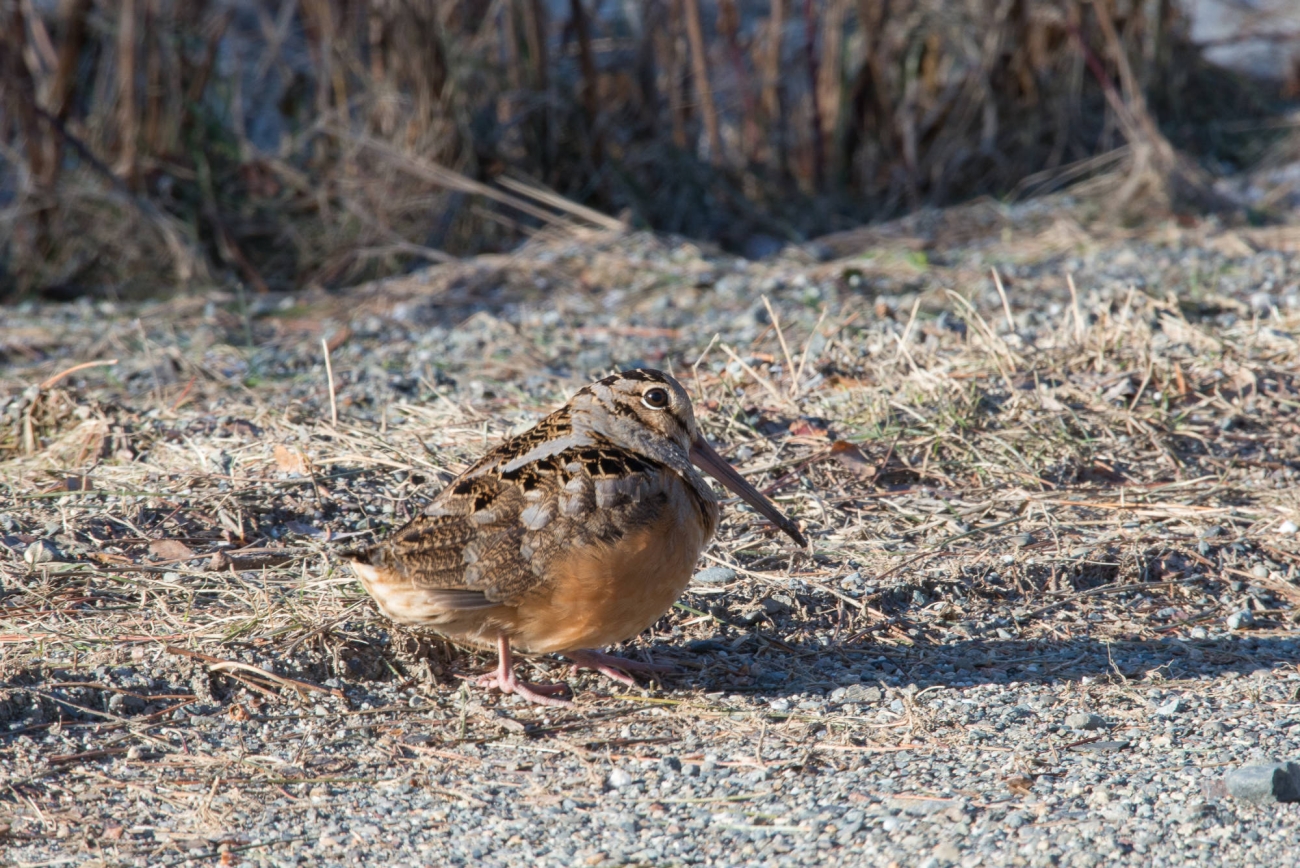
American Woodcock (Scolopax minor) also has a shrinking distribution in Delaware. An American Woodcock nesting habitat model developed in a Pennsylvania study indicated that chosen nest sites were characterized by a significantly lower stem count of invasive species, compared to random sites. In addition, successful nest sites had a mean invasive cover of 30%, while unsuccessful nests averaged 56% invasive cover. The birds in this study tended to nest most often in Arrowood (Viburnum dentatum) and Spicebush (Lindera benzoin) cover and avoided Bush Honeysuckles (Lonicera sp.) and multiflora rose (Rosa multiflora) (Miller and Jordan 2011). The continued spread of invasive woody plants throughout Delaware, combined with the impending threat of the Viburnum Leaf Beetle, represent further threats to woodcock breeding in the state. A Woodcock Management Plan (http://timberdoodle.org/) has been developed for this species.
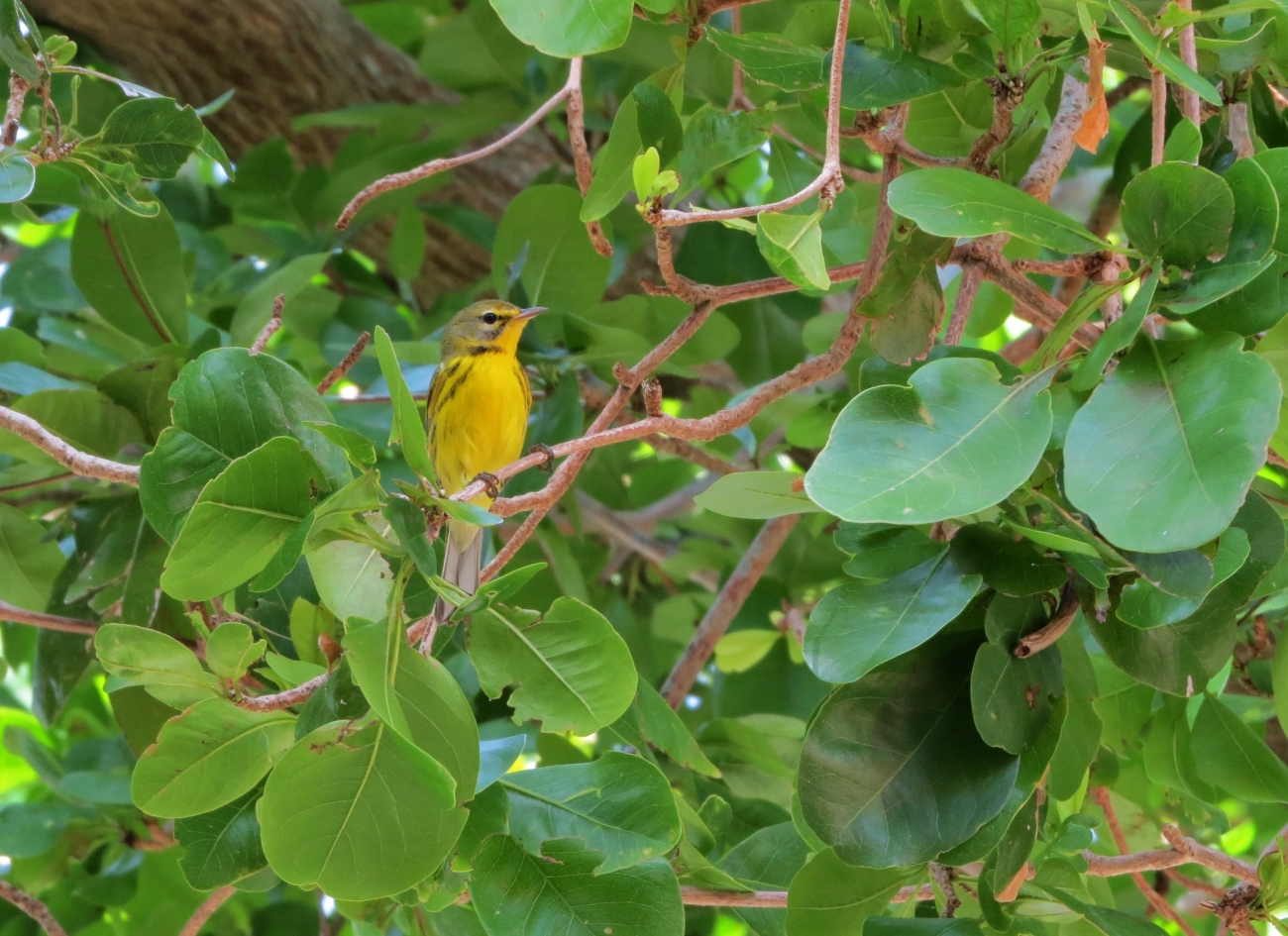
Six species of shrubland birds were identified as SGCN in Delaware.
| Common Name | Scientific Name | Tier |
|---|---|---|
| Willow Flycatcher | Empidonax traillii | Tier 1 |
| American Woodcock | Scolopax minor | Tier 2 |
| Black-billed Cuckoo | Coccyzus erythropthalmus | Tier 2 |
| Blue-winged Warbler | Vermivora cyanoptera | Tier 2 |
| Northern Bobwhite | Colinus virginianus | Tier 2 |
| Prairie Warbler | Setophaga discolor | Tier 3 |
Shrubland birds have declined throughout the US during the past several decades. According to the Northeast RSGCN list, the only shrubland bird species for which the region has “high responsibility” is the Blue-winged Warbler, with 48% of the continental population in the Northeast. However, the fact that these species are largely dependent on anthropogenic, early successional habitats makes them a high management.
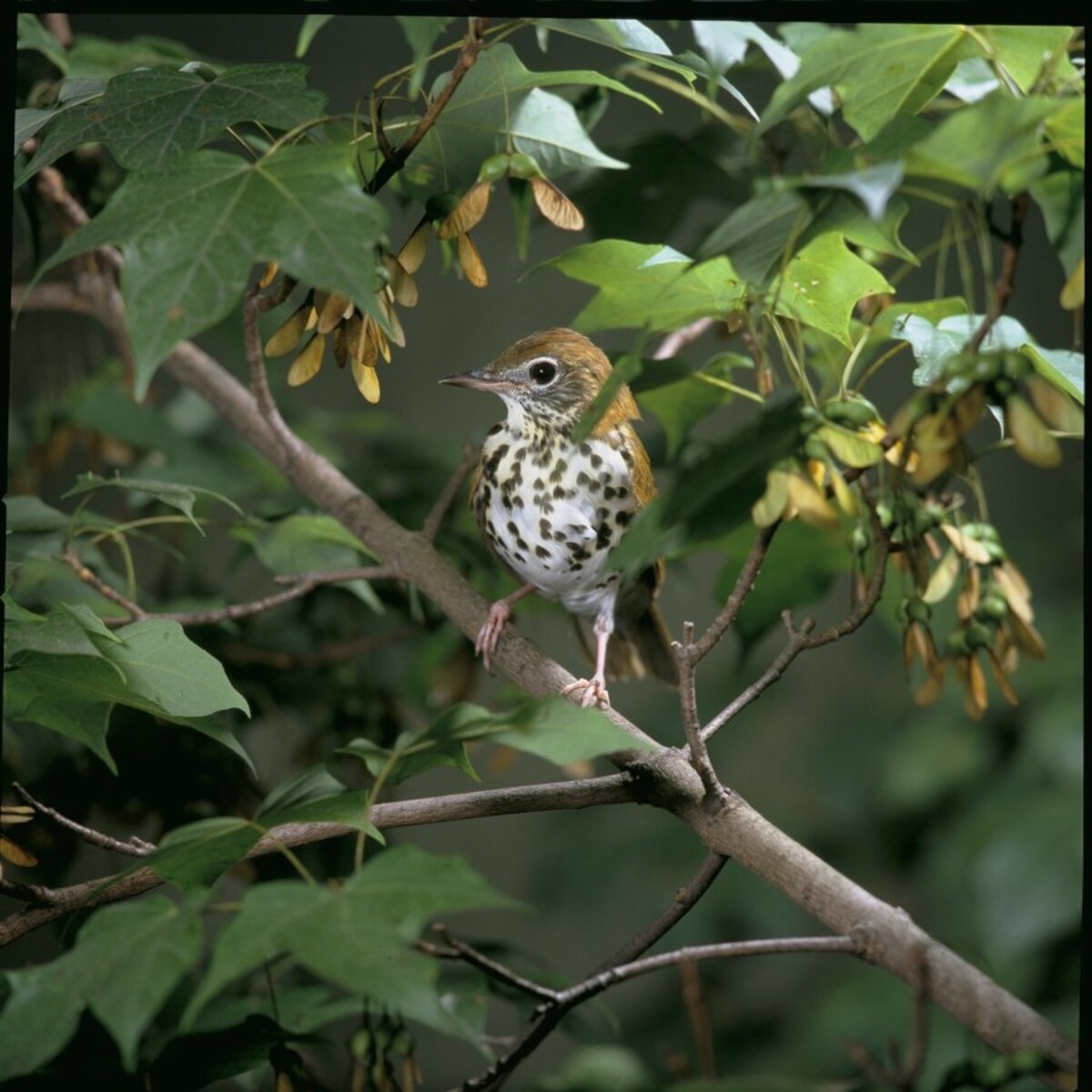
There have been substantial changes, both increases and declines, in forest bird abundances over the past 40 years (Anderson and Olivero Sheldon 2011). Species abundance changes have been correlated with degree of fragmentation, with the road-fragmented oak-pine forests showing declines in 11 species and increases in 10 species.
| Common Name | Scientific Name | Tier |
|---|---|---|
| Black-and-white Warbler | Mniotilta varia | Assessment Priority |
| Common Raven | Corvus corax | Assessment Priority |
| Yellow-throated Vireo | Vireo flavifrons | Assessment Priority |
| Ruffed Grouse | Bonasa umbellus | Extirpated |
| Broad-winged Hawk | Buteo platypterus | Tier 1 |
| Cerulean Warbler | Setophaga cerulea | Tier 1 |
| Hooded Warbler | Setophaga citrina | Tier 1 |
| Swainson's Warbler | Limnothlypis swainsonii | Tier 1 |
| American Redstart | Setophaga ruticilla | Tier 2 |
| Blackpoll Warbler | Setophaga striata | Tier 2 |
| Brown Creeper | Certhia americana | Tier 2 |
| Brown-headed Nuthatch | Sitta pusilla | Tier 2 |
| Northern Parula | Setophaga americana | Tier 2 |
| Rose-breasted Grosbeak | Pheucticus ludovicianus | Tier 2 |
| Veery | Catharus fuscescens | Tier 2 |
| Warbling Vireo | Vireo gilvus | Tier 2 |
| Yellow-throated Warbler | Setophaga dominica | Tier 2 |
| Baltimore Oriole | Icterus galbula | Tier 3 |
| Kentucky Warbler | Geothlypis formosa | Tier 3 |
| Red-headed Woodpecker | Melanerpes erythrocephalus | Tier 3 |
| Scarlet Tanager | Piranga olivacea | Tier 3 |
| Wood Thrush | Hylocichla mustelina | Tier 3 |
In fragmented landscapes and small habitat patches, direct threats such as predation and Brown-headed Cowbird (Molothrus ater) brood parasitism are higher, creating ecological sinks. Emerging threats include changes in forest composition from invasive insects, diseases, and climate change. It is also important to note that forest birds have varying structural requirements with some requiring older or younger seral stages, or different levels of structural diversity. Twenty-nine species of forest birds were identified as SGCN in Delaware.
| Common Name | Scientific Name | Tier |
|---|---|---|
| Yellow-throated Vireo | Vireo flavifrons | Assessment Priority |
| Broad-winged Hawk | Buteo platypterus | Tier 1 |
| Cerulean Warbler | Setophaga cerulea | Tier 1 |
| Brown Creeper | Certhia americana | Tier 2 |
| Rose-breasted Grosbeak | Pheucticus ludovicianus | Tier 2 |
| Yellow-throated Warbler | Setophaga dominica | Tier 2 |
| Scarlet Tanager | Piranga olivacea | Tier 3 |
Bird species sensitive to forest fragmentation are sometimes referred to as forest interior-dwelling (FID) species or forest area-dependent (FAD) species. There are some species that are sensitive to forest patch isolation, requiring a large amount of overall forest cover, but which do not necessarily require forest interior, so FAD is a broader term that also includes these species. Data on forest area requirements of Mid-Atlantic bird species was summarized by Robbins et al. (1989).
Heckscher (2000) conducted point count surveys of birds in the Great Cypress Swamp, the largest remaining contiguous forest area in Delaware, finding a total of 73 species, of which seven of the top 10 most abundant species were forest-dependent neotropical migrants. This study represents an important baseline survey of breeding species of coastal plain forests.
Despite many forest area-dependent species still being relatively common, there has been a general decline of 63% of Neotropical migrant species since 1966 (Sauer et al. 2007). Some flagship species for this decline include two that breed in Delaware: Wood Thrush (Hylocichla mustelina) and Cerulean Warbler (Setophaga cerulea).
Many species of FAD birds are Neotropical migrants. Other species include the Eastern Whip-poor-will (Caprimulgus vociferus) as a well as several hawk and woodpecker species. Although there are survival pressures on these species throughout their annual cycle, habitat loss and forest fragmentation on their breeding grounds certainly play a critical role. Jones et al. (2000) outlines in detail conservation measures necessary to conserve the remaining forest interior habitats in this region.
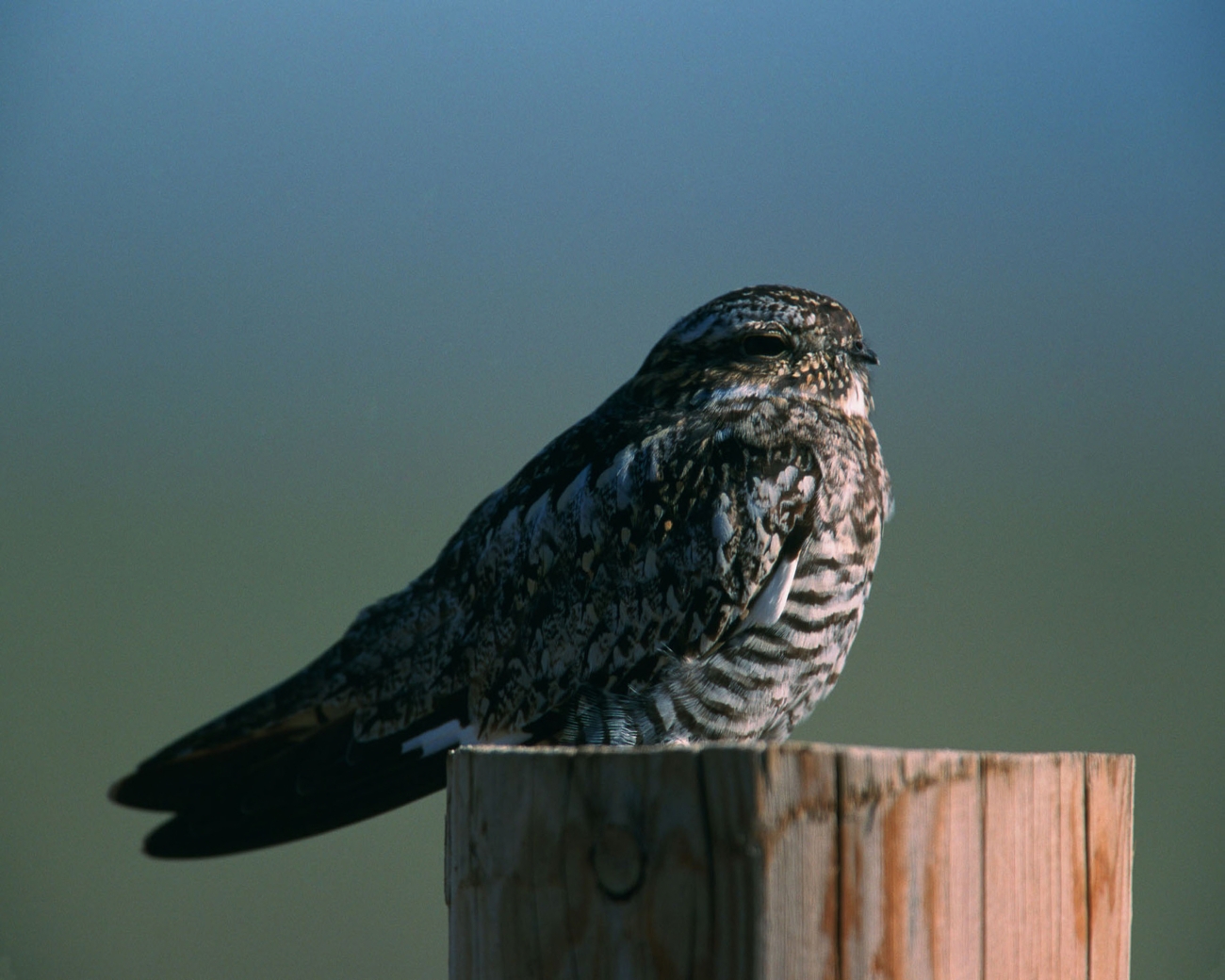
Six species of aerial insectivores were identified as SGCN in Delaware.
| Common Name | Scientific Name | Tier |
|---|---|---|
| Chimney Swift | Chaetura pelagica | Tier 1 |
| Bank Swallow | Riparia riparia | Tier 2 |
| Chuck-will's-widow | Antrostomus carolinensis | Tier 2 |
| Cliff Swallow | Petrochelidon pyrrhonota | Tier 2 |
| Common Nighthawk | Chordeiles minor | Tier 2 |
| Eastern Whip-poor-will | Antrostomus vociferus | Tier 2 |
Birds whose diet consists primarily of aerial invertebrates have declined dramatically, especially in the Northeast (Nebel et al. 2010). The reasons for this decline are not well understood, but potential climate change-related effects have been suggested as many of these species are long-distance migrants. Some of these species (Common Nighthawk, Chimney Swift) depend nearly exclusively on buildings and structures in urban areas for breeding sites, while others (Cliff Swallow, Barn Swallow, Bank Swallow, Purple Martin) depend largely on anthropogenic nesting habitats.
Cornell’s Nestwatch program is tracking nesting success of aerial insectivores that use nest boxes or artificial structures range wide through their volunteer network. The Nightjar Survey Network, a nationwide monitoring effort for nightjars, coordinates standardized survey routes for singing nightjars, with one route established in Delaware as of 2023.
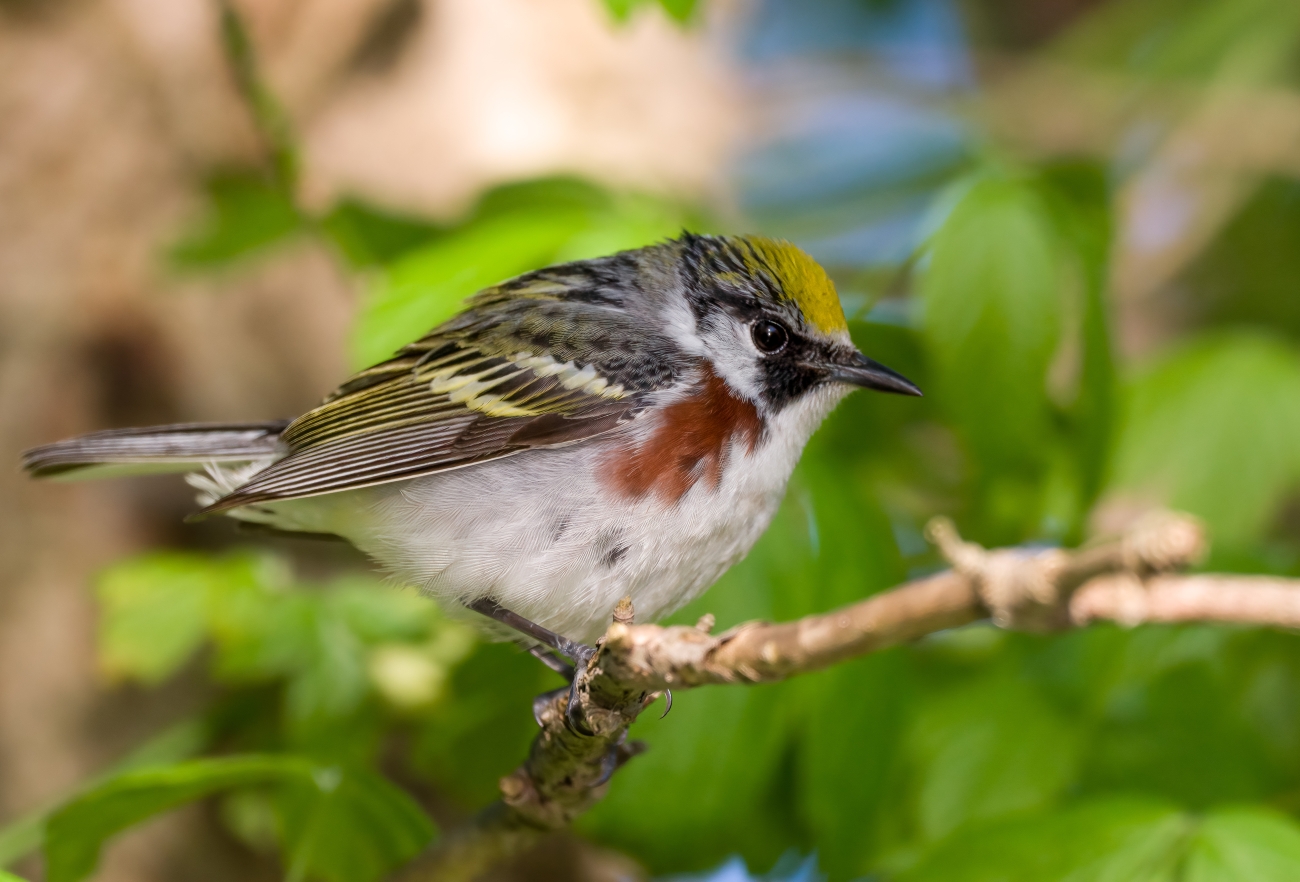
Five species of neotropical passage migrant birds were identified as SGCN in Delaware.
| Common Name | Scientific Name | Tier |
|---|---|---|
| Bicknell's Thrush | Catharus bicknelli | Tier 1 |
| Golden-winged Warbler | Vermivora chrysoptera | Tier 2 |
| Olive-sided Flycatcher | Contopus cooperi | Tier 2 |
| Chestnut-sided Warbler | Setophaga pensylvanica | Tier 3 |
| Least Flycatcher | Empidonax minimus | Tier 3 |
Delaware provides critical stopover habitat for Neotropical and temperate passage migrant songbirds. An extensive point count study by McCann et al. (1993) was the first to quantify significantly higher abundance and species richness of migrants at bayshore sites as compared to inland or ocean shore areas. Additional studies using weather surveillance radar to assess stopover distributions of landbirds during fall, showed that a high density of birds consistently use significant portions of New Castle, Kent, and Sussex Counties for stopover between migratory flights (LaPuma et al. 2012, Buler and Dawson 2014). The Delaware Piedmont, coastal forests along the Delaware Bay, and the Nanticoke Watershed appear to be especially important stopover areas (Heckscher pers. comm.).
Six species of migratory and wintering raptors were identified as SGCN in Delaware.
| Common Name | Scientific Name | Tier |
|---|---|---|
| Long-eared Owl | Asio otus | Assessment Priority |
| Peregrine Falcon | Falco peregrinus | Tier 1 |
| Sharp-shinned Hawk | Accipiter striatus | Tier 2 |
| American Goshawk | Astur atricapillus | Tier 3 |
| Golden Eagle | Aquila chrysaetos | Tier 3 |
| Northern Saw-whet Owl | Aegolius acadicus | Tier 3 |
| Rough-legged Hawk | Buteo lagopus | Tier 3 |
Large numbers of migrating raptors pass through Delaware each year, with especially large numbers observed in the fall. Two hawk watches in Delaware are operated by a collaboration between DFW, DPR, DOS, and The Delaware Nature Society (DNS). The Ashland Hawk Watch has historically been located at the DNS Ashland Nature Center in the Red Clay Valley of the Piedmont and has documented large flights of Broad-winged Hawks during fall migration. The Cape Henlopen Hawk Watch is located along the Atlantic Ocean shore of Cape Henlopen State Park and documents numerous raptors crossing over Delaware Bay from Cape May, as well as those migrating down the western shore of the Bay. Major threats to these species include collisions with wind turbines and communications towers and loss of stopover foraging and roosting habitat.
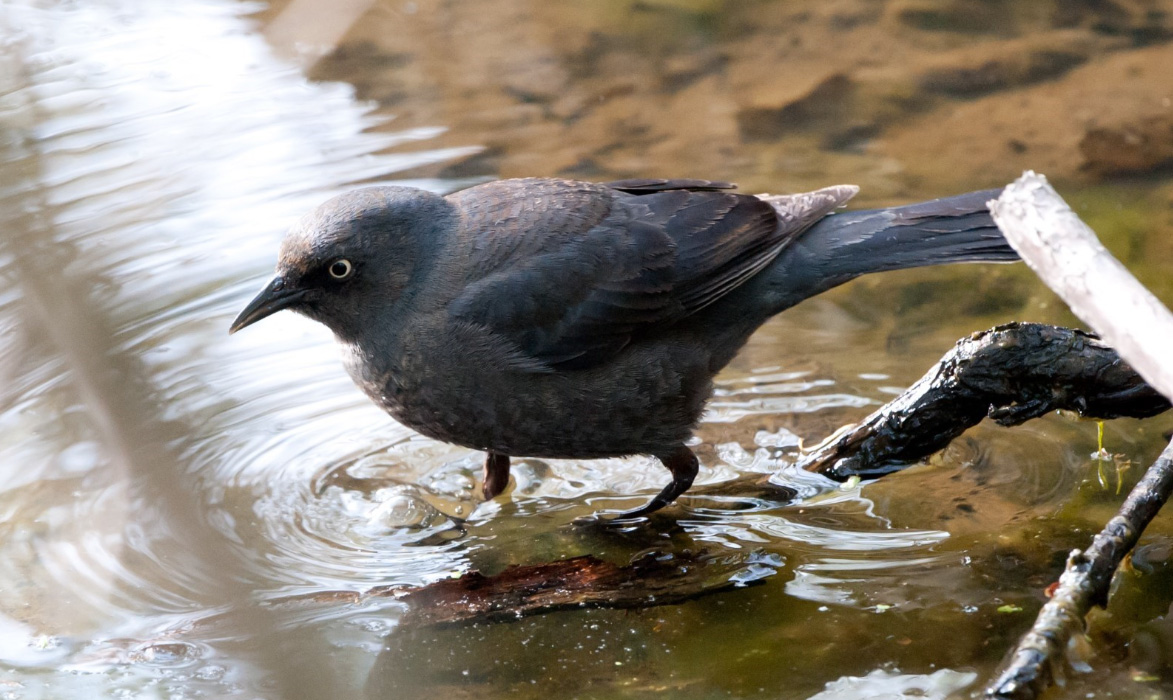
| Common Name | Scientific Name | Tier |
|---|---|---|
| Rusty Blackbird | Euphagus carolinus | Tier 1 |
| Pine Siskin | Spinus pinus | Tier 2 |
| Red-breasted Nuthatch | Sitta canadensis | Tier 2 |
| American Tree Sparrow | Spizelloides arborea | Tier 3 |
| Purple Finch | Haemorhous purpureus | Tier 3 |
| Snow Bunting | Plectrophenax nivalis | Tier 3 |
Several SGCN birds are regular winter visitors in Delaware. Irruptive species such as Pine Siskin (Carduelis pinus), and Red-breasted Nuthatch (Sitta canadensis) are very abundant some years and absent, or nearly so, in others. These birds are grouped together here even though they may use different habitats because their seasonal presence in the state dictates different management actions than those for resident species.
The Rusty Blackbird (Euphagus carolinus) is a boreal-breeding, forested wetland-dependent species that has declined 85-95% since the early 1900s (Greenberg and Droege 1999). Rusty Blackbirds use Delaware’s non-tidal freshwater wetlands and floodplain forests during migration and to a lesser extent in winter.
Related Topics: action plan, conservation, draft, fish and wildlife, habitat, plan, species, wildlife
Delaware's Governor
State Agencies
Elected Officials
General Assembly
Delaware Courts
State Employees
Cities & Towns
Delaware State Code
State Regulations
Business First Steps
Phone Directory
Locations Directory
Public Meetings
Voting & Elections
Transparency
Health Insurance
Tax Center
Personal Income Tax
Privacy Policy
Weather & Travel
Contact Us
Corporations
Franchise Tax
Gross Receipts Tax
Withholding Tax
Delaware Topics
Help Center
Mobile Apps
E-mail / Text Alerts
Social Media


Built by the Government Information Center
©MMXXVI Delaware.gov