DNREC Menu
This Delaware Wildlife Action Plan (DEWAP) presents a 10-year strategy for keeping today’s wildlife from becoming tomorrow’s memory. It is comprehensive in terms of the species, habitats, issues, and actions it addresses, in order to fulfill a mandate making Delaware eligible for federal funding under the State Wildlife Grant program (SWG). These funds provide a historic opportunity to reverse the decline of wildlife populations and the loss of key habitats.
To develop this 10-year strategy, DNREC leans on our vision and mission that envisions a Delaware that offers a healthy environment where people embrace a commitment to the protection, enhancement and enjoyment of the environment in their daily lives; where Delawareans’ stewardship of natural resources ensures the sustainability of these resources for the appreciation and enjoyment of future generations; and where people recognize that a healthy environment and a strong economy support one another.
Although one of the smallest of the 50 States, Delaware is home to a diversity of wildlife and plants due to its range of habitats between the Atlantic Ocean coastline and the Piedmont border with Pennsylvania. More than 2,800 animal species and 2,400 plant species can be found in Delaware, and nearly 20% of the wildlife and plants are designated Species of Greatest Conservation Need (SGCN) for the 2025 revision. This Plan provides a blueprint for that diversity to continue to thrive. Although the Delaware Department of Natural Resources (DNREC) Division of Fish and Wildlife (DFW) will play a lead role in the DEWAP’s continued development and in coordinating implementation, the Plan is intended for all who can actively engage in conservation efforts.
The 2025 DEWAP addresses each of the criteria required by Congress under Public Laws 107-063 (FY02), 108-447 (FY05), and 109-54 (FY06). These laws provide funding and administration through the U.S. Fish and Wildlife Service (USFWS), Office of Federal Assistance and State Wildlife Grant Program. This document is organized in a manner that addresses each of the eight required elements of SWAPs in the order they are identified in the law. It presents the species of greatest conservation need (SGCN), their key habitats, issues and research needs, conservation actions, how the Department of Natural Resources and Environmental Control (DNREC) will monitor effectiveness, coordinate with conservation partners and foster public participation in wildlife conservation efforts.
From coastal shorebirds to forest mammals, Delaware is home to exceptional biodiversity.

Identified through data and expert consensus, prioritized for conservation action.

Species are grouped by priority—from critical concern to broader regional responsibility.
Revised every decade to reflect new data, threats, and conservation progress.
The 2025 DEWAP is the second revision, preceded by the 2007 and 2015 versions. This revision builds on the knowledge gained over the last ten years. Since 2005, Delaware has been involved with several state, regional, and national projects to address conservation and monitoring of SGCN and their habitats. The 2025 DEWAP was a two-year process that involved the review of a comprehensive inventory of natural resource information and conservation programs and included consultation with a diversity of stakeholders in the state, region and nation. Information on the full array of wildlife and wildlife conservation efforts in Delaware was solicited, researched, and compiled. From these data, DNREC DFW, additional taxonomic experts, and conservation partners identified Delaware’s SGCN.
The 2025 SGCN list was created using updated data and criteria. The updated process resulted in the addition of 391 previously unlisted wildlife and plant taxa, for a total of 1,019 SGCN. Each SGCN has a status rank or tier, which denotes the degree of conservation need for that species. Tier 1 species are in the highest and most urgent need of conservation and include the rarest species in the state. Tier 2 species are of moderate conservation concern and urgency in Delaware, and Tier 3 species are listed as SGCN for reasons such as population declines or high regional responsibility and are still relatively more common in Delaware.
Includes the rarest species in Delaware–those facing the most immediate and critical conservation needs.
Species with notable conservation concern or urgency. These may be at risk but are not as critically imperiled as those in Tier 1.
Species with declining populations or high regional conservation responsibility. Still relatively more common in Delaware.
Nearly all of Delaware’s habitats are used to some extent by at least one SGCN. Wildlife habitats continued to use existing classification systems, namely the Northeast Terrestrial Wildlife Habitat Classification, Northeast Aquatic Habitat Classification System, Coastal and Marine Ecological Classification Standard, and the Atlantic Coastal Fish Habitat Partnership habitats. For the 2025 Revision of the DEWAP, wildlife habitats retain their spatial prioritization using existing frameworks based on principles of landscape ecology and conservation biology, providing a consistent framework to help identify and prioritize areas for natural resource protection.
Some of the highest ranked statewide issues affecting Delaware’s SGCN are climate change and severe weather (including salinity changes and intrusion, effects on dams and impoundments), invasive species (primarily plant species) and resource needs. Other important issues include habitat loss or conversion from residential and commercial development, agriculture, and water management (ditching, extraction, retention ponds, dams, etc.). To address these issues, conservation actions were developed at the statewide level, habitat level, and SGCN ecological group level. Review, revision and development of these issues and actions included many stakeholders and partners who will be needed in the implementation of the DEWAP priority actions.
Monitoring Delaware’s SGCN, key habitats, and the effectiveness of the conservation actions provides important and necessary information for DNREC DFW and its partners. It will allow these agencies and organizations to determine the most efficient methods to reduce and eliminate issues facing the state’s fish and wildlife resources. Monitoring is also necessary to track the success of conservation actions, ensuring the most efficient use of limited staffing and funds. The 2025 DEWAP includes several tools for information management and conservation planning to track the implementation and effectiveness of conservation actions. Examples of these tools include the Northeast Lexicon Project, the Northeast State Wildlife Action Plan Database, and the Tracking and Reporting Actions for the Conservation of Species System of the U.S. Fish and Wildlife Service’s Wildlife and Sport Fish Restoration Program.
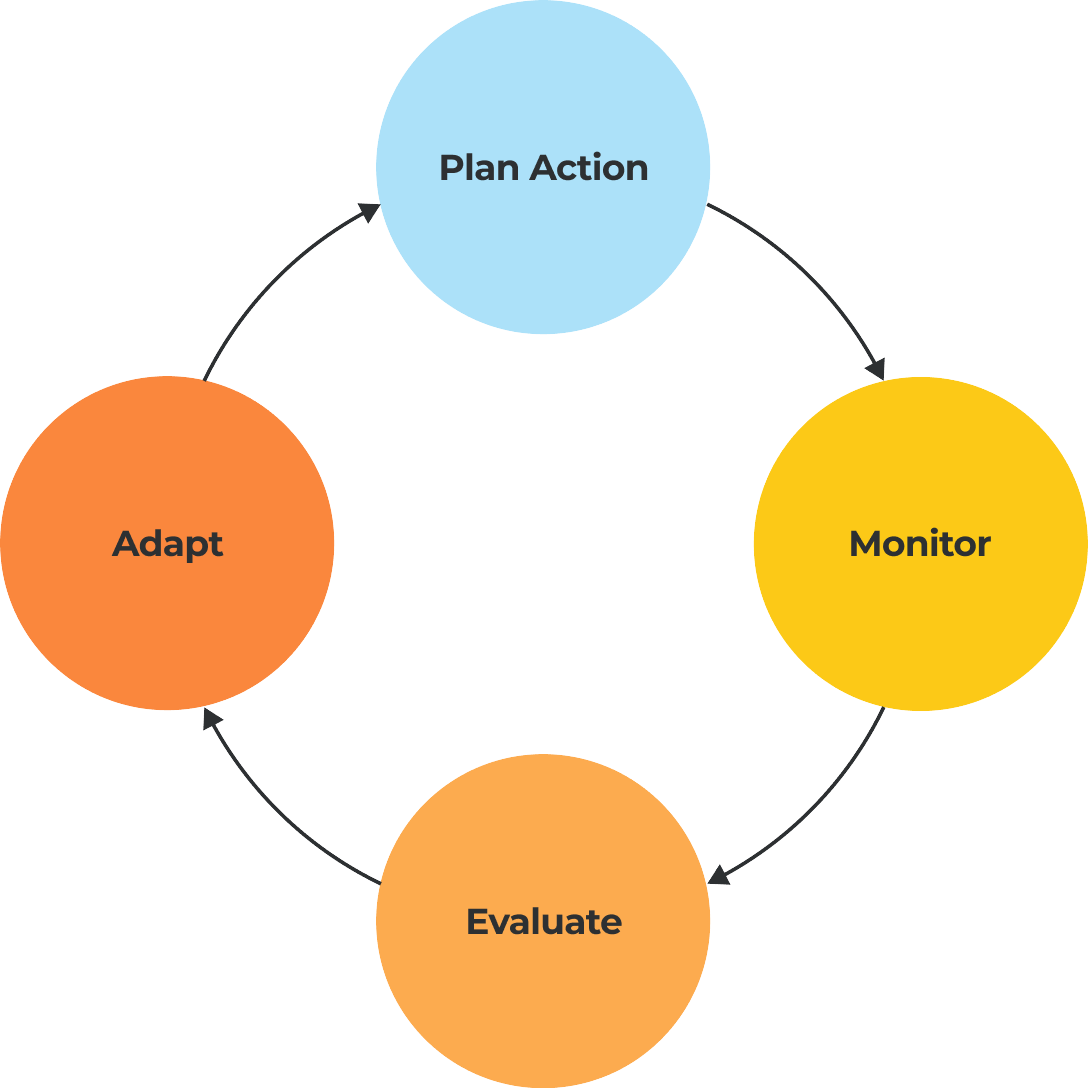
Delaware’s effectiveness monitoring framework starts with a specific conservation action, and then the action is linked to relevant issues, habitats and species. Next, indicators and measures are selected for each step, and monitoring data are used to track and populate those indicators. Taken together, the measurements of these indicators will provide the essential information needed for evaluating the effectiveness of conservation actions. Conservation actions will be refined, or new actions will be developed based upon whether the original actions were effective in aiding the state’s SGCN and key habitats (i.e., adaptive management). In addition to these adaptations, the DEWAP will undergo a complete review every ten years.
Effective conservation starts with a specific action. It connects to the species, habitats, and threats it is meant to protect. Indicators track progress. Monitoring makes the results meaningful.
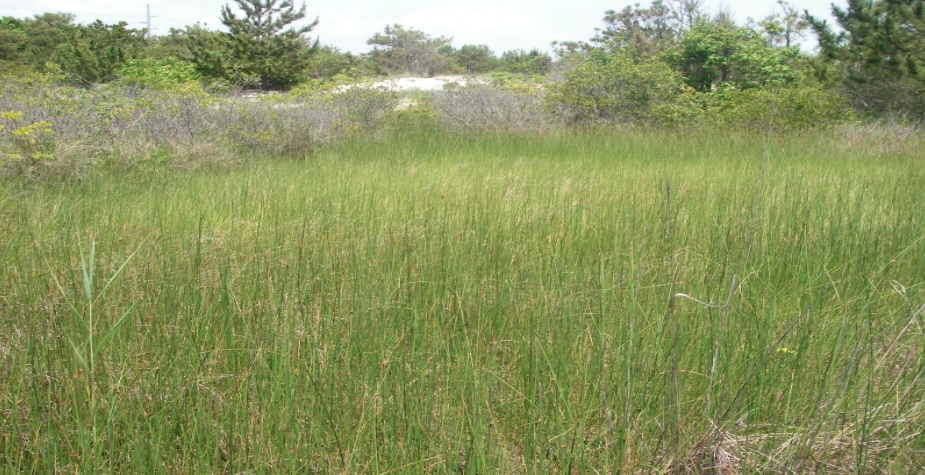
To illustrate the how each of the eight required elements was addressed by the DEWAP, the Bethany Beach firefly (Photuris bethaniensis) is used as an example. Discovered in 1949 and described by Frank McDermott in 1953, this firefly was named for the only location it is known to inhabit. Restricted to two sites among the interdunal wetlands along Atlantic Ocean beaches near Bethany Beach, Delaware, subsequent surveys for this globally-rare species yielded no new records until 1994 when biologists from the Delaware Natural Heritage Program rediscovered the species in the same wetlands presumed surveyed by McDermott. This discovery also confirmed the strong habitat association between the Bethany Beach firefly and the dynamic interdunal wetlands that provided the obligate habitat required to maintain a population of this species, raising the need for effective habitat management and protection to allow the species to persist into the future. DNREC DFW staff and regional experts on Delaware’s invertebrate fauna considered the elevated status of the species, its distribution and abundance, and conservation efforts employed to date to support both the species and its habitat. In consideration of that information, the Bethany Beach firefly was examined as a candidate SGCN.

Any species is considered a candidate for SGCN status if it occurs in Delaware and meets any one of the nine criteria below:
As the criteria above reveal, the Bethany Beach firefly met criteria #1, as it is a proposed federally threatened species, criteria #2, as it has a status of endangered at the state level, criteria #5 as a designated RSGCN for the Northeast Region It is very important to note, that this species is one of only two known wildlife species endemic only to Delaware (criteria #8), and so the Delaware state responsibility is considered high. For each prior iteration of the DEWAP this species was determined to be a Tier 1 SGCN, so was automatically considered for 2025 (Element 1). The Bethany Beach firefly is known only to use interdunal wetland habitats (Element 2). These habitats are quite rare in Delaware and restricted to oceanfront beaches and are at risk from a number of threats ranging from disturbance and degradation, natural processes and increased sensitivity to sea level rise (SLR), climate change and invasive species (Element 3). These wetland systems are particularly vulnerable to sea level rise and will unlikely persist without direct habitat management (Element 4). Coordinated monitoring of coastline dynamics and the status of populations and distribution along the coast are direct actions that can be undertaken to adaptively manage the habitat and address threats (Element 5) and provide important, relevant and reliable data to be used and considered in future revisions and updates to the overall plan (Element 6). Identifying conservation actions through monitoring will allow DNREC DFW, conservation partners and the public an opportunity to have a direct role in the conservation of this unique species and maintain its contribution as a component of Delaware’s biodiversity (Element 7), completing a process to guide conservation for this species and many other SGCN that include public input at each step (Element 8).
Species of Greatest Conservation Need presents an overview of Delaware’s wildlife, including information on the distribution and abundance of species. There is information about the taxonomic groups from which the SGCN are derived, with a total of 165 bird species, 37 herpetofauna species, 26 mammal species, 100 fish species, 365 invertebrate species, and 326 plant species.
Habitats examines Delaware’s habitats in relation to the state’s wildlife, especially its SGCN, as wildlife and plants cannot survive and thrive without suitable habitat. The habitats are discussed in a regional context, and the habitat classification is explained. Habitat extent and condition is described in detail and habitats are linked to a web-map for distribution information for all habitats for which there was sufficient data. Detailed habitat associations are provided for the SGCN, a comprehensive resource that had not been compiled for the state.
Threats to SGCN and Habitats analyzes the issues affecting SGCN and their habitats in Delaware. Some of these issues are statewide, while others affect habitat groups, specific habitat types, species ecological groups, or certain specific taxa. Conservation Measures Partnerships threat classification categories were used as the Delaware threat categories and given priority ranking, in line with the Northeast Regional Lexicon and Synthesis.
Conservation Actions recommends a broad range of actions to address the identified issues impacting Delaware’s SGCN and their habitats. Other conservation and management plans have identified many goals or objectives for addressing wildlife conservation threats, and thus these were surveyed carefully and integrated into this DEWAP Revision. Using TRACS action categories, this section presents hundreds of ranked inventory/research/monitoring needs and conservation actions that will serve as a detailed blueprint for addressing conservation in Delaware throughout the next decade.
Species and Habitat Monitoring discusses the need for effective monitoring and adaptive management to assess trends affecting wildlife and the success of conservation actions. Delaware already has a number of effective monitoring programs in place, outlined in this section. Coordination of monitoring efforts and the effective sharing of information are of key importance to the implementation of the DEWAP, and continued efforts in developing new tools to aid in this process are important, discussed here, and repeatedly identified as a high-ranking conservation action in Conservation Actions.
Review, Revision and Working Together describes the process of conducting the comprehensive review and revision to produce the 2025 DEWAP, and the timeframe by which the DEWAP will be reviewed and updated. The process by which the 2025 DEWAP SGCN, Habitats, Threats and Actions were reviewed and revised is described in detail. Moving forward, the goal is to maintain the DEWAP as a living document, keeping it as up to date as possible, acknowledging data gaps as they are filled and identifying and addressing new ones. This section also describes the review process and schedule of other conservation and management plans in the state. Review and Revision also describes the Northeast SWAP Database, whichis a data management tool that provides a structure for storing and querying data collected by the individual states as part of their SWAP revisions.
Review, Revision and Working Together also describes coordination with partners and stakeholders in the development of the 2025 DEWAP and how this coordination and collaboration will continue through the next 10-year cycle. Past and potential opportunities to use existing and new partnerships to help implement the DEWAP are also described here. Members of the Oversight, Revision Development, and Technical Review Teams are identified. Work leading up to publication of the current document has proceeded under the framework of a stakeholder and public input review plan that included partner and stakeholder meetings as well as correspondence and communication with the public through websites, published articles, news releases, and a series of public listening sessions.
In conclusion, there are many challenges facing Delaware’s wildlife species and the habitats and ecosystems that support them. The intent of the DEWAP is to identify those challenges and to recommend important steps that can be taken to conserve wildlife in the state. The tools exist, the networks and partnerships are in place, and the conservation measures needed to protect Delaware’s wildlife have been identified and are within reach.
This Wildlife Action Plan is a community document designed for public use. The information it contains will be widely disseminated to provide a strong foundation as well as inspiration for the work ahead.
By itself, this Plan cannot guarantee the future of wildlife in Delaware. Legislators, local government officials, park and refuge managers, conservationists, business leaders, educators, and concerned individuals must all take important, necessary steps toward that end. It is Delaware’s Wildlife Action Plan to keep today’s wildlife from becoming a memory over the next decade.
Related Topics: action plan, conservation, draft, fish and wildlife, habitat, plan, species, wildlife
Delaware's Governor
State Agencies
Elected Officials
General Assembly
Delaware Courts
State Employees
Cities & Towns
Delaware State Code
State Regulations
Business First Steps
Phone Directory
Locations Directory
Public Meetings
Voting & Elections
Transparency
Health Insurance
Tax Center
Personal Income Tax
Privacy Policy
Weather & Travel
Contact Us
Corporations
Franchise Tax
Gross Receipts Tax
Withholding Tax
Delaware Topics
Help Center
Mobile Apps
E-mail / Text Alerts
Social Media


Built by the Government Information Center
©MMXXVI Delaware.gov