DNREC Menu

Outdoor Delaware is the award-winning online magazine of the Delaware Department of Natural Resources and Environmental Control. Articles and multimedia content are produced by the DNREC Office of Communications.
At the Delaware Department of Natural Resources and Environmental Control, Earth Day is far too important and multifaceted to be confined to a single 24-hour period.
Though Earth Day normally takes place on April 22, in Delaware, this holiday is transformed into a monthlong event recognizing the importance of preserving our natural world. For 2025, DNREC has planned tree plantings, beach cleanups, hikes, talks and more. The public can learn and register for these events at de.gov/earthday.
Nationally, Earth Day began in 1970. The brainchild of U.S. Sen. Gaylord Nelson of Wisconsin, the inaugural occasion was seen as a way to spotlight threats to the health of the nation’s environment.

As the U.S. Environmental Protection Agency wrote in 1990, environmental problems such as air and water pollution and the unintended consequences of pesticides “were proliferating like a many-headed hydra, a monster no one could understand let alone tame or slay” at the time.
Events like Ohio’s Cuyahoga River catching on fire in 1969 due to oil in the water and the 1962 publication of the book “Silent Spring” helped sow the seeds for a national day dedicated to recognizing the value provided by our natural world and the danger human actions can place it in.
The first Earth Day was a scramble but proved to be a rousing success, with an estimated 20 million Americans gathering for rallies, teach-ins and speeches around the country. Today, according to the nonprofit EARTHDAY.ORG, more than 1 billion people globally recognize Earth Day.
DNREC archives show issues of Outdoor Delaware’s predecessor, the print magazine the Delaware Conservationist, made no mention of Earth Day in the early 1970s. That’s a far cry from 2025, when schoolchildren throughout Delaware learn about the occasion and its purpose from a young age.
Indeed, the environmental movement has progressed a great deal in the past half-century or so, evolving to reflect the changing views and concerns of the American public. Climate change, for instance, has emerged as a driving force for many worried about the state of our natural world.
Delaware Center for the Inland Bays Executive Director and former DNREC Secretary Christophe Tulou attended a commemoration of the very first Earth Day in Washington 55 years ago. To him, the occasion is a reminder that as much as Delaware has embraced the principles behind Earth Day, one state — especially one as small as Delaware — cannot do it alone.
Additionally, the First State’s location means it is deeply impacted by air and water pollution from nearby states.
“We are at the end of America’s tailpipe, so we are uniquely vulnerable,” Tulou said.
The first Earth Day and its early successors were able to successfully tackle several major issues that could not be handled at the state level. EPA was created in 1970, formed from a reorganization that shifted most environmental responsibilities under one large agency. 1970 also saw an update to the Clean Air Act, with the Clean Water Act following two years later.
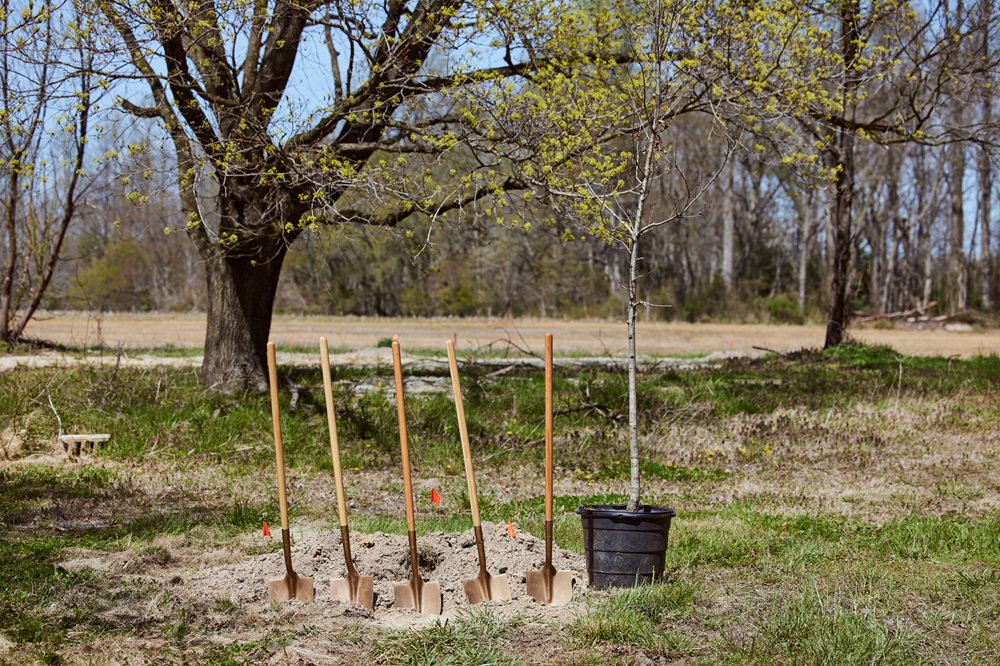
Locally, 1970 is notable in environmental history for another reason: that’s the year DNREC was created. The agency initially consisted of the Division of Fish and Wildlife, the Division of Parks, Recreation and Forestry, the Division of Environmental Control, the Division of Soil and Water Conservation and several advisory councils. Previously, jurisdiction for environmental issues had been split among six different state commissions.
Meanwhile, the Delaware General Assembly passed the landmark Coastal Zone Act limiting heavy industry along our state’s coastline in 1971 and the Beach Preservation Act in 1972. The Coastal Zone Act was promoted by then-Gov. Russ Peterson and is now recognized as playing a major role in safeguarding our coastal resources for their unique ecosystems supporting the recreation and tourism industries in particular.
The Coastal Zone Act was proposed by Peterson to facilitate responsible economic development that is compatible with the preservation of Delaware’s coastal resources. The act also provided provisions for heavy industry and manufacturing uses in operation prior to 1971, some of which continues more than 50 years later.
Through these laws, Peterson’s vision of economic development balanced with natural resource preservation has helped preserve the Delaware way of life.
Early in the history of Earth Day, the environmental movement successfully took aim at “low-hanging fruit” like sewage leaking into waterways, air pollution and the pace of development, Tulou said. There was a general agreement that something needed to be done to reduce pollution, improve public health and allow future generations to enjoy the rich bounty supplied by our planet, he said.
Unquestionably, changes put into place around the time of the initial Earth Day have had a positive effect on our country.
According to an analysis published in the Journal of Pediatrics, for instance, the Clean Air Act prevented around 435,000 premature deaths and saved roughly $50 trillion nationally from 1970 to 2020. Cleaner air means fewer people getting respiratory illnesses, which is especially beneficial for children.
The Clean Water Act, meanwhile, significantly expanded water monitoring, and at the national level, it prevents 350 million tons of pollutants from entering our streams, ponds, lakes, rivers, bays, seas and oceans annually, per the National Wildlife Federation.
Today, the challenge is different.
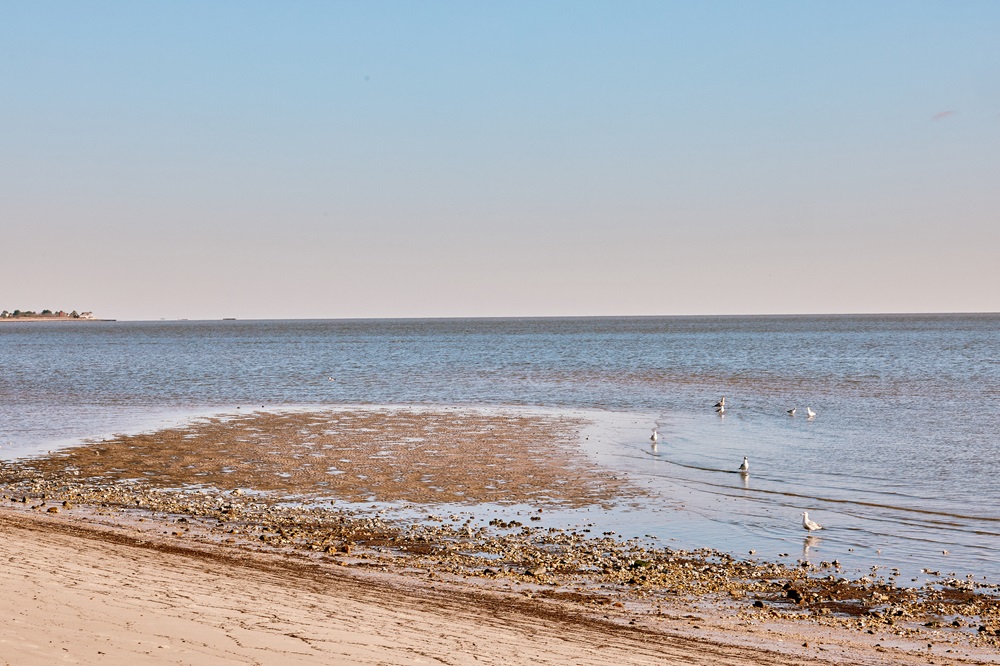
Issues are more complicated, such as managing forever chemicals like PFAS and the continued reduction of nonpoint source pollution required to meet water quality goals set by the Clean Water Act. These require buy-in not just from policymakers but from the public, including potential lifestyle changes with an eye toward a more sustainable future.
Actions at the state and national levels can improve water quality at the local and regional levels, but because communities across the globe are interconnected in so many ways, the problems cannot be resolved by Delaware or even the United States alone. Still, many elected officials and environmental experts recognize the importance of taking charge and leading by example.
As the lowest-lying state with an average elevation of around 60 feet, Delaware is especially vulnerable to sea level rise. Fortunately, many nearby states have bought in, and Delaware is today part of a coalition of Mid-Atlantic and Northeast states focused on reducing greenhouse gases, to name just one partnership.
Continuing the shift toward cleaner, renewable energy is a huge part of what can and should be done, Tulou noted. Delaware has taken big strides toward green energy in recent years, with both DNREC and individual legislators seizing the initiative. The private sector has also bought in to a degree as consumers have begun requesting products that have less of an impact on the environment.
Electric vehicles, for instance, were seen by many just a few years ago as prohibitively expensive experimental technology. But they are becoming increasingly mainstream, with manufacturers placing more focus on zero-emission vehicles in response to consumer demand.
According to the U.S. Department of Energy, the number of electric, hybrid electric and plug-in hybrid electric vehicles in the United States increased from about 4.3 million to 12.3 million from 2016 to 2023, while the number of such vehicles in Delaware leapt from about 12,000 to 30,000 over the same timespan. The EV market is expected to continue to expand in the coming years.
“We can’t responsibly spend time and resources protecting our residents from sea level rise and flooding and more powerful storms and more extreme heat, and not take steps to prevent the residents 20 and 50 years from now from having it worse than we do,” DNREC Secretary Greg Patterson said. “That means taking actions to help communities along our coast adapt and become more resilient to current and future conditions, and also take steps to slow the rate of climate change, including and especially transitioning to cleaner energy.”
In the words of Tulou, it’s a fight we cannot afford to lose. And the process is never-ending.
“Earth Day of today ought to be about not being complacent about the success the Earth Days of the past have provided to us,” Tulou said. “We cannot afford to believe, as a nation, that because we have clean water and cleaner air, we can stop working to protect those resources.”
1970 is also notable in environmental circles in Delaware for another reason: that’s the year of John Stenger’s crusade to save the dunes at Cape Henlopen State Park in Delaware.
The park is home to the Great Dune, a roughly 80-foot-tall sand hill that is the largest such heap between Cape Cod, Massachusetts, and Cape Hatteras, North Carolina. It has been a popular spot for locals to hike and observe the Delaware Bay and Atlantic Ocean for centuries.
But for a few decades, Cape Henlopen also played host to a facility owned by the U.S. military, including Fort Miles, which saw use as a defense installation during World War II. In 1970, the Army decided to convert some of its land into a vacation spot for officers.

John Stenger learned of the plans on April 21 after a friend spotted a bulldozer destroying part of the dune. A science teacher at Lewes High School and a part-time naturalist at Cape Henlopen State Park, Stenger had previously fought to stop Lewes from using a nearby location as a dump and selling sand from the dune. When he was told what the Army was up to, he became enraged and called the governor, Peterson, who was unavailable.
Perhaps any attempt to publicize this issue and save the dune would have died there if not for Stenger’s children. His daughter Cathy, a senior in high school at the time, urged him to make a stand. In response, Stenger questioned how he would do so, even asking if he should lie down in front of a bulldozer, family members later recalled.
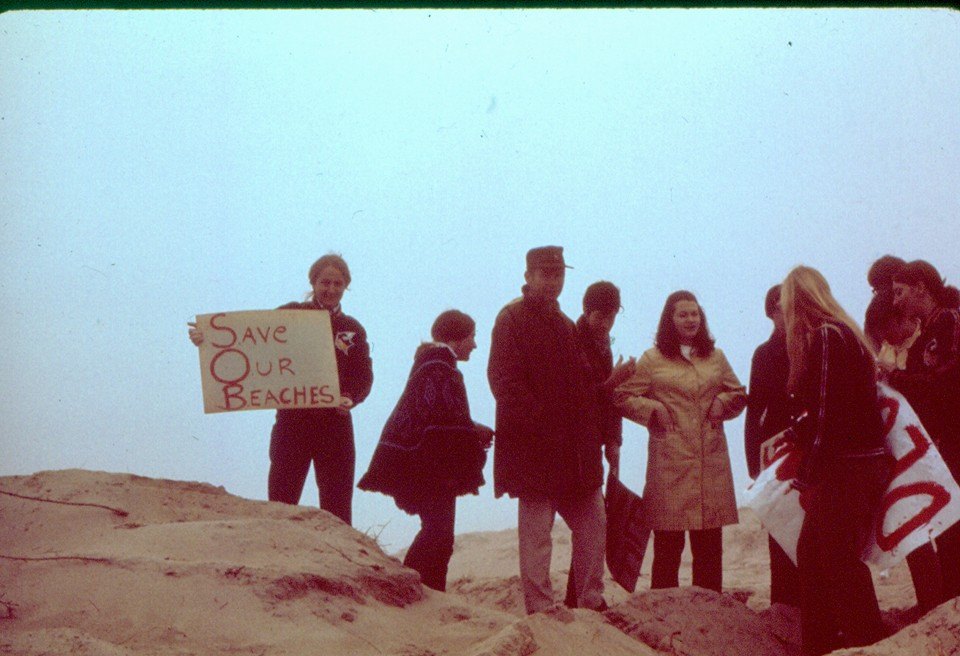
Though he ultimately did not do that, he mobilized a miniature army, with his children calling friends in an attempt to arrange a protest. Because the family only had one phone, they essentially started a giant game of Telephone, with Stenger’s kids taking turns contacting classmates and urging them to pass the message along. Three of Stenger’s four children — daughters Cathy and Nancy and son Bob — would ultimately attend the protest, though son John could not be there as he was in college.
Stenger also spoke to some college students that night, inviting them to the protest the following day. While he was nervous about getting fired from his teaching job, he felt determined and received additional courage from his children.
“At the time he had no idea he was making history, but he saw himself as somebody who could change things, and I knew him to be that way,” Cathy Martin said.
Come the next day, April 22, Stenger and dozens of students (only some of whom actually had parental permission) gathered by the Great Dune. They confronted an Army officer, who called in his superiors. The group was buoyed by the arrival of a local reporter, who took a photo that ran on the front page of a local newspaper.
Coincidentally, one of the Army higher-ups who later arrived on the scene was with the First Cavalry Division, a unit Stenger had served in during World War II.
Stenger’s protest proved to be a catalyst, and the Army decided to stop construction activities at Cape Henlopen for the time being. Gov. Peterson and the state’s congressional delegation got involved, and lawsuits were filed. Eventually, the Army backed off, and in 1979, the General Assembly passed a law protecting the dunes and surrounding acreage.
The property “shall be forever administered” by DNREC “for the public benefit as areas of public recreation, conservation and/or nature education and may not be used for private benefit to the detriment of such public benefit.”
Stenger gives significant credit to attorney Bill Chasanov, who took on the case for very little money. Like Stenger, he did so because he cared.
For Stenger, at least part of his passion for the natural world can be traced back to his upbringing in West Virginia, where he observed the harmful environmental impacts of strip mining, his daughters Cathy and Nancy recalled. When he moved to Delaware for a teaching job, he fell in love with Cape Henlopen.
“Everything he had was going to protecting that land and teaching people about how wonderful a resource it was,” Nancy Stenger said.
The fact the protest took place on the inaugural Earth Day was a coincidence, but it likely helped draw attention to the effort, she noted.
Stenger would continue his environmental work, even starting an environmentally minded nonprofit funded in part by generous donations from as far as Germany, and he received awards from the Delaware Wildlife Federation and General Motors for his activism. Now, he’s come full circle, from being criticized by some residents of the area who would profit from development to being honored by the city of Lewes this month.
“One of the things we learned without question is that one person in this world can make a difference,” Nancy Stenger said.
While his daughters wish he had received more credit, they also noted their father never did it for the recognition — he was motivated by the simple fact he believed protecting the Earth was right.
For the student participants, it was an unforgettable experience that taught them important lessons about the value of our natural resources and standing up for your convictions. More than 40 years later, some of them would connect online to relive the day, sharing memories and marveling at what they accomplished. It’s a reminder even a small grassroots effort can grow to effect change.
Related Topics: cape henlopen, climate change, conservation, dunes, earth day, education, fun, outdoor delaware, people, pollution, science
Delaware's Governor
State Agencies
Elected Officials
General Assembly
Delaware Courts
State Employees
Cities & Towns
Delaware State Code
State Regulations
Business First Steps
Phone Directory
Locations Directory
Public Meetings
Voting & Elections
Transparency
Health Insurance
Tax Center
Personal Income Tax
Privacy Policy
Weather & Travel
Contact Us
Corporations
Franchise Tax
Gross Receipts Tax
Withholding Tax
Delaware Topics
Help Center
Mobile Apps
E-mail / Text Alerts
Social Media


Built by the Government Information Center
©MMXXVI Delaware.gov