DNREC Menu

Forests and urban trees cover nearly one-third of Delaware’s land area and provide critical benefits for wildlife habitat, clean water and community well-being. They also support a strong forestry industry that employs nearly 2,000 people and contributes hundreds of millions of dollars to the state’s economy. At the same time, Delaware is losing more than 1,000 acres of forest each year due to development, reducing the state’s natural ability to store carbon.
Forests and trees are a net carbon sink, making their protection and expansion essential to Delaware’s climate goals. Between 2005 and 2021, carbon sequestration from forests and trees fell by more than one-third as forested lands were converted to other uses. Delaware has responded by strengthening land conservation and accelerating tree planting initiatives.
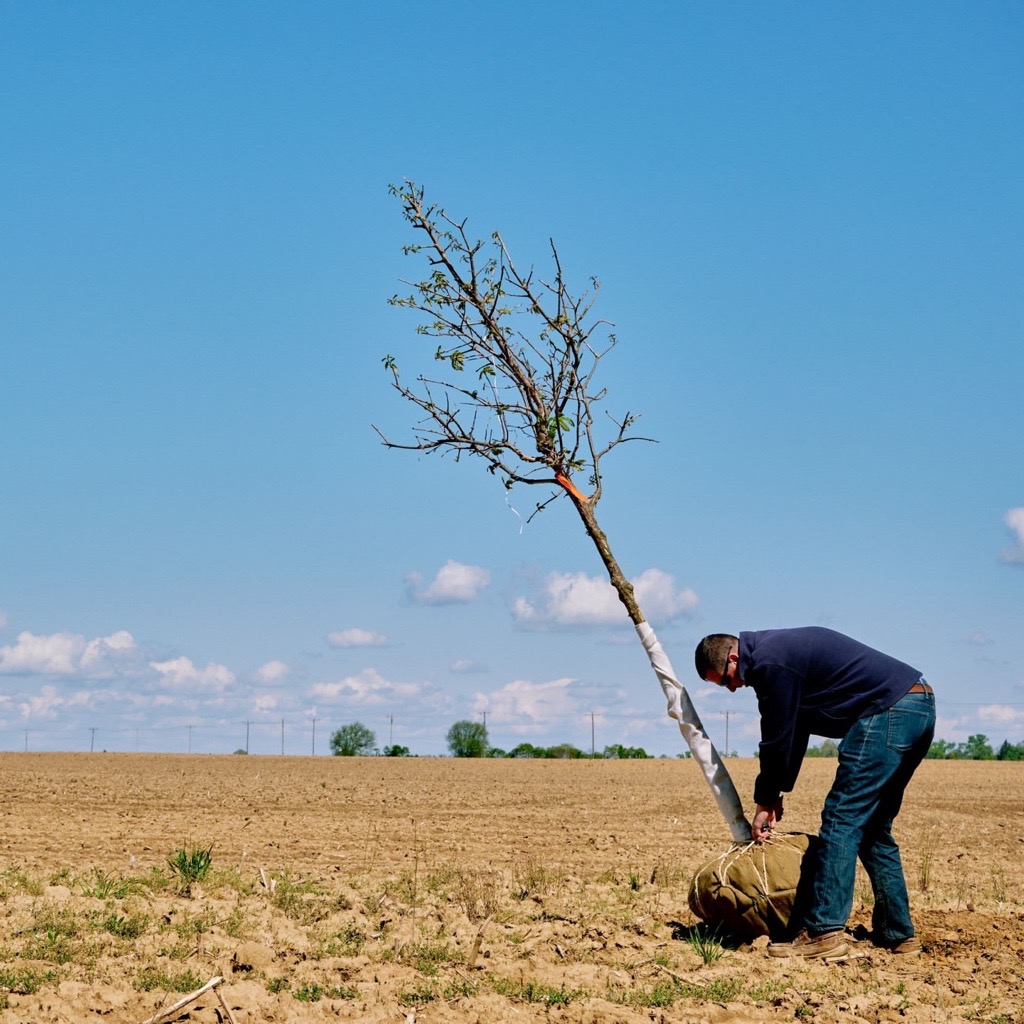
Forests and urban trees are a cornerstone of Delaware’s pathway to net-zero emissions by 2050. Modeling for this plan shows that improving land management and significantly increasing tree planting could more than double current sequestration levels by mid-century. Because some emissions from other sectors cannot be fully eliminated, protecting and expanding natural carbon sinks will be critical to balancing remaining emissions. Investing in forests and trees not only supports emission goals, but also delivers cleaner air and water, reduced heat impacts, healthier ecosystems and long-term economic benefits for communities across the state.
Below is a summary of forest and urban trees goals, strategies and actions from the 2025 Delaware Climate Action Plan (PDF). Download the plan for full context.
N1.1. Identify optimal sites for afforestation and reforestation on public and private lands and prioritize them for investment.
N1.2. Increase conservation efforts through expanded funding for education, outreach and reinstated technical assistance for landowners.
N1.3. Enact a statewide forest preservation and riparian buffer law that includes assistance for municipal governments.
N2.1. Provide technical assistance for including tree canopy cover and forest planning targets in municipal and county comprehensive plans.
N2.2. Expand the Urban and Community Forestry Program and the Tree for Every Delawarean Initiative.
N2.3. Provide model ordinances and tools to assist local governments in protecting existing trees and ensure appropriate planting of new trees.
N2.4. Encourage property owners to preserve high-value forests as Nature Preserves in the State’s Natural Areas Preservation Program.
N2.5. Support a community assistance program to help municipalities place lands into conservation easements to retain ecosystem services.
N3.1. Conduct research, including pilot projects, to determine the optimal silvicultural practices for Delaware for carbon sequestration and storage.
N3.2. Promote proper forest management and silvicultural best management practices to maintain and restore forests for water quality, wildlife and climate resilience.
N4.1. Improve statewide greenhouse gas inventory and emission reduction planning through a synchronized inventory of Delaware’s total tree cover.
N4.2. Promote improved urban tree canopy management, tracking and mapping by providing technical assistance to local governments and municipalities.
N4.3. Conduct a baseline forest carbon inventory by using aerial mapping and remote sensing technologies.
N5.1. Regularly update Delaware’s economic impact study for forest products industries in the state.
N5.2. Promote the importance of Delaware forests and forest industries.
N5.3. Support the Governor’s Council on Forestry’s effort to attract forest industries to Delaware.
Strategy N6: Ensure future native tree supply.
N6.1. Assess the feasibility of a state-run native plant and tree nursery to expand availability.
N6.2. Incentivize economic growth of local private native plant and tree nurseries.
N6.3. Support workforce development for the native plant and tree nursery industry.
Delaware's Governor
State Agencies
Elected Officials
General Assembly
Delaware Courts
State Employees
Cities & Towns
Delaware State Code
State Regulations
Business First Steps
Phone Directory
Locations Directory
Public Meetings
Voting & Elections
Transparency
Health Insurance
Tax Center
Personal Income Tax
Privacy Policy
Weather & Travel
Contact Us
Corporations
Franchise Tax
Gross Receipts Tax
Withholding Tax
Delaware Topics
Help Center
Mobile Apps
E-mail / Text Alerts
Social Media


Built by the Government Information Center
©MMXXVI Delaware.gov