DNREC Menu

Outdoor Delaware is the award-winning online magazine of the Delaware Department of Natural Resources and Environmental Control. Articles and multimedia content are produced by the DNREC Office of Communications.
In the mid-1980s, two chemical spills at locations 8,000 miles apart sparked change aimed at increasing transparency and benefiting public safety.
In December 1984, the gas methyl isocyanate leaked from a Union Carbide pesticide plant in Bhopal, India. Thousands died and hundreds of thousands more suffered injuries in what is still the deadliest industrial accident in history.
Eight months later, another leak of toxic gas occurred, this one involving aldicarb oxime in West Virginia. Though no fatalities were reported, more than 100 people were hospitalized.
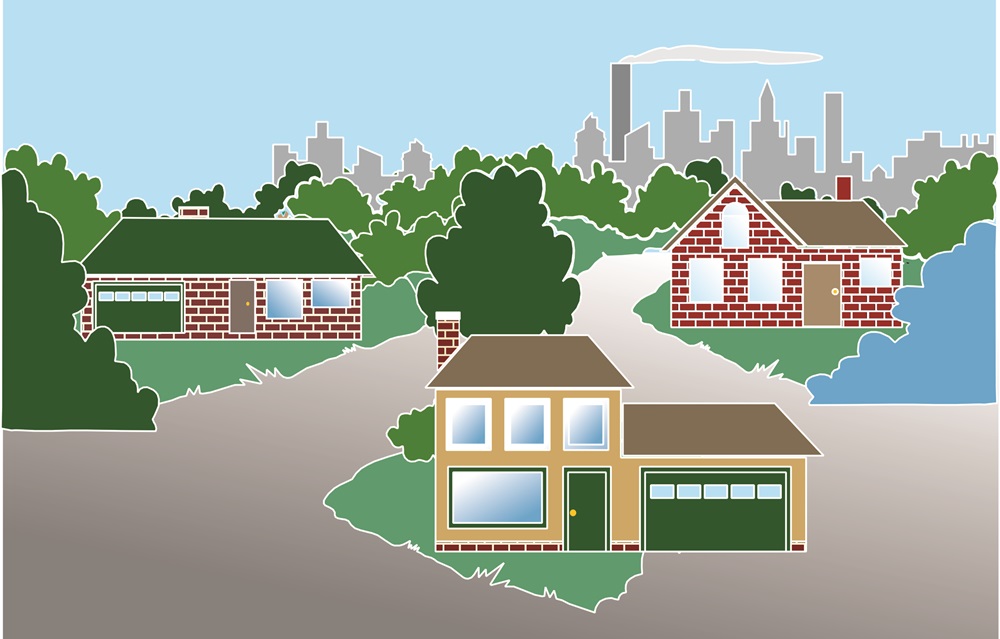
The two incidents and the subsequent public outcry prompted Congress to pass legislation requiring state and local governments to develop emergency plans for chemical spills and educate residents about substances stored near them. The resultant Emergency Planning and Community Right-to-Know Act has two key parts, with the first mandating state and local governments maintain policies to keep the public safe while the second requires authorities collect and provide individuals with information about chemical hazards in their communities.
Currently, the Delaware Department of Natural Resources and Environmental Control works with communities, regulated facilities and local governments to oversee the First State’s EPCRA Reporting Program.
DNREC is a member of the State Emergency Response Commission, which, along with the four Local Emergency Planning Committees (one for each county plus the city of Wilmington) plays a critical role in coordinating efforts and reviewing disaster contingencies every year. Should an incident occur, first responders, including DNREC’s Emergency Response Team, jump into action, following a detailed plan developed by the commission and local committees.
In addition to state and local officials, the emergency-planning teams are made up of industry representatives and other experts. It’s an effort possible only through collaboration.
While the emergency planning aspect may leap off the page first, efforts to collect and disseminate information are just as vital.
For more information on EPCRA or to access the public portal, visit de.gov/epcra or contact DNREC’s EPCRA Reporting Program at DNREC_WHS_EPCRA_Mail@delaware.gov or 302-739-9405.
“This is all about making sure everyone is in touch with one another,” said Bill Davis, an environmental engineer with the DNREC Division of Waste and Hazardous Substances.
DNREC is just one piece of the puzzle, but it is an important one, Davis said, comparing the agency to a data broker for its role in providing information to various parties.
In 2024, DNREC unveiled a portal designed to make it easier for residents to learn about chemicals in their communities. Available at de.gov/chemicalportal, the site allows users to see the locations of various facilities storing chemicals above the state’s threshold, view the chemicals’ hazards or search for a specific facility or chemical.
This information isn’t only relevant to those living near the big facilities you hear about in the news, as there are more than 2,600 sites in Delaware listed in the portal. Those locations include schools, gas stations, grocery stores, factories and more.
Much of that consists of everyday chemicals like gasoline, but there are more than 300 substances deemed to be extremely hazardous.
If you’re feeling at all concerned about these numbers, know this is exactly why EPCRA exists. For decades, dedicated experts have been tracking these substances and preparing disaster response plans should an incident occur.
At the same time, any discomfort you may be feeling isn’t a bad thing. As DNREC’s EPCRA team emphasizes, knowledge is power.
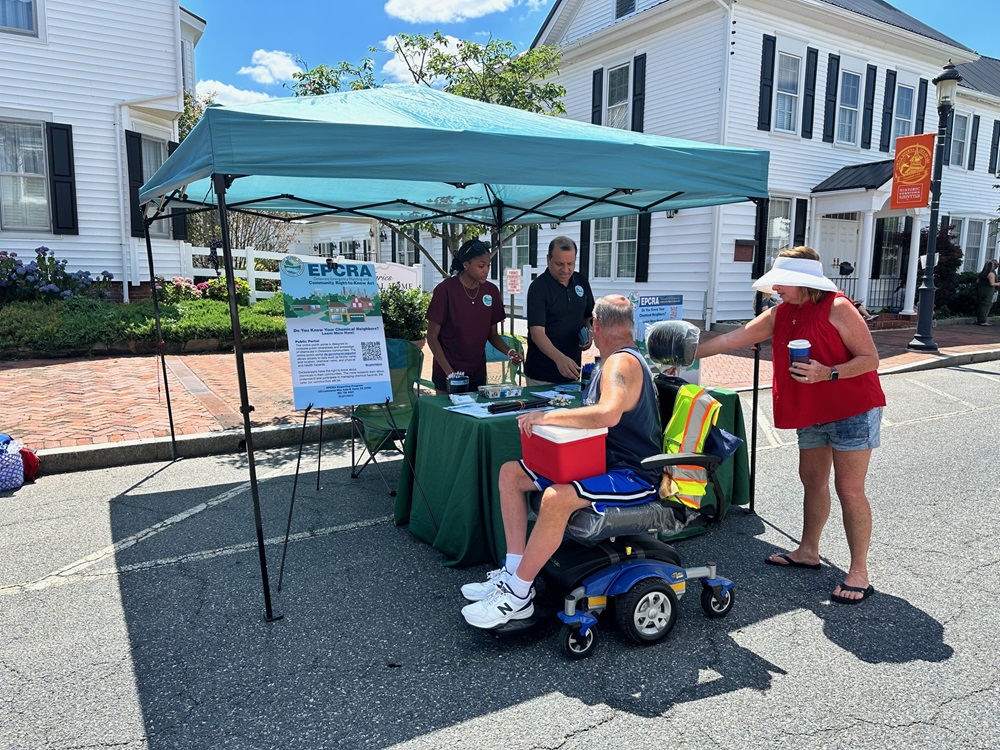
The employees in DNREC’s EPCRA Reporting Program take very seriously their duty of educating the public, and to that end, they’ve been increasing their outreach efforts, seeking to ensure Delawareans know about the available information. That means participating in community events to raise public awareness of the program with the aid of presentations, brochures and maps, efforts DNREC plans to continue.
In the past, an individual curious about exactly which chemicals were being stored at a facility had to submit a Freedom of Information Act request, a process that can sometimes take a couple of weeks to get a response. Now, anyone can go online and browse the portal to take an inventory of who their “chemical neighbors” might be.
“The whole point of this public portal is to remove that barrier, to make it easily accessible to the community, to bring those eyeballs to the table and let the committees and let the facilities know that people in their communities, their neighbors, are counting on them,” Davis said.
DNREC and its partners are locked in when it comes to monitoring chemicals and ensuring sites conduct a thorough inventory once a year.
Initially, the government’s focus was on gathering information to help first responders in the event of a crisis. Now, public engagement is being emphasized, with an eye toward removing barriers to information — hence the portal.
As long-time residents of the First State can attest, Delaware has a long tradition when it comes to chemicals. DuPont was started near Wilmington in 1802 and would become one of the state’s most important businesses, just as recognizable a Delaware icon as scrapple and chickens.
The state’s many local fire companies also play a vital role, Davis said, serving as community pillars and, along with the Delaware State Fire School, lending their knowledge to the State Emergency Response Commission and the Local Emergency Planning Committees.
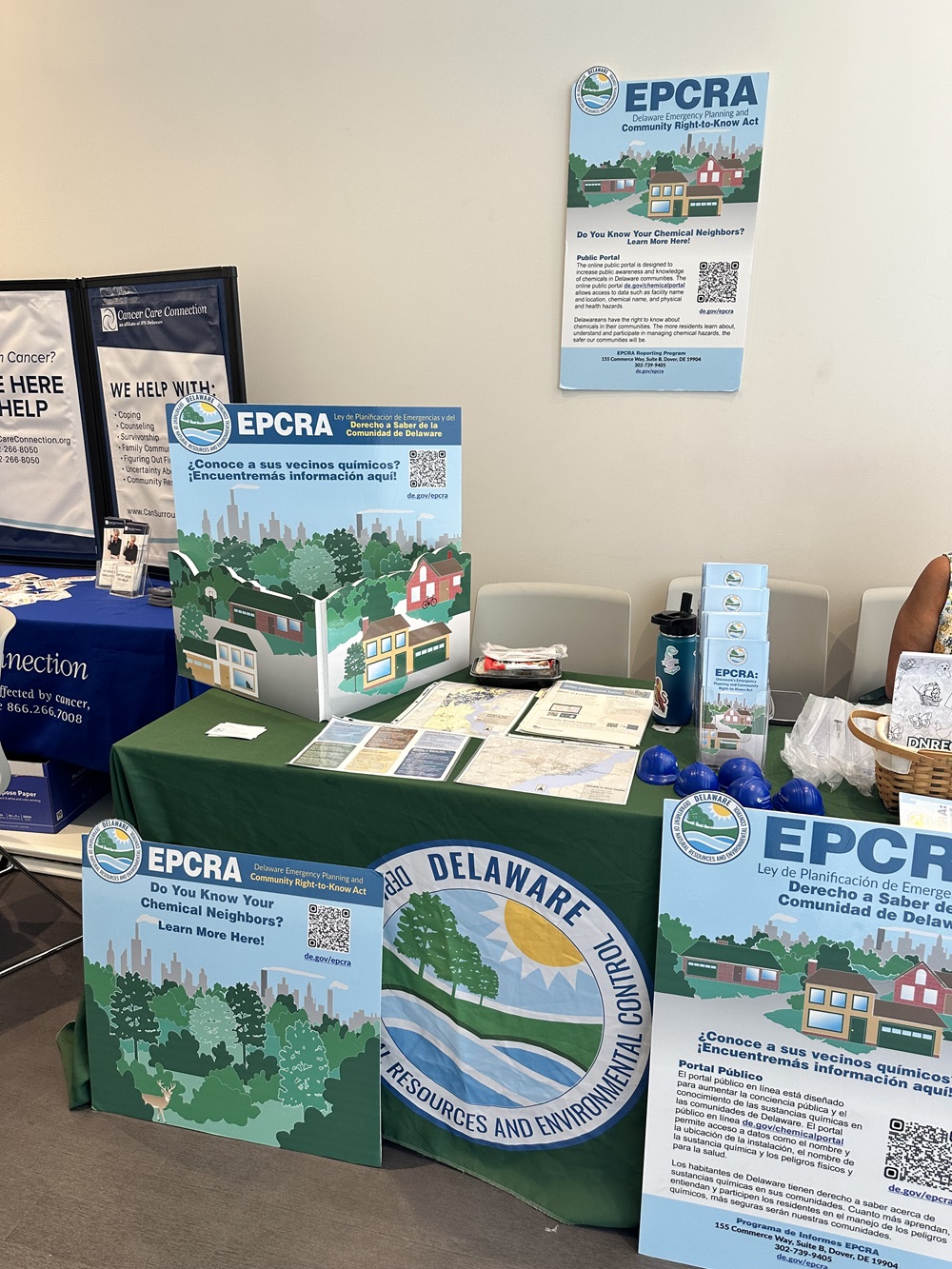
Anuj Kumar, DNREC’s EPCRA program manager, emphasized the importance of preparedness, urging Delawareans to become familiar with the portal and what chemicals are stored near where they live, work, learn or play. In addition to hazardous chemicals included in EPCRA, Kumar noted the Accidental Release Prevention Program requires facilities with extremely hazardous substances to develop risk management plans to further safeguard against chemical accidents.
“People need this information to make wise decisions, so that they don’t act out in fear with misinformation and so that they understand and are able to take proactive measures and become engaged before — surprise! There’s a fire at the warehouse!” Davis said. “When an event happens is not the time to begin getting the word out. People need to understand what’s going on in their community. They might know their child goes to a school, and right next to that school there is an agricultural distribution center, and inside that agricultural distribution center they store herbicides and pesticides and insecticides. So, if there’s a fire in that agricultural distribution center, they want their child’s school to do a certain thing. That’s the type of engagement we’re looking for.”
Davis, who has spent three decades working with EPCRA across the private and public sectors, is a firm believer in the power of modern chemistry to make our lives better. At the same time, he, like the other members of DNREC’s EPCRA team, holds that safeguards and transparency are important components that must be present. After all, it is only an informed public that is able to ensure governments and businesses alike are making safety a top priority.
Delaware has had some chemical releases over the decades, most of which were permit exceedances or transportation incidents, though Davis noted the state has fortunately been spared any long-lasting consequences as a result.
Perhaps the most high-profile release was in November 2018, when the Croda Atlas Point plant in New Castle accidentally released ethylene oxide due to an equipment failure. Fortunately, no one was injured, with DNREC’s Emergency Response Team, the Delaware Fire School and many New Castle County volunteer fire companies responding to the situation and managing to contain it within a matter of hours.
Though any incident involving chemicals is likely to raise concerns, Delawareans can be assured committed teams of experts will continue to ensure our state remains safe.
For more information on EPCRA or to schedule a presentation on the portal, visit de.gov/epcra or contact DNREC’s EPCRA Reporting Program at DNREC_WHS_EPCRA_Mail@delaware.gov or 302-739-9405.
Related Topics: chemicals, emergency response, epcra, hazardous substances, health, outdoor delaware, planning, science, waste, waste and hazardous substances
Delaware's Governor
State Agencies
Elected Officials
General Assembly
Delaware Courts
State Employees
Cities & Towns
Delaware State Code
State Regulations
Business First Steps
Phone Directory
Locations Directory
Public Meetings
Voting & Elections
Transparency
Health Insurance
Tax Center
Personal Income Tax
Privacy Policy
Weather & Travel
Contact Us
Corporations
Franchise Tax
Gross Receipts Tax
Withholding Tax
Delaware Topics
Help Center
Mobile Apps
E-mail / Text Alerts
Social Media


Built by the Government Information Center
©MMXXVI Delaware.gov