DNREC Menu

Outdoor Delaware is the award-winning online magazine of the Delaware Department of Natural Resources and Environmental Control. Articles and multimedia content are produced by the DNREC Office of Communications.
In recent years, per- and polyfluoroalkyl substances, better known as PFAS and sometimes referred to as “forever chemicals,” have entered the public consciousness as scientists have come to realize how prevalent these substances are in our water, soil, food and bodies.
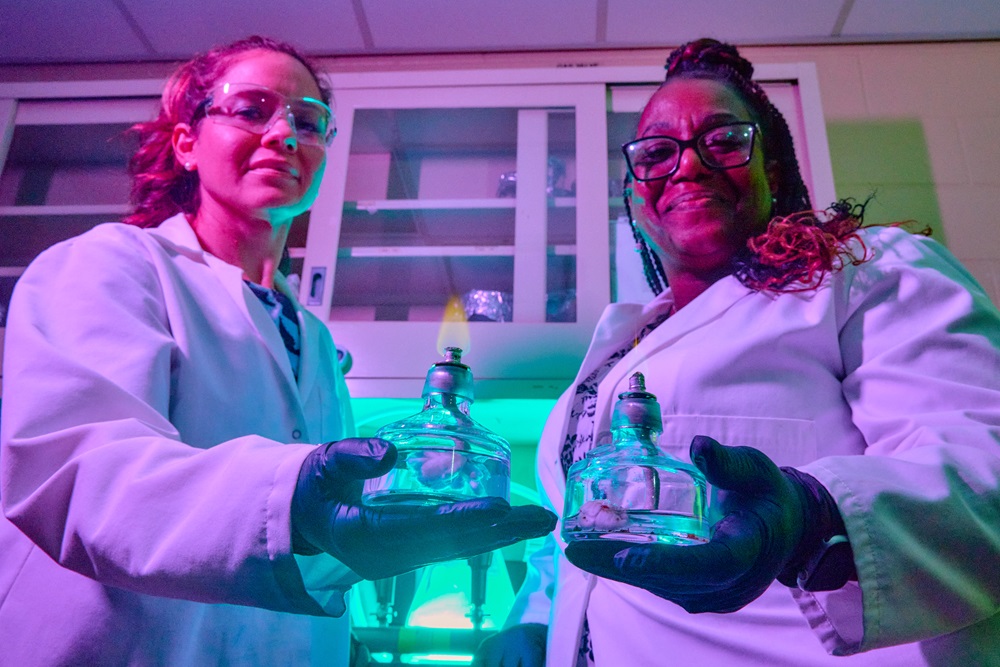
The Delaware Department of Natural Resources and Environmental Control has stepped up to the plate to help develop solutions to the problem, and in 2024, the U.S. Environmental Protection Agency unveiled the first official limits for PFAS, as low as four parts per trillion for certain substances.
But how can policymakers even know if something is present in such a small amount? After all, four parts per trillion is literally 0.0000000004% — a total that can seem almost impossibly infinitesimal.
That’s where the Delaware Environmental Laboratory comes in. Founded in 1949 as the Water Pollution Commission, it was intended “to maintain within its jurisdiction a reasonable quality of water consistent with public health and public enjoyment thereof, the propagation and protection of fish and wildlife, including birds, mammals and other terrestrial and aquatic life and the industrial development of the State.”
In 1966, the Water Pollution Commission was converted into a part of the Water and Air Resources Commission, which was itself reorganized into DNREC in 1969. Today, the Environmental Laboratory remains part of DNREC.
Throughout the decades, the laboratory’s core mission has remained unaltered even as its name and headquarters have changed. The team of about two dozen scientific, technical and support staff play a vital role in supporting DNREC by collecting and testing water samples for various contaminants, and their work helps inform the decisions of policymakers as they confront modern environmental and public health challenges.
“Our main role is to assist the surface water quality monitoring program that is run by the DNREC Division of Watershed Stewardship. We collect and analyze surface water and groundwater samples to better understand the health of the environment around us,” said Laboratory Manager Dr. Christopher Main.
Outside of DNREC, the Environmental Laboratory has roughly 50 clients, including U.S. EPA, the Delaware River Basin Commission and the U.S. Geological Survey. It also performs tests for contractors working with DNREC.
The partnership with the Delaware River Basin Commission, an interstate-federal compact consisting of the federal government and the four states that border the Delaware River, is the oldest continuous relationship the laboratory has, dating back around 60 years. The commission’s monthly water quality check, known as the boat run, is one of the longest-running water quality monitoring programs in the world.
Laboratory staff look for various contaminants in samples collected, which can include nitrogen, phosphorus, heavy metals or bacteria. Their work helps detect potential pollution concerns for both humans and the environment and is of course vital as Delaware continues to respond to the growing issue related to PFAS and other emerging contaminants.
Currently, Main is working on environmental DNA, or eDNA, which is DNA that can be found in the natural environment from skin cells, feces and other environmental sources and can be used for the detection of rare and invasive species.
The laboratory is responsible for testing the Nanticoke River near Seaford, Brandywine Creek by Wilmington and many other bodies of water in between. Its personnel are generally dispatched several days a week to collect specimens, with the laboratory taking in roughly 200 to 300 samples a month. Some come from DNREC staff, while others are submitted by outside entities or individuals and then analyzed by the laboratory.
Throughout it all, the laboratory’s staff keep a core aspect of their duties in mind: They produce data from the samples that have been tested but leave the interpretation up to the clients.
“As a laboratory, we’re a neutral, unbiased entity,” Director Ashley Kunder said. “We assess the data for analytical quality, not necessarily how it relates to the environment from an ecological viewpoint.”
Unlike many DNREC programs and services, the laboratory lacks regulatory authority.
(Delaware DNREC)
Contrary to the common popular image of a laboratory, the Delaware Environmental Laboratory is not just made up of chemists and microbiologists but also includes other vital employees such as technical and support personnel who help keep things running.
“We also can’t forget that we wouldn’t be a laboratory without technical and support staff,” Kunder said.
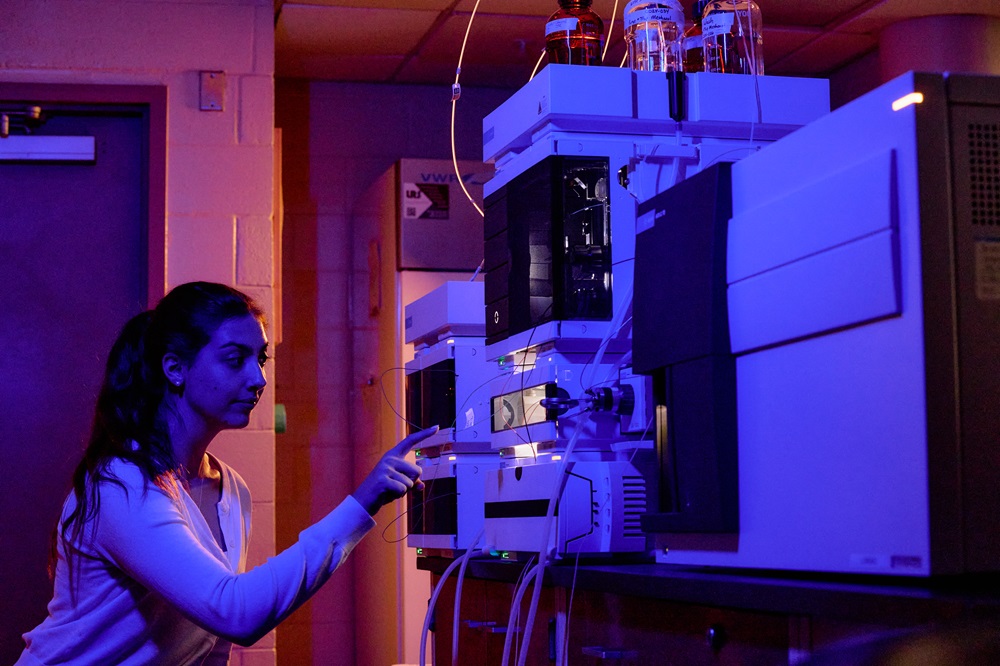
The laboratory’s employees use a variety of sophisticated, specialized equipment, such as a liquid chromatograph with tandem mass spectrometry, which analyzes substances for various compounds. These machines, which can cost hundreds of thousands of dollars, are vital for the laboratory to be able to detect chemicals like PFAS at scales of parts per billion or even trillion.
The laboratory is also expanding into other types of sample testing, such as tissue, soil and air.
Personnel are constantly looking for new and improved methods of conducting tests and are currently working on expanding testing capability to include microplastics, as well as emerging contaminants like 6PPD-quinone.
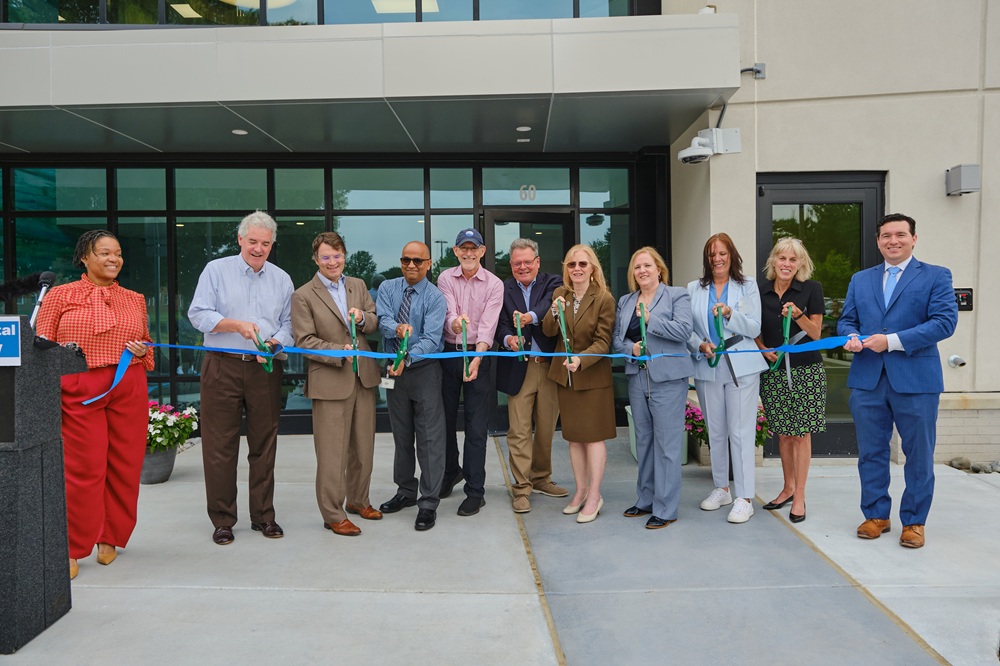
In 2026, the laboratory relocated to a brand-new, state-of-the-art facility. Located on the Delaware Department of Health and Social Services campus in Smyrna, the building has 12 labs, two clean rooms, offices and an assortment of high-tech equipment.
The old laboratory was based in the Richardson and Robbins Building in downtown Dover, which also houses many other DNREC programs and services. That building was originally built in the 1800s as a cannery and later purchased by the State, with a portion of the space being repurposed into the Delaware Environmental Laboratory in the 1980s.
Because it wasn’t designed for such specialized and advanced work, the old location lacked some of the essentials a modern laboratory needs, such as proper ventilation and negative pressure. In the words of DNREC Secretary Greg Patterson, it “had the vibe of a middle school science laboratory.”
But thanks to $27.3 million in federal American Rescue Plan Act funding and $2.4 million allocated through the state bond bill, DNREC was able to finally design and build a top-notch new laboratory.
While the talented DNREC employees running the laboratory made the old location work, they are thrilled to now have a purpose-built facility that allows them to perform their work more efficiently and effectively.
Being so close to the Division of Public Health’s laboratory is also beneficial, making it easier for experts to share knowledge and supplies when needed. This cross support can help when it comes to a situation like preventing disease outbreaks along the beaches or case management to mitigate the spread and impact of pollutants.
“This new state-of-the-art laboratory will support DNREC’s mission to protect Delaware’s natural resources, public health and the environment,” Kunder said.
Related Topics: environmental laboratory, groundwater, health and science, laboratory, outdoor delaware, PFAS, science, surface water, testing, water testing
Delaware's Governor
State Agencies
Elected Officials
General Assembly
Delaware Courts
State Employees
Cities & Towns
Delaware State Code
State Regulations
Business First Steps
Phone Directory
Locations Directory
Public Meetings
Voting & Elections
Transparency
Health Insurance
Tax Center
Personal Income Tax
Privacy Policy
Weather & Travel
Contact Us
Corporations
Franchise Tax
Gross Receipts Tax
Withholding Tax
Delaware Topics
Help Center
Mobile Apps
E-mail / Text Alerts
Social Media


Built by the Government Information Center
©MMXXVI Delaware.gov