DNREC Menu

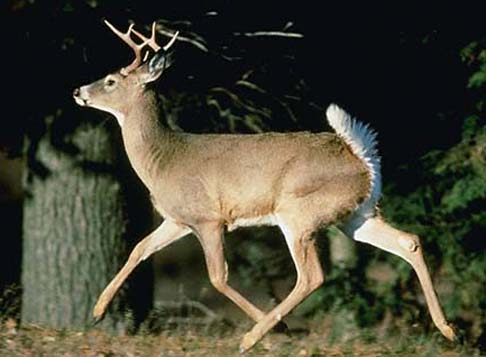
When Europeans arrived in North America centuries ago and began settling in what is today the United States, white-tailed deer were plentiful.
The species was already an important resource for Native Americans. Before long, colonists also relied on deer for meat and hides.

All this had a harmful effect on the deer population, however, leading to Delaware officials banning deer hunting in 1841. Other states took similar action, with some importing deer to help their populations rebound.
While such a step wasn’t necessary in Delaware, it took time for the species to recover from the low point reached in the 19th century. By 1954, officials decided the population had grown enough to reopen deer hunting.
After hunting resumed, Delaware’s deer herd continued to expand. Unlike many states at the time, Delaware later allowed hunters to harvest not only bucks (males) but does (females) as well.
The first deer hunting season lasted just three days, and the next nine were only two days annually. In 1964, however, the hunting season was lengthened. More expansions would follow.
By the late 20th century, Delaware’s deer population and development were both increasing. As more people moved into suburban and rural areas, complaints from residents became more common. Deer were damaging not just crops planted by farmers but landscaping favored by many homeowners. Collisions between deer and vehicles also became more common, and as development increased, there was less land to hunt on.
“Deer managers soon realized that the cultural carrying capacity of deer (the deer density that the general public can tolerate) often was lower than the biological carrying capacity (the number of deer the habitat can support before the health of the deer begins to diminish) and that deer must be managed at the former threshold,” states the Delaware Department of Natural Resources and Environmental Control’s deer management plan.
Hunters have played and continue to play a very important role in managing the deer population, with the harvest climbing to a record 18,823 in the 2024-2025 season. That’s a 3,600% increase from the 505 harvested in 1954, the very first deer hunting season after the long pause was lifted.
The regular hunting season opens for archery hunting on Sept. 1 and runs through the end of January. It is the longest statewide deer hunting season in the country.
Archery hunting is permitted the entire five months, but hunters have opportunities to hunt with firearms and muzzleloaders during shorter, typically weeklong segments, throughout the season. For more information on deer season, visit eregulations.com/delaware/hunting/deer-seasons.
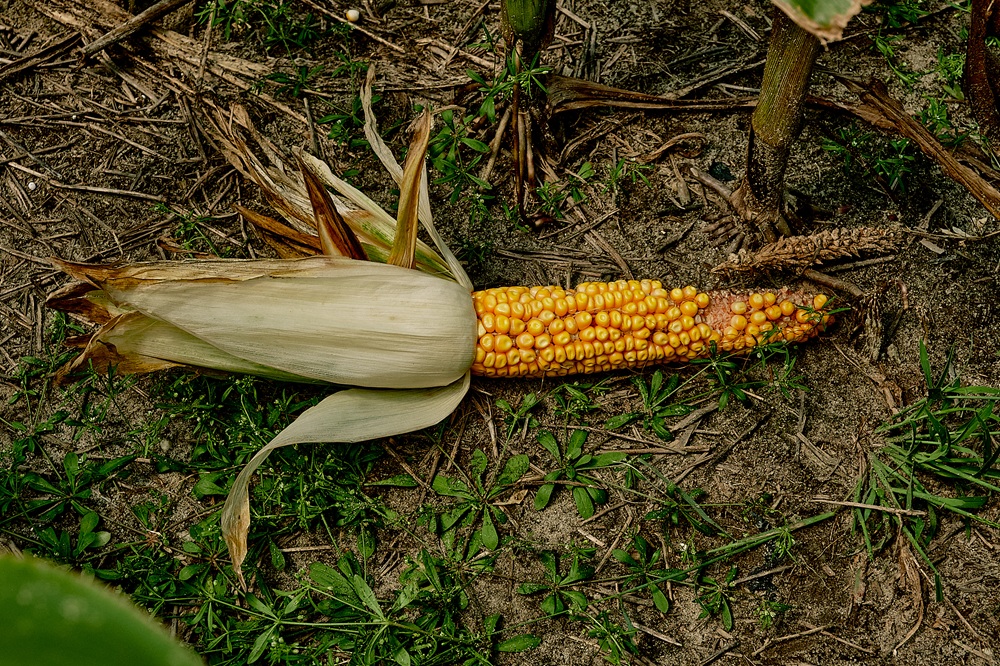
The regular hunting season is DNREC’s primary tool for deer management, and the value sportsmen and -women provide by helping control the number of deer in the state should not be underestimated. But, some need additional options. DNREC has programs available for landowners who face serious crop damage.
In 1996, Delaware instituted a formal Deer Damage Assistance Program allowing for expanded hunting under certain circumstances. That program remains to this day, making it easier for Delawareans whose crops are threatened by deer to harvest the animals and avoid property damage.
“The goal isn’t to completely eliminate deer, the goal is to reduce the population that’s causing damage to a tolerable level to the landowner while also maintaining a healthy population of white-tailed deer,” said Ryan Harris, the wildlife damage biologist for the DNREC Division of Fish and Wildlife.
That’s an important distinction. The only foolproof way to completely halt deer from eating crops is by eradicating the species, which is not a desirable outcome. Instead, DNREC seeks to manage the population and meet landowners’ expectations.
Exactly what those expectations are can vary greatly.
“We have landowners who fully accept that they’re going to lose potentially 2 to 3 acres annually on, let’s say, a 50-acre piece of land. They’ve accepted that loss based on their own cultural perception of deer,” Harris said.
DNREC’s last deer survey, which was conducted in 2009, estimated the population of deer in the state at about 31,000. According to data collected from hunting seasons since then, the species population remains strong, Division of Fish and Wildlife deer program leader and wildlife biologist Sam Millman said. Hunters must report their harvest to DNREC within 24 hours, part of the surveillance designed to ensure the population remains healthy.
So, what do you do if deer are eating your plants?
For starters, there’s the regular hunting season. But if that isn’t enough, DNREC’s Deer Damage Assistance Program can help. The initiative uses hunters to control the population of does, providing participants with free antlerless deer tags to be used on permitted properties to help keep levels in check.
Delaware Deer Hunting Timeline
1841: Delaware bans deer hunting after deer are nearly being extirpated here by hunters.
1954: Delaware reopens deer hunting, with the season starting on Jan. 1 and lasting three days.
1955: The deer hunting season is shortened to two days.
1955-1963: At some point in this timespan, the deer hunting season is moved to November.
1964: The deer hunting season is expanded to five days, with 27 separate archery days added.
1972: The first muzzleloader season, which totaled three days, is added. Shotgun and archery seasons are expanded to eight and 60 days, respectively.
1973: The muzzleloader season is moved to October and increased to six days.
1975: A two-day January muzzleloader season is added.
1976-1989: The deer hunting season is periodically expanded until by 1989, it consists of 10 days for shotguns, six days for muzzleloaders and 113 days for archery.
1992: A December antlerless season is established, and 17 management zones are created to manage deer on a finer scale.
1996: The Deer Damage Assistance Program is created, the December antlerless season is expanded to six days and a special season for youth and non-ambulatory hunters begins.
1999: Baiting on private land is allowed.
2002: The license structure is changed so each license comes with two antlerless tags and a hunter must purchase a Hunter’s Choice Tag permitting the harvest of one male or female deer. Also, antlerless-only hunting days are added to October.
2003: Individuals are allowed to register to hunt online or via the phone for the first time.
2005: A seven-day handgun season in January is added.
2006: The Severe Deer Damage Assistance Program is established.
2010: Crossbow season is established, running concurrently with archery.
2018: Sunday hunting is legalized, and straight-walled pistol-caliber rifles are authorized for deer hunting. Additionally, the Extreme Deer Damage Assistance Program opens to farmers.
2020: Sunday deer hunting is expanded.
Antlerless deer are targeted because this mostly results in harvesting female deer, thus eliminating the potential offspring they could have over the years.
All hunters must have a license or a special exemption reserved for certain folks, like disabled veterans. They are not limited in what weapons they can use other than what state law allows.
The initiative consists of three levels based on the severity of the damage. Though there’s no acreage requirement to take part, it is intended for commercial farms, not homeowners who have deer feasting on their backyard gardens.
Delawareans who qualify for the Severe Deer Damage Assistance Program are allowed to start hunting deer on Aug. 15 and continue through May 15, giving landowners an extra four months or so to help control the population. Most commercial farms in the state are already enrolled, with a majority of them at this level.
Participants in the Extreme Deer Damage Assistance Program can hunt deer year-round, though they’re still restricted to the specified parcels. To enroll, a Delawarean must demonstrate they are still experiencing damage despite participation in the Severe program.
The programs also strongly promote non-lethal methods, including:
During an inspection, experts from DNREC or the Agriculture Department ask the landowner what steps they are already taking and work with them to implement safeguards rather than immediately using expanded harvesting.
DNREC recommends landowners using hunters to help control the population on their property take advantage of all hunting seasons and strive for a ratio of roughly 1 hunter per 25 acres.
Roughly 90% of the deer harvested annually in Delaware are taken during the regular hunting season by recreational hunters. People often focus on deer damage in the spring and summer when their plants are growing, but a deer harvested in the prior autumn will not be around to cause problems during the growing season. The key to minimizing damage is to start addressing it beforehand, hence why targeting and harvesting deer during the hunting season makes the most sense.
Neal Dukes, who owns a farm in the Townsend area, has been part of the Deer Damage Assistance Program for decades. The initiative has helped him control the deer population near his farm, thanks in part to the ability to hunt on his property with shotguns outside the normal season. It’s proven beneficial for his farm, saving many crops from being eaten over the years.
“These measures gave us the opportunity to manage our deer herd without the limitations that we previously had,” Dukes said. “It was in our hands now and all we had to do was manage the hunters that were on our farms. It took us quite a long time to get our deer numbers down to a more reasonable amount, but we managed to get there eventually.”
Two Delawareans enrolled at the same level may use this expanded hunting access very differently. One farmer might obtain a permit but seldom use it, while someone else might invite a handful of hunters to come and kill dozens of deer annually.

Although many states with deer are also home to natural predators like bears and mountain lions, Delaware does not have any of these animals. That makes it all the more important that DNREC keeps managing harvests at a level that is acceptable to the public, striking a balance between protecting property and keeping the deer population plentiful enough for hunters and wildlife enthusiasts.
“Everybody has a different value for how many deer should be in their neck of the woods,” Millman said.
Crop damage done by deer can vary greatly based on preventative steps like fences (or lack thereof) as well as the types of plants. Hungry deer particularly favor soybeans, corn, blackberries and blueberries, for instance.
Ultimately, DNREC’s experts emphasize, this is an issue that requires working with and educating the public: “Deer management isn’t just about wildlife, it’s about people, values and how we share the landscape,” Millman said.
And, in case you’re wondering what happens to all the meat from harvested deer, rest assured it doesn’t go to waste. Even if hunters in the Deer Damage Assistance Program shoot more deer than they could hope to eat themselves, they can donate venison to Hunters Against Hunger. This worthy initiative saw hunters donate more than 13 tons of deer meat in the 2024-2025 season, providing in excess of 105,000 meals to communities across the state.
Related Topics: animals, conservation, deer, fish and wildlife, hunting
Delaware's Governor
State Agencies
Elected Officials
General Assembly
Delaware Courts
State Employees
Cities & Towns
Delaware State Code
State Regulations
Business First Steps
Phone Directory
Locations Directory
Public Meetings
Voting & Elections
Transparency
Health Insurance
Tax Center
Personal Income Tax
Privacy Policy
Weather & Travel
Contact Us
Corporations
Franchise Tax
Gross Receipts Tax
Withholding Tax
Delaware Topics
Help Center
Mobile Apps
E-mail / Text Alerts
Social Media


Built by the Government Information Center
©MMXXVI Delaware.gov