DNREC Menu
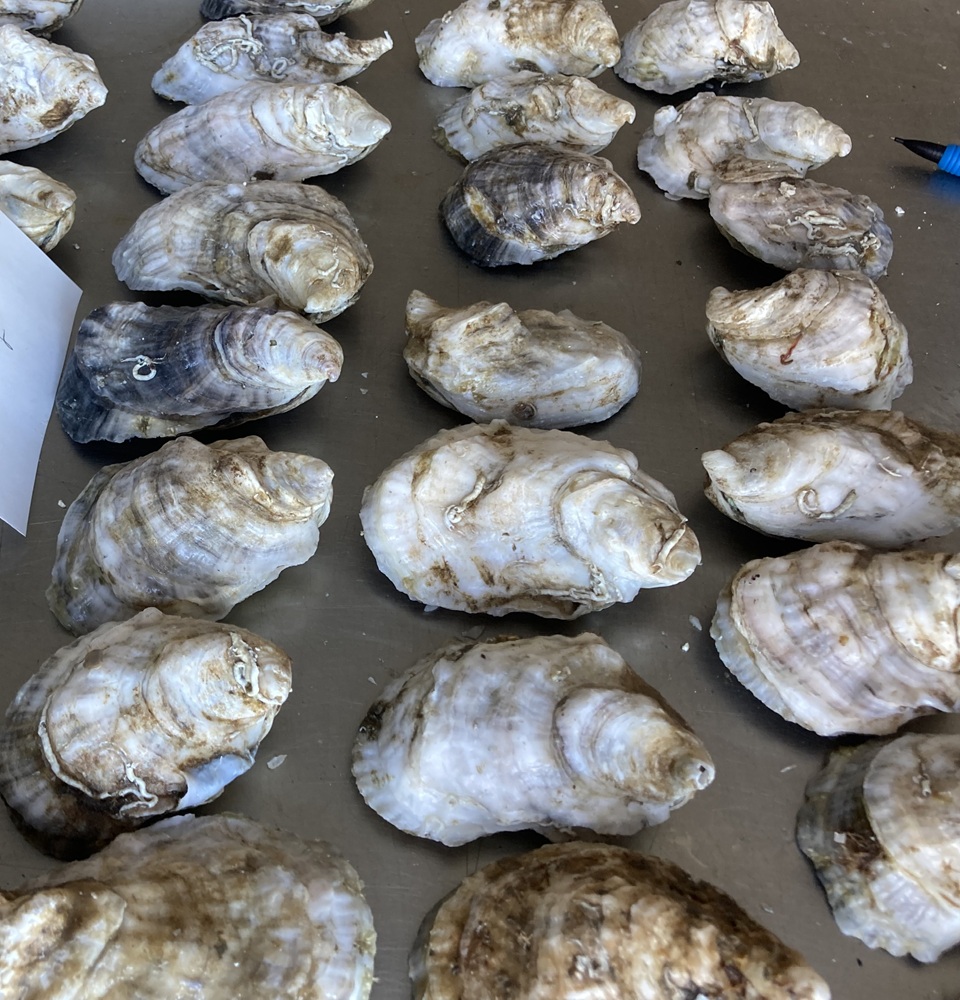
The next time you’re considering ordering oysters at a Delaware restaurant, you may want to ask where the establishment gets its shellfish. You might be interested to know the source could be within the boundaries of our state, meaning you can support local businesses while you’re slurping down your meal.
Significant progress in the shellfish industry has been made since the beginning of the 2010s, when Delaware was the only state on the Atlantic coast without shellfish aquaculture. Just a decade later, hundreds of thousands of oysters are being harvested via aquaculture and sold to restaurants and distributors right here in the state.
Much of the impetus came from the Center for the Inland Bays, a nonprofit that in 2012 convened a task force to discuss authorizing shellfish aquaculture, or underwater farming. Consisting of representatives from the Delaware Department of Natural Resources and Environmental Control, the Delaware Department of Agriculture, the University of Delaware, Sussex County, the commercial shellfish industry, and other stakeholders, the group met almost two dozen times over the next 12 months.
In 2013, following the publication of a final report by the center, the Delaware General Assembly passed legislation authorizing shellfish aquaculture leasing in the Inland Bays, including directing DNREC to develop regulations to protect the environment and ensure shellfish leases are compatible with commercial and recreational fishing, boating safety, public water access and native biota while making aquaculture feasible.
DNREC would issue its initial shellfish aquaculture lease in the Inland Bays at the end of 2017, with the first harvest taking place the following September. Soon, many oysters were being harvested, and in 2024, more than 287,000 oysters were taken from the Inland Bays.
So, how did Delaware go from no oysters grown via aquaculture to hundreds of thousands in a few short years? Strap on your wetsuit as we stroll along the seafloor and take a look at the Delaware oyster industry.
Oysters have a long history in Delaware. Native Americans ate them well before European colonists arrived, and even today old piles of shells, known as middens, can be found in coastal areas.
It should be no surprise, then, that a thriving commercial oyster industry developed here during the United States’ early years. Oysters were moved between and harvested from various East Coast waterways, including the Delaware Bay and Delaware Inland Bays, to continue growing, add flavor and decrease distance to market.
Unfortunately, pollution, overharvesting and shellfish diseases would eventually make their impact felt. A mysterious condition began killing oysters in great numbers in the 1950s, leading to a pause on inter- and intrastate transfer, as well as a Delaware harvest moratorium. Over time, there was some recovery from the disease, MSX, and the oyster population allowed for harvesting to begin again.
However, harvesting was halted again around the turn of the millennium due to a separate disease called dermo. This ban was lifted after a few years, enabling members of the commercial oyster industry to continue collecting wild oysters from the Delaware Bay via dredging.
By the 2010s, there was a burgeoning interest in aquaculture from several stakeholder groups in Delaware, leading to the task force and new legislation. After the aquaculture bill was signed into law in 2013, regulations were established by DNREC and acreage in the Inland Bays was made available for lease.
Today, those looking to raise and sell oysters in Delaware have two options: the Inland Bays and the Delaware Bay.
Because of the shallow water and the make-up of the bays’ bottom, the Inland Bays are reserved for oysters grown in gear, containers like cages, bags and baskets that protect the young shellfish. In the Delaware Bay, in contrast, oysters are grown directly on the seabed.
But where do these baby oysters come from in the first place?
To start, a hatchery carefully controls the mix of eggs and sperm for the species being cultivated. Eggs are fertilized and soon develop into larvae. The hatchery cares for the larvae, which, after a week or two, are ready to settle. The larvae are then collected and introduced to cultch, which consists primarily of oyster shell, in a tank.
This cultch forms a solid foundation for larvae to attach to, transform into oysters and continue growing on. The introduction process of providing larvae with cultch in a tank is known as remote setting.
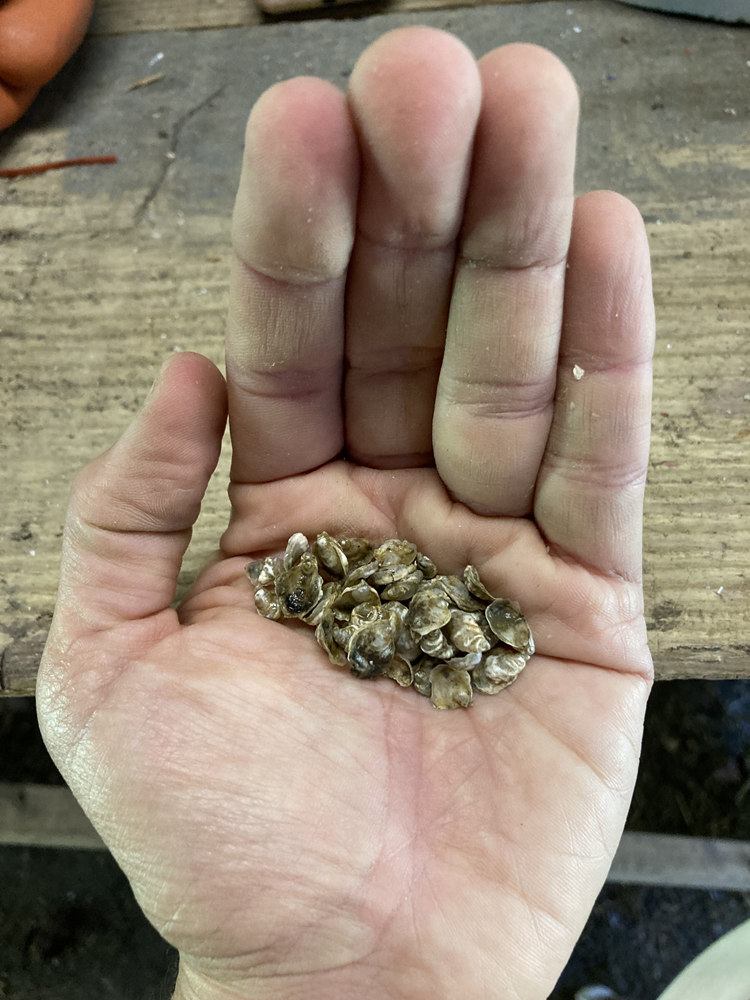
Shortly after larvae cement themselves onto a hard surface, they metamorphose into oysters, albeit very, very small versions. These newly settled oysters are referred to as spat, and along with the shell on which they have settled, are known as spat-on-shell.
Soon, the spat-on-shell will be taken from the tank and boated to the Delaware Bay to be placed on a lease. There, the oysters will grow, clumped together with many others on the seafloor. The cultch helps protect the spat from predators.
This is also known as on-bottom culture, since oysters are cultivated on the seafloor as opposed to being grown intensively in gear.
In addition to planting spat-on-shell, individuals looking to grow oysters on a leased bed in Delaware Bay can also plant bare shell to enhance their oyster beds and hopefully encourage natural oyster spatfall.
Oysters that are aimed at intensive culture (gear-grown rather than directly on bottom), on the other hand, are first set as larvae on microcultch, pieces of shell or stone smaller than the diameter of a human hair. After setting, the larvae develop into small oysters known as seed that grow singly.
Because single seed lacks the protection of cultch and larger oysters, it is often grown with equipment specifically designed to hold and cultivate very small shellfish for a period of time. This allows the shellfish to grow larger before being moved to a lease.
Both growing spat-on-shell on bottom and growing oysters in gear have pros and cons. Oysters raised on bottom require less regular work once placed on a lease, as lessees set the spat-on-shell and wait while the oysters grow.
However, oysters grown on bottom, like those grown on Delaware Bay leases, can have a higher mortality rate. Additionally, oysters growing in close proximity to each other are less likely to develop a deep shell “cup” and often must be broken apart from each other after harvest. These traits can make bottom-grown oysters less visually appealing for the raw bar market than intensively grown aquaculture oysters.
Oysters raised in gear are more labor-intensive, necessitating lessees check on them frequently to clear algae, barnacles and tunicates off the gear holding the oysters. Growers must also ensure the gear isn’t becoming too crowded as the shellfish grow, which can prevent oysters from developing the deep shell cup and uniform size that are so desirable for raw bars
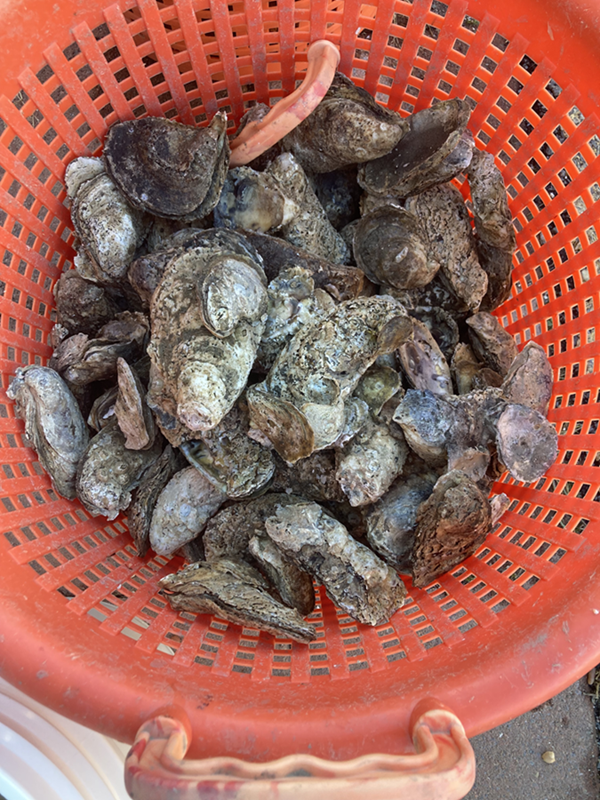
Boats are necessary to reach both the Inland Bays and Delaware Bay leases, though because the Inland Bays are relatively shallow, growers working with oysters in gear sometimes will wear waders or a wetsuit and tend their gear on foot, something not possible in the deeper Delaware Bay.
Intensive aquaculture also requires more gear, which is manufactured in various configurations. This method does, however, have the benefit of not requiring large quantities of shell, which can be expensive and difficult to find.
Wild oysters raised in the Delaware Bay typically take one to three years to reach 2.75 inches, the minimum size at which the state allows harvest. In the Inland Bays, in contrast, harvest size depends on grower preference and market demand, as there is no statutory minimum. Growers working in the Inland Bays have gotten oysters to market in as few as six months, although growth speed depends on multiple factors, including time of year planted and seed size at planting.
The Inland Bays are warmer and saltier than the Delaware Bay, which favor quicker growth.
In the wild, Delaware oysters generally spawn from late spring to early fall. Temperature has a definite impact on oyster metabolism, growth and feeding, with oysters becoming nearly dormant once the water temperature falls below about 50 degrees Fahrenheit.
Wild oysters are diploids, which means they have two sets of chromosomes. However, aquaculture oysters raised in intensive aquaculture are often triploids — a hybrid that has three sets of chromosomes. Triploids are generally sterile, which means they expend less energy on reproduction than diploids. As a result, triploids typically have more meat during spawning season, when diploid oysters are responding to natural cues that cause them to focus more energy on reproducing than growing.
Two oysters of the same species can vary greatly in taste depending on where they are brought up, with the salinity and metallic content in the water, as well as the method of cultivation, impacting the outcome. This is known as merroir, an allusion to the French term terroir, which refers to how environmental factors affect the development of certain natural foods as well as wine.
Because of the higher salinity of the Inland Bays, oysters grown there typically have a high salt content — a selling point for many customers.
Leases in the Delaware Bay range from 50 to 100 acres in size in a general square shape, with all being situated south of the natural oyster beds.
Prospective growers can submit applications to DNREC from Jan. 1 to March 15. Renewal is automatic as long as the fees are paid. There are no restrictions on how many leases a single individual can have in the Delaware Bay, and no applications have been denied to this point.
An oyster harvesting license, which is separate from a lease to raise oysters, is required to harvest oysters from both the natural beds and lease beds in the Delaware Bay. This means someone who has an oyster lease may need to work with someone else who has a license to harvest from their lease.
Recreational harvesting of oysters is not allowed in Delaware.
The state has a quota for oysters harvested by the commercial industry from the natural beds in the Delaware Bay (13,037 bushels in 2025), but there is no limit for a lessee harvesting off their own lease.

By law, lessees do have to notify DNREC of their intent to harvest at least 48 hours beforehand.
Leases in the Inland Bays are limited by law to up to five acres combined in Rehoboth and Indian River bays and up to five acres in the Little Assawoman Bay.
Though state law requires someone physically on the lease to have a harvester permit while tending or harvesting shellfish, the Inland Bays’ harvester permits are not capped. Each lessee receives a harvester permit for no additional charge after taking a short shellfish sanitation test administered by DNREC. Additionally, lease workers can purchase a harvester permit by passing the same test and paying a small fee of $25.
Little Assawoman Bay is restricted to clams, though no planting has taken place yet.
Currently, there are 343 acres in the Inland Bays and 5,893 acres in the Delaware Bay earmarked for potential aquaculture shellfish production.
A comprehensive series of safeguards exists to protect against the transmission of foodborne illness, as shellfish are among the country’s most heavily regulated foods. Oysters must be tagged by both the harvester and the buyer, and they can only be sold to permitted shellfish dealers.
In 2024, there were 11 commercial leases for aquaculture in the Inland Bays. Approximately 1.2 million oysters were planted that year, and about 287,000 were harvested.
The aquaculture industry is aided by a collaboration between Delaware Sea Grant, the University of Delaware and Delaware State University, which started a shellfish hatchery and nursery on UD’s Lewes Campus in 2022. This hatchery aims to advance shellfish aquaculture by providing seed and spat to oyster growers.
How Delaware’s shellfish aquaculture industry will continue to develop remains to be seen, but there’s certainly the potential for growth that can benefit growers, consumers and the state as a whole.
And if you order oysters at a Delaware establishment, remember to ask where they’re from. Perhaps knowing the shellfish you’re feasting on were grown in the Delaware Bay or the Inland Bays will make them even more delicious!
Related Topics: aquaculture, delaware bay, fish and wildlife, inland bays, outdoor delaware, oysters, shellfish
Delaware's Governor
State Agencies
Elected Officials
General Assembly
Delaware Courts
State Employees
Cities & Towns
Delaware State Code
State Regulations
Business First Steps
Phone Directory
Locations Directory
Public Meetings
Voting & Elections
Transparency
Health Insurance
Tax Center
Personal Income Tax
Privacy Policy
Weather & Travel
Contact Us
Corporations
Franchise Tax
Gross Receipts Tax
Withholding Tax
Delaware Topics
Help Center
Mobile Apps
E-mail / Text Alerts
Social Media


Built by the Government Information Center
©MMXXVI Delaware.gov