DNREC Menu

The waste sector accounts for a small share of Delaware’s greenhouse gas emissions – about 3% in 2021 – but remains an important part of the state’s path to net-zero. Delaware manages all of its waste within state borders through landfills, recycling facilities and wastewater treatment plants. Emissions from this sector are primarily methane and nitrous oxide from landfills and wastewater treatment and have increased slightly since 2005 due to population growth and higher waste volumes.
Delaware has a strong foundation of policies and programs to reduce waste-related emissions. The Universal Recycling Law provides recycling access statewide, landfill gas capture systems collect methane and generate energy and wastewater facilities are being upgraded to improve efficiency and reduce emissions. Recycling rates also continue to rise and now exceed the national average, supported by public education tools and expanding community composting efforts.
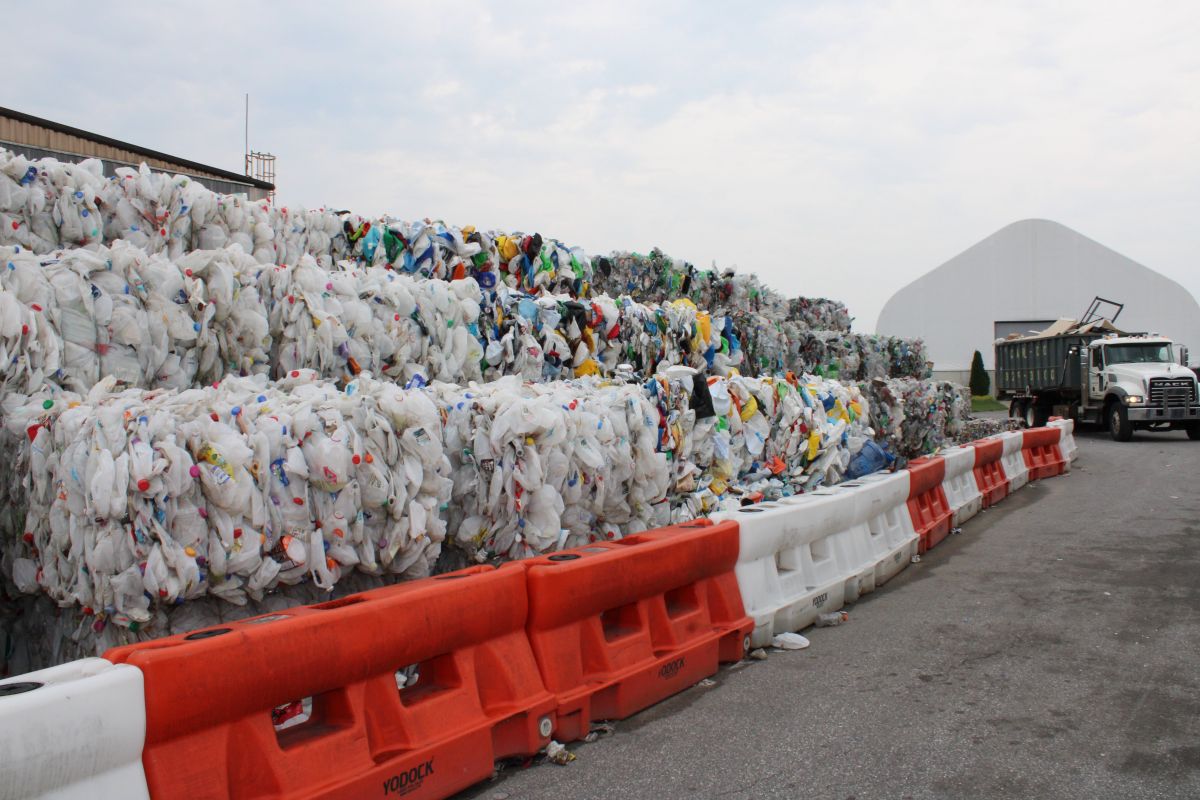
Reducing waste sector emissions will focus on diverting more material from landfills, improving landfill and wastewater operations and lowering the energy used to manage waste. While emissions reductions in this sector are expected to be modest, these actions deliver meaningful benefits for air and water quality, public health and community well-being.
Below is a summary of waste goals, strategies and actions from the 2025 Delaware Climate Action Plan (PDF). Download the plan for full context.
W1.1. Assess anaerobic digesters to plan maintenance or replacement of floating roofs with fixed roofs.
W1.2. Encourage stringent methane monitoring programs and technologies to promote timely repair or replacement of leaking floating anaerobic digester roofs.
W1.3. Promote on-site anaerobic wastewater treatment at manufacturing facilities to reduce outflow to wastewater treatment plants and energy use.
W1.4. Continue landfill gas capture and beneficial reuse practices.
W2.1. Promote use of anaerobic digestion at public wastewater treatment plants over aerobic digestion.
W2.2. Explore Delaware-specific standards for reduced motor sizes at pumps and sewer lift stations to increase energy efficiency.
W2.3. Increase use of incentives such as DNREC’s Clean Water State Revolving Fund for energy efficiency upgrades and on-site renewable energy.
W2.4. Investigate feasibility of establishing single-hauler districts to reduce emissions from transporting household waste.
W2.5. Explore electrification of on-site vehicles and equipment.
W3.1. Enhance program participation and effectiveness through recycling assessments and public education.
W3.2. Update state agency procurement requirements for recycled products.
W3.3. Develop material-specific recycling targets for glass, metal, paper and plastics.
W3.4. Prepare for emerging high-impact waste streams, such as e-waste from data centers, solar panels and electric vehicle batteries.
W3.5. Explore regional waste management strategies, such as Extended Producer Responsibility programs.
W4.1. Expand community composting access, zoning, education and pilot programs through schools, farmers markets and community partnerships.
W4.2. Assess the need for an industrial-scale composting facility in Delaware.
W4.3. Study the feasibility of a centralized industrial-scale sludge management facility.
Delaware's Governor
State Agencies
Elected Officials
General Assembly
Delaware Courts
State Employees
Cities & Towns
Delaware State Code
State Regulations
Business First Steps
Phone Directory
Locations Directory
Public Meetings
Voting & Elections
Transparency
Health Insurance
Tax Center
Personal Income Tax
Privacy Policy
Weather & Travel
Contact Us
Corporations
Franchise Tax
Gross Receipts Tax
Withholding Tax
Delaware Topics
Help Center
Mobile Apps
E-mail / Text Alerts
Social Media


Built by the Government Information Center
©MMXXVI Delaware.gov