DNREC Menu

Transportation is Delaware’s largest source of greenhouse gas emissions, making up nearly 30% of the state’s total in 2021. Emissions come from cars, trucks, buses, planes, boats and off-road equipment. Reducing transportation emissions is key to reaching Delaware’s net-zero goals while improving air quality, public health and community resilience.
Delaware is taking action through clean vehicle incentives, expanded electric vehicle charging, upgraded transit options, clean port initiatives and planning for passenger rail. Since 2020, electric vehicle registrations have grown from 2,000 to over 14,000, and investments in walking, biking and transit are helping reduce reliance on single-occupancy vehicles.
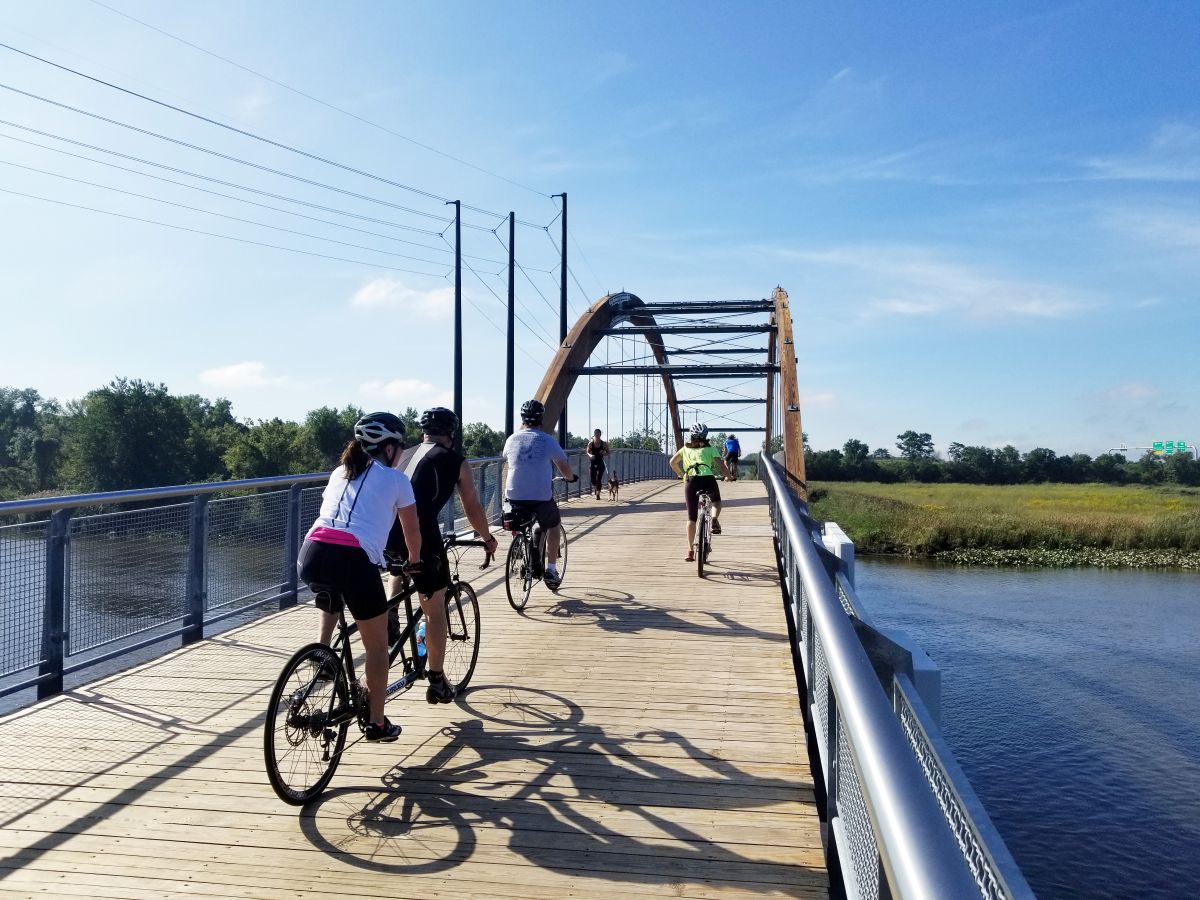
Modeling shows that continuing current policies could cut transportation emissions by nearly 40% by 2050. With additional measures, including widespread electric vehicle adoption, more transit and active transportation options and a cleaner electrical grid, emissions could drop by over 70%. Reaching full net-zero will require ongoing electrification and strategic investments in infrastructure and planning.
Below is a summary of transportation goals, strategies and actions from the 2025 Delaware Climate Action Plan (PDF). Download the plan for full context.
T1.1. Support the implementation of the DART Reimagined plan to deliver measurable operational improvements.
T1.2. Extend core local bus routes to state, county and municipal parks during peak visit hours and on weekends.
T1.3. Actively support and fund transit initiatives focused on bus rapid transit service.
T1.4. Prioritize capital funding for the upgrade of passenger amenities at bus stops, including seating, lighting, weather protection and clear digital signage.
T2.1. Ensure continued regional rail service by maintaining SEPTA, MARC and AMTRAK service in Delaware.
T2.2. Support the ongoing feasibility study for Diamond State Rail, which would provide rail service statewide.
T3.1. Expand micromobility, shuttles and other shared mobility services in areas where traditional transit is not cost-effective.
T3.2. Invest in mobility hubs that allow safe and convenient transfers among buses, trains, car share vehicles, bikes and other forms of transportation.
T4.1. Update DelDOT capital projects design guidance to prioritize safe biking design.
T4.2. Develop criteria that address the acute and cumulative effects of transportation pollution in roadway planning.
T4.3. Strengthen the standards and enforcement of Delaware’s “Complete Streets” policy to accelerate and enhance existing efforts to create complete communities.
T5.1. Implement incentive programs for bike and e-bike adoption in low-income communities.
T5.2. Pilot citywide bike and community bike share programs.
T5.3. Provide model codes to municipalities for bike parking minimums and design.
T6.1. Collaborate with local governments, Metropolitan Planning Organizations and state agencies to encourage compact, mixed-use development, especially near transit and central business districts.
T6.2. Provide assistance to local governments to support reducing or eliminating minimum parking requirements.
T6.3. Develop pedestrian- and cyclist-only interconnections between businesses and residential areas.
T6.4. Invest in infrastructure upgrades to increase safety, such as signaling at crosswalks and intersections, raised crosswalks and traffic calming measures.
T6.5. Improve community engagement in transportation planning by establishing more inclusive, transparent and consistent processes.
T7.1. Increase DelDOT Cycling Infrastructure Innovation Fund.
T7.2. Continue to explore and maximize opportunities for active transportation infrastructure and innovation using state transportation funds.
T7.3. Support funding for education/access programs — e.g., DelDOT’s Safe Routes to School program.
T8.1. Expand state incentive programs for electric and plug-in hybrid electric vehicle purchases and leases.
T8.2. Establish local electric vehicle car sharing programs to support access to zero-emission vehicle mobility for populations with limited access to personal vehicles.
T8.3. Launch an electric vehicle facilitator program offering technical assistance and guidance to support residents and businesses adopting electric vehicles.
T9.1. Collaborate with schools to incorporate clean transportation topics into driver education, environmental science and vocational programming.
T9.2. Co-host electric vehicle ride-and-drives and dealer open houses, translate materials and use trusted messengers to share information about electric vehicles, rebates and charging with overburdened and under-resourced communities.
T10.1. Create model ordinances for local governments to streamline permitting and installation of vehicle charging stations.
T10.2. Launch a pilot program for on-street charging.
T10.3. Expand state incentive programs for electric vehicle infrastructure.
T10.4. Consider implementing consumer protections related to electric vehicle charging.
T11.1. Identify locations and deploy charging infrastructure for medium- and heavy-duty electric vehicles through the multi-state Clean Corridor Coalition.
T12.1. Continue efforts to address challenges and opportunities for installation and operation of school bus charging stations.
T12.2. Encourage electrification of privately contracted school buses.
T13.1. Support the adoption of idle mitigation strategies and logistics management strategies.
T13.2. Encourage freight businesses to adopt best practices for route optimization, last mile solutions and mode switching.
T13.3. Improve marketing of existing incentive programs for fuel switching to accelerate the transition to zero-emission vehicles.
T14.1. Assess potential applications for hydrogen fuel cells, renewable natural gas and renewable diesel where feasible.
T14.2. Work with industry partners to understand fueling infrastructure needs for alternative fuels.
T14.3. Explore pilot projects to test emerging low-carbon fuels in sectors where emissions are difficult to reduce
T15.1. Expand existing and create new programs to incentivize the electrification of commercial lawn equipment.
T15.2. Work with affordable housing partner organizations to provide zero-emission lawn care equipment to new homeowners, especially in overburdened or under-resourced communities.
T15.3. Launch an outreach campaign to educate residents, landscaping professionals and property managers on the benefits of zero-emission lawn care equipment.
T16.1. Track innovations in sustainable aviation fuel production and potential opportunities for Delaware agricultural producers.
T16.2. Explore pathways and incentives for increasing the use of sustainable aviation fuel.
T17.1. Consider pilot programs for port equipment electrification and renewable shore power.
T17.2. Reduce barriers to electrification by working with utilities to reduce electricity demand charges.
Delaware's Governor
State Agencies
Elected Officials
General Assembly
Delaware Courts
State Employees
Cities & Towns
Delaware State Code
State Regulations
Business First Steps
Phone Directory
Locations Directory
Public Meetings
Voting & Elections
Transparency
Health Insurance
Tax Center
Personal Income Tax
Privacy Policy
Weather & Travel
Contact Us
Corporations
Franchise Tax
Gross Receipts Tax
Withholding Tax
Delaware Topics
Help Center
Mobile Apps
E-mail / Text Alerts
Social Media


Built by the Government Information Center
©MMXXVI Delaware.gov