DNREC Menu

Delaware’s buildings are a central part of daily life and a growing source of greenhouse gas emissions. Because buildings vary widely in age, size and use, there is no single solution for reducing emissions. In 2021, the buildings sector produced about 14% of Delaware’s total emissions, with commercial buildings accounting for slightly more than homes. Building-related emissions come primarily from energy use for heating and cooling systems, as well as cooking, refrigerants, lighting and insulation.
Reducing emissions from buildings starts with how energy is used. The largest opportunities lie in improving energy efficiency and transitioning from fossil fuels to clean electric technologies, such as heat pumps and high-efficiency appliances. Upgrading existing buildings can cut energy costs, improve comfort and reduce pollution, while new construction presents a chance to lock in long-term savings by building to modern efficiency and electrification standards.
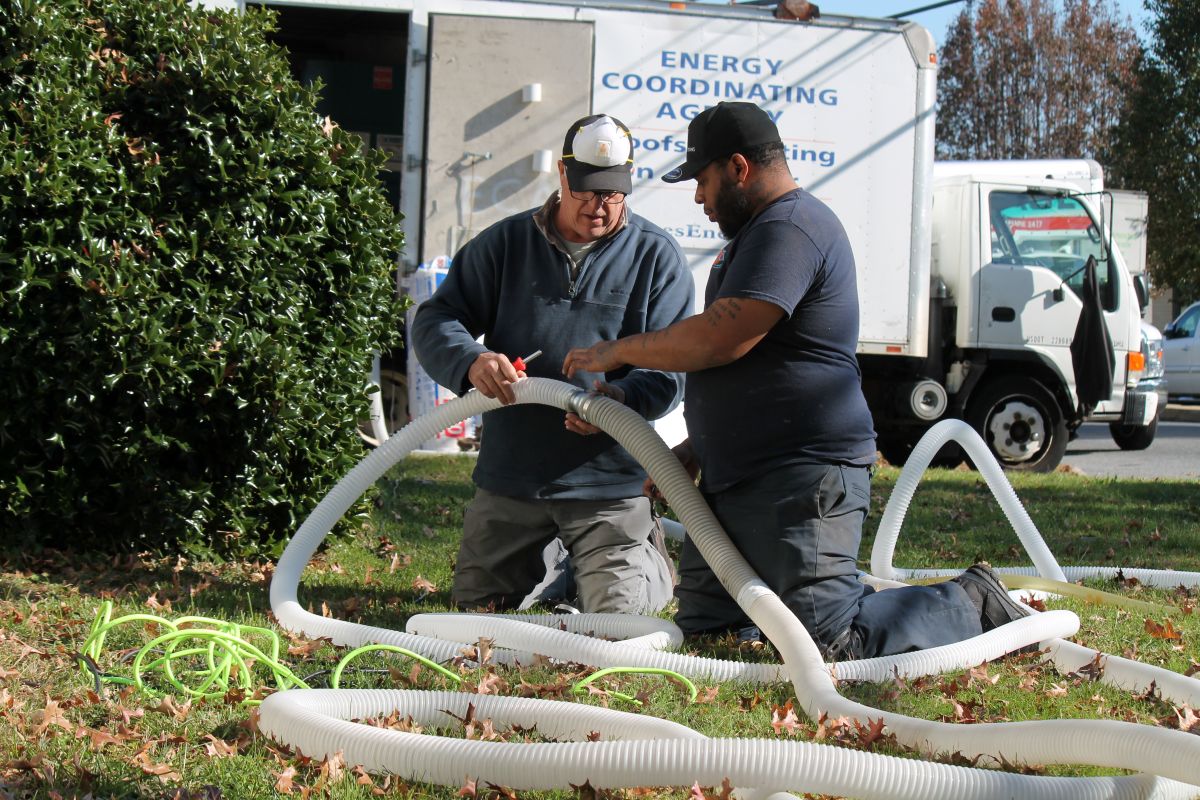
Delaware has already made progress through stronger energy codes, expanded weatherization programs for low-income households, and new policies like solar-ready building requirements, helping residents and businesses lower bills while reducing emissions.
Modeling shows that widespread electrification of heating and appliances, continued improvements in building energy codes and expanded use of rooftop solar could dramatically reduce emissions from homes and businesses. These actions are most effective when paired with a cleaner electric grid, allowing buildings to run on increasingly renewable energy. Investing in efficient, all-electric buildings not only supports climate goals, but also delivers healthier indoor air, more affordable energy costs and resilient communities as Delaware continues to grow.
Below is a summary of residential and commercial buildings goals, strategies and actions from the 2025 Delaware Climate Action Plan (PDF). Download the plan for full context.
B1.1. Conduct statewide energy code compliance studies every 3 to 5 years to assess implementation effectiveness, inform future code updates and identify technical assistance needs.
B1.2. Use code compliance study findings to set performance targets and develop technical assistance and training resources for builders and code enforcement officials.
B1.3. Support local code adoption by providing counties and municipalities with technical assistance, policy tool kits, model stretch codes and training resources.
B1.4. Explore adopting rigorous green building standards, certifications and incentives.
B2.1. Launch a building energy inventory for all state-owned buildings.
B2.2. Complete an economy-wide energy benchmarking study to establish baseline data for building performance standards.
B2.3. Establish mandatory energy benchmarking, disclosure and building performance standards for large commercial, institutional and multifamily residential buildings to drive continuous energy and emission reductions.
B2.4. Explore a Home Energy Score or residential energy labeling program to provide standardized energy performance information at the time of home sale or rental, empowering homeowners and buyers to make energy-conscious decisions.
B3.1. Require electric appliances and heat pumps in new affordable housing projects supported by state financing programs.
B3.2. Incentivize affordable housing projects that meet rigorous green building standards and certification for renewable energy and efficiency.
B4.1. Develop new, substantial incentives to encourage voluntary transition to high-efficiency heat pumps for heating and cooling in existing buildings.
B4.2. Assess feasibility of establishing statewide requirements for all-electric HVAC systems sales by 2040.
B4.3. Improve heat pump training opportunities for HVAC professionals, especially for retrofits of existing homes.
B5.1. Develop a Strategic Energy Management program to help Delaware businesses integrate energy management strategies into business practices.
B5.2. Expand the Energy Efficiency Investment Fund eligibility to include all Delaware businesses and nonprofits.
B5.3. Encourage expansion of utility-managed energy efficiency programs to include building decarbonization pilot initiatives.
B6.1. Expand the Weatherization Assistance Program to include additional cost-effective measures such as low-cost interior storm windows and reflective roof coatings for older homes.
B6.2. Partner with other agencies and community organizations to provide comprehensive energy efficiency education for clients of assistance programs, empowering residents to maintain savings and improve comfort.
B6.3. Expand existing energy efficiency programs to increase participation and support for minority-, women- and veteran-owned small businesses.
B6.4. Increase energy-related subsidies, including a low-income rate for electricity, to help reduce utility costs for low- and moderate-income households.
B7.1. Assess feasibility of adopting state appliance efficiency standards, including for space heating, water heating and cooking appliances.
B7.2. Phase out incentives for fossil fuel-powered equipment in state-funded energy programs.
B7.3. Expand incentive programs for heat pump water heating, clothes dryers, stoves and other high-efficiency appliances.
B7.4. Develop education and training resources on electric cooking appliances for commercial kitchens, residents and contractors by 2030.
Delaware's Governor
State Agencies
Elected Officials
General Assembly
Delaware Courts
State Employees
Cities & Towns
Delaware State Code
State Regulations
Business First Steps
Phone Directory
Locations Directory
Public Meetings
Voting & Elections
Transparency
Health Insurance
Tax Center
Personal Income Tax
Privacy Policy
Weather & Travel
Contact Us
Corporations
Franchise Tax
Gross Receipts Tax
Withholding Tax
Delaware Topics
Help Center
Mobile Apps
E-mail / Text Alerts
Social Media


Built by the Government Information Center
©MMXXVI Delaware.gov