DNREC Menu

In Delaware, no one is ever more than a mile from water. The state’s 381 miles of coastline and nearly 300,000 acres of wetlands provide substantial economic, ecological and community benefits. These coastal and marine systems also play a critical role in Delaware’s climate strategy by storing and sequestering carbon in vegetation, sediments and submerged aquatic habitats.
Wetlands alone contribute an estimated one to three billion dollars in annual economic value, while the Atlantic Ocean and Delaware’s bays and estuaries support habitat, infrastructure and growing opportunities for renewable energy development.
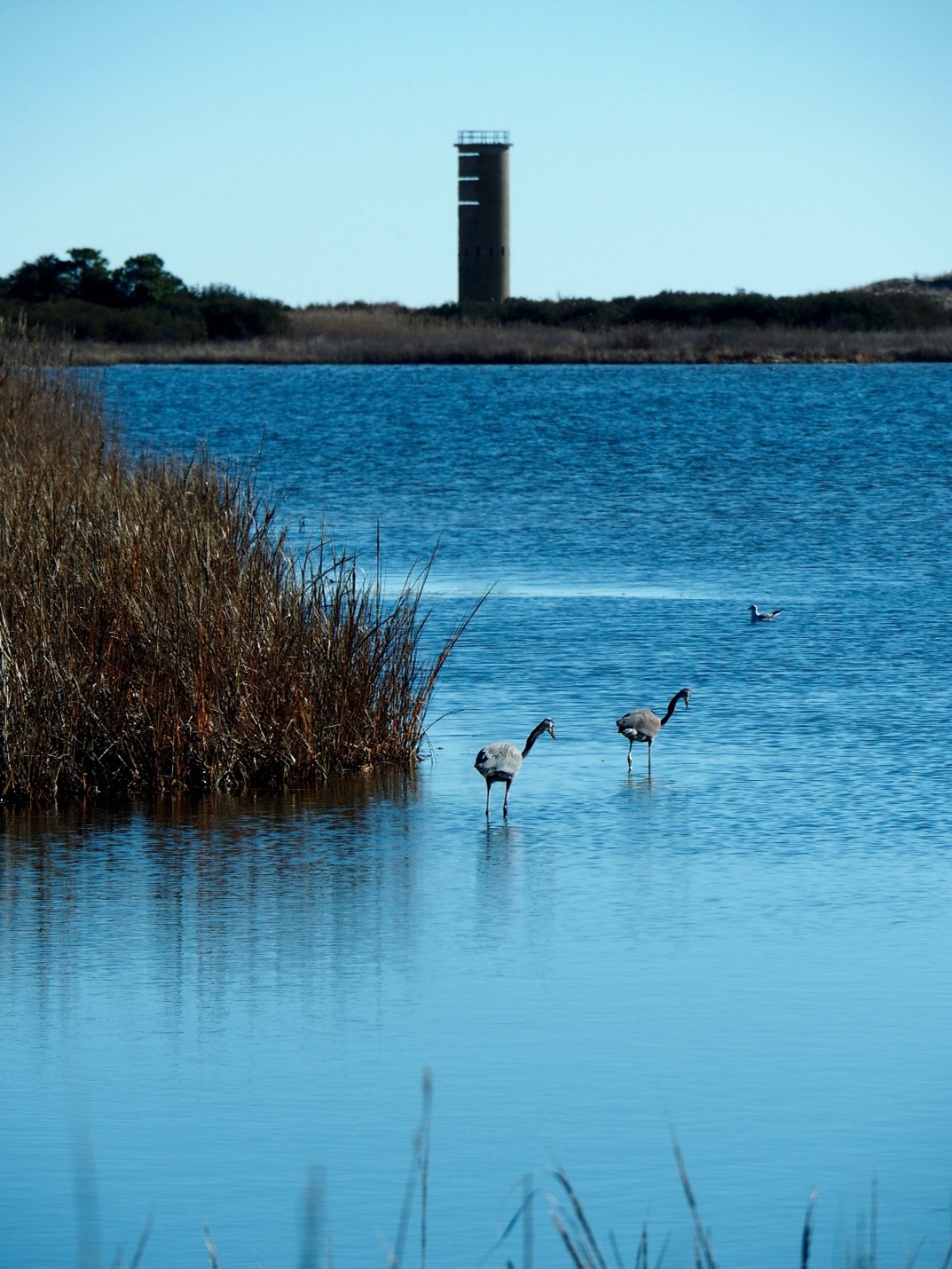
Wetlands and oceans are among the most effective natural carbon sinks, with national research showing that wetlands can store carbon up to ten times more efficiently than forests. While Delaware’s greenhouse gas inventory does not yet fully account for carbon stored in wetlands and marine systems due to data limitations, ongoing research is improving understanding of their sequestration potential.
Efforts to monitor wetland elevation, restore submerged aquatic vegetation and assess carbon storage in tidal marshes are strengthening Delaware’s ability to manage these ecosystems amid sea level rise and other climate stressors.
Modeling for this plan shows that wetlands alone could provide significant and sustained carbon sequestration through mid-century if existing protections are maintained, wetlands are restored and allowed to migrate inland and management practices continue to improve. Protecting and enhancing these natural systems not only supports emission goals but also strengthens coastal resilience, safeguards communities and preserves the environmental and economic benefits that Delaware’s waters provide.
Below is a summary of oceans and wetlands goals, strategies and actions from the 2025 Delaware Climate Action Plan (PDF). Download the plan for full context.
O1.1. Assist counties and municipalities with wetland preservation ordinances and practices.
O1.2. Strengthen Delaware’s Wetlands Act to increase regulatory protections for tidal wetlands and include non-tidal wetlands.
O1.3. Expand wetland restoration efforts, especially those that increase carbon storage.
O1.4. Integrate carbon sequestration concepts into environmental and wetland education programs.
O2.1. Identify areas most viable for marsh migration.
O2.2. Ensure that existing conservation and financial incentive programs support marsh migration, with a special focus on incentivizing private landowners.
O2.3. Incorporate marsh migration into comprehensive development plans.
O3.1. Expand existing program for wetland elevation data collection and analysis.
O3.2. Support research to improve understanding of wetland carbon sinks and wetland methane sources.
O3.3. Where feasible, restore tidal wetlands by fully re-establishing tidal connections to reduce methane emissions.
O4.1. Map submerged aquatic vegetation and continue habitat suitability research.
O4.2. Continue and expand funding for marine carbon restoration projects and environmental education programs.
O5.1. Monitor outcomes of pilot projects in the region.
O5.2. Advance Delaware-based research on the benefits and trade-offs of marine carbon dioxide removal.
O5.3. Conduct a gap analysis of state regulations and policies for marine carbon dioxide removal projects.
Delaware's Governor
State Agencies
Elected Officials
General Assembly
Delaware Courts
State Employees
Cities & Towns
Delaware State Code
State Regulations
Business First Steps
Phone Directory
Locations Directory
Public Meetings
Voting & Elections
Transparency
Health Insurance
Tax Center
Personal Income Tax
Privacy Policy
Weather & Travel
Contact Us
Corporations
Franchise Tax
Gross Receipts Tax
Withholding Tax
Delaware Topics
Help Center
Mobile Apps
E-mail / Text Alerts
Social Media


Built by the Government Information Center
©MMXXVI Delaware.gov