DNREC Menu

The industry sector is Delaware’s third-largest source of greenhouse gas emissions, accounting for 23.1% of statewide emissions in 2021. Although industrial emissions are 7.3% lower than in 2005, emissions are projected to grow without additional action. By 2050, industrial emissions are expected to overtake transportation as the state’s largest source of greenhouse gases, highlighting the need for targeted decarbonization strategies.
Industrial activity has long been central to Delaware’s economy, dating back to the 1700s when mills along the Brandywine River produced flour, cloth and gunpowder. Today, Delaware’s industrial base includes pharmaceutical and chemical manufacturing, petroleum refining, food processing and fabricated metals. Nearly 600 manufacturing companies employ more than 35,000 people statewide and contribute billions of dollars annually to the state’s economy, underscoring the sector’s continued economic importance.
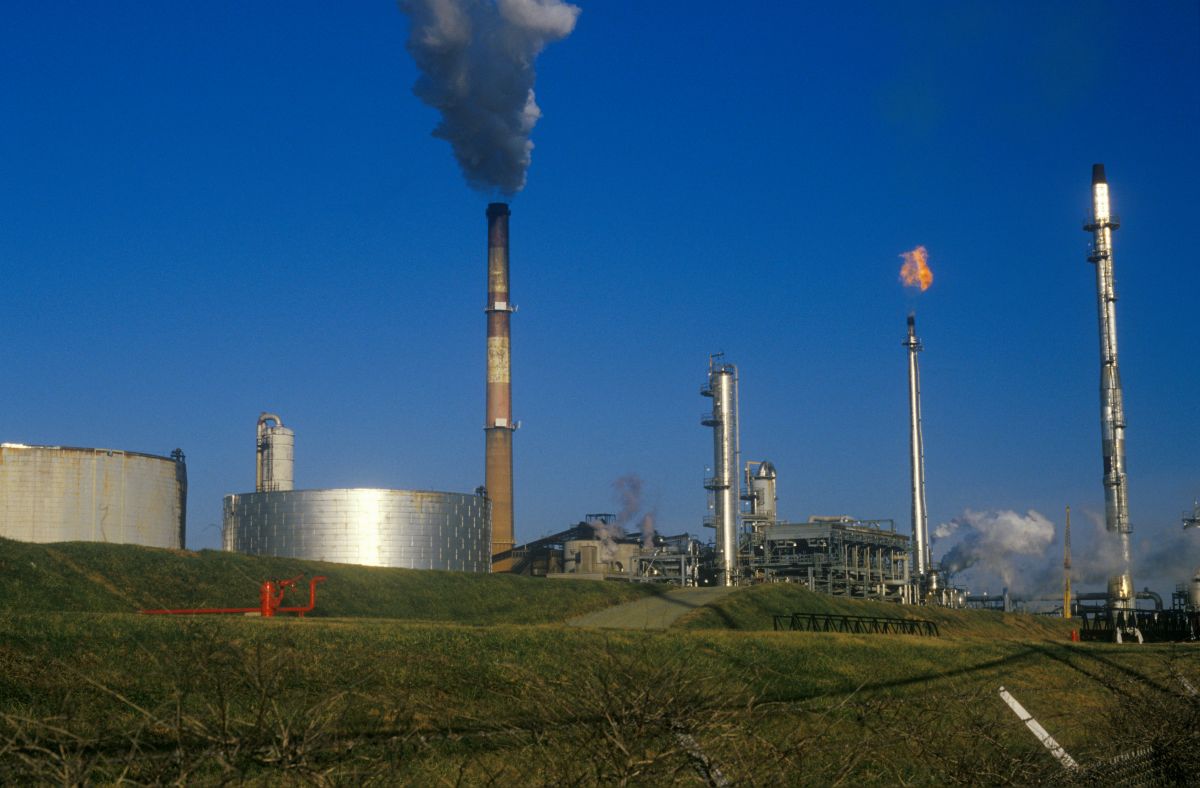
Petroleum refining is currently the largest contributor to industrial emissions, followed by chemical manufacturing and other non-energy-producing industries. Reducing emissions in this sector is particularly challenging because effective solutions vary widely based on facility size, manufacturing processes and location. Nevertheless, achieving Delaware’s emissions reduction targets depends on meaningful progress across all industrial subsectors through efficiency improvements, low-carbon energy adoption and emerging technologies.
Below is a summary of industry goals, strategies and actions from the 2025 Delaware Climate Action Plan (PDF). Download the plan for full context.
I1.1. Explore the tools and technical assistance needed to assist businesses to create short- and long-term decarbonization plans.
I1.2. Establish a community of practice for industrial organizations and businesses engaged in advancing sustainability.
I2.1. Expand State and Local Emissions Inventory System (SLEIS) to require more complete emissions inventories, including greenhouse gases.
I2.2. Evaluate the feasibility of a regional industrial cap-and-trade program, including emissions reduction potential and community and economic costs and benefits.
I3.1. Facilitate pilot projects to develop case studies and proofs-of-concept for energy storage.
I3.2. Support investments and incentives for industrial battery storage to reduce demand charges and improve grid reliability.
I3.3. Explore the feasibility of thermal and chemical energy storage systems.
I4.1. Explore improved financing mechanisms for energy-efficient combined heat and power systems and large industrial equipment.
I4.2. Conduct feasibility analyses for on-site use of captured waste heat.
I4.3. Explore the potential for industrial district heating systems to share waste heat with nearby buildings.
I5.1. Support pilot programs for electric and hybrid boiler replacements for low-pressure steam boilers.
I5.2. Support pilot programs for industrial heat pumps.
I5.3. Explore incentives for electric ovens and fryers in industrial food preparation.
I5.4. Explore incentives to replace low-pressure steam boilers with industrial heat pumps.
I6.1. Support research, development and pilot projects to replace hydrocarbon-based heat with electricity.
I6.2. Conduct a feasibility analysis of using heat pumps for hot oil heating.
I7.1. Develop incentives for on-site renewable energy systems at industrial facilities.
I7.2. Evaluate the potential for biofuel production and use in applications where emissions reductions are most difficult.
I7.3. Assess renewable natural gas potential and opportunities to expand fueling station infrastructure.
I8.1. Provide economic incentives for storing and reusing materials.
I8.2. Facilitate material and waste exchange among facilities via pilot programs and demonstration projects.
I9.1. Support research and development on clean hydrogen production.
I9.2. Support pilot projects for clean hydrogen end-uses.
I9.3. Maintain partnerships to support the emerging regional clean hydrogen innovation industry.
I10.1. Conduct a legal analysis to prepare for permitting and regulation of hydrogen production, refining and use, including pipeline readiness.
I10.2. Investigate opportunities and challenges for clean hydrogen production and end-uses in applications where emission reductions are most difficult.
I10.3. Support workforce training and development for clean hydrogen technology and end-uses.
I10.4. Partner with emergency managers to establish clear safety protocols, identify potential emergency response needs and ensure community safety.
I11.1. Conduct a comprehensive assessment of carbon capture technology deployment opportunities across Delaware’s industry sector.
I11.2. Develop a regulatory framework and identify suitable sites for carbon capture, utilization and storage as well as pipeline infrastructure.
I11.3. Identify financing mechanisms and incentives for pilot projects and deployment.
Delaware's Governor
State Agencies
Elected Officials
General Assembly
Delaware Courts
State Employees
Cities & Towns
Delaware State Code
State Regulations
Business First Steps
Phone Directory
Locations Directory
Public Meetings
Voting & Elections
Transparency
Health Insurance
Tax Center
Personal Income Tax
Privacy Policy
Weather & Travel
Contact Us
Corporations
Franchise Tax
Gross Receipts Tax
Withholding Tax
Delaware Topics
Help Center
Mobile Apps
E-mail / Text Alerts
Social Media


Built by the Government Information Center
©MMXXVI Delaware.gov