DNREC Menu

Agriculture is a vital part of Delaware’s economy and landscape, supporting farm families, food production and covering more than 40% of the state’s land area. In addition to its economic value, farmland plays an important role in addressing climate change by storing carbon in soils and vegetation. While agriculture contributes a relatively small share of Delaware’s greenhouse gas emissions – about 3% in 2021 – emissions have increased since 2005, driven by energy use in poultry operations, nutrient and manure management and the loss of farmland to development.
Delaware has a strong foundation of policies and programs that support climate-smart agriculture. Longstanding efforts such as the Aglands Preservation Program and the Nutrient Management Program help protect farmland, improve water quality and reduce emissions.
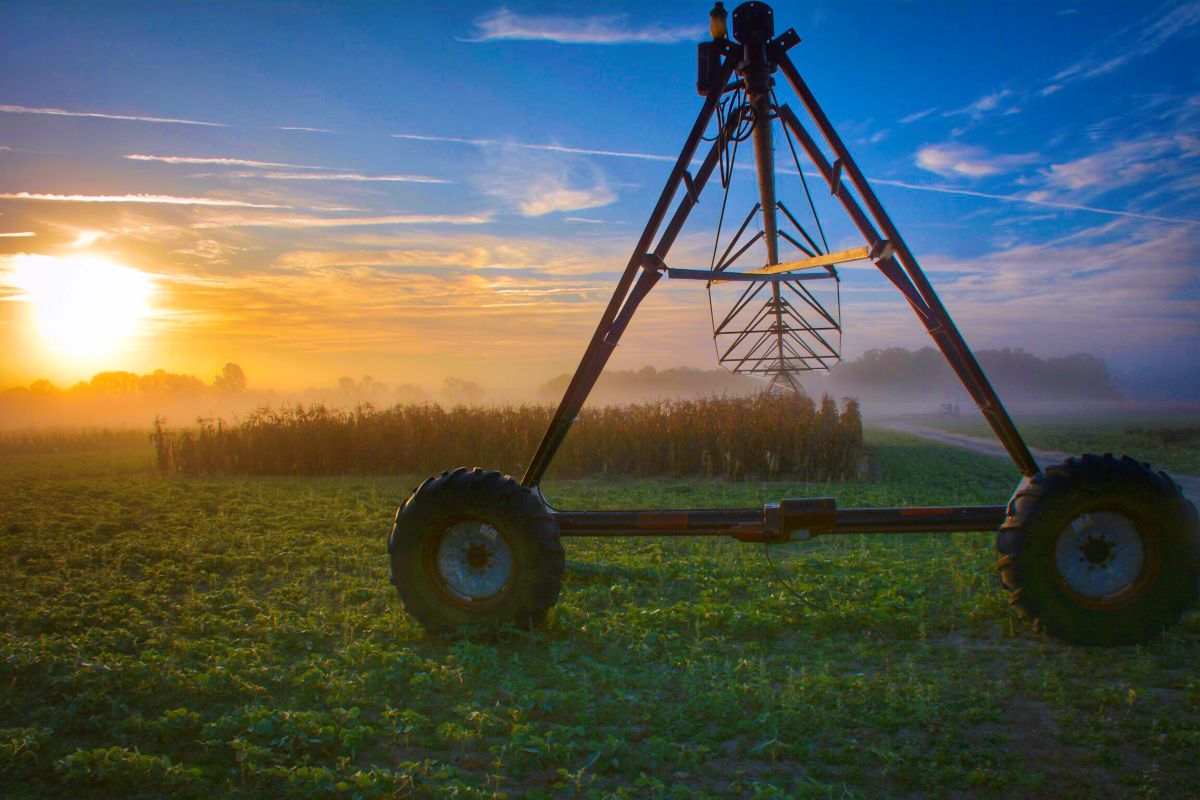
Recent progress includes expanded farmland preservation, increased funding for cover crops and growing interest in reducing energy use on farms through efficiency improvements and on-farm solar.
Delaware’s pathway to net-zero relies on strategies that help expand cover crops, adopt precision agriculture practices, improve fertilizer efficiency and support low-carbon poultry operations. These actions provide meaningful climate benefits and help support farm viability.
Below is a summary of agriculture goals, strategies and actions from the 2025 Delaware Climate Action Plan (PDF). Download the plan for full context.
A1.1. Launch research program on soil carbon changes and sequestration to inform best management practices.
A1.2. Continue to support no-till and low-till practices in Delaware.
A1.3. Cover an additional 3,000 acres with cover crops through cost share programs and conservation district partnerships.
A1.4. Expand support for agricultural producers to adopt practices that increase soil carbon.
A1.5. Promote emission reductions by encouraging and supporting practices that enhance irrigation efficiency.
A2.1. Expand agroforestry practices used in Delaware, with a goal of adding 1,000 acres.
A2.2. Increase use of forest or grass buffers adjacent to croplands.
A3.1. Expand adoption of enhanced efficiency fertilizers.
A3.2. Study benefits of slow-release synthetic nitrogen fertilizer.
A3.3. Support and expand the adoption of in-season soil nitrate sampling and plant tissue testing.
A3.4. Expand the practice of seasonally splitting nitrogen fertilizer applications.
A3.5. Incentivize adoption of in-furrow soil application of nutrients with seeds to improve nutrient uptake efficiency and reduce runoff.
A4.1. Support the use of variable rate technologies for all nutrient applications.
A4.2. Expand Delaware-based research and demonstration projects for precision agriculture methods applications.
A4.3. Support integration of precision agriculture methods into education and training for workforce development.
A4.4. Develop and enhance partnerships to collaborate with the private sector on expanding precision agriculture adoption.
A5.1. Support research and pilot programs on innovative agrivoltaics to balance land use between agricultural production and energy solutions.
A5.2. Support increased voluntary agricultural land preservation to help achieve the agricultural land preservation goals.
A5.3. Update and increase funding for the Aglands Preservation Fund to keep pace with rising costs of land over time.
A5.4. Explore zoning mechanisms to incentivize conservation of agricultural lands.
A6.1. Expand voluntary programs for solar panel installation on or adjacent to poultry houses.
A6.2. Research contribution and management of nitrous oxide emissions from poultry houses.
A6.3. Research the impact of routine mortality poultry composting on emission reductions.
A6.4. Investigate the feasibility and community impacts of on-site anaerobic digestion of organic waste from poultry houses to offset energy demand.
A7.1. Expand silvopasture practices in Delaware to encompass at least 500 acres of pasturelands.
A7.2. Support practice of seasonal split nutrient applications and reduce applications based on soil nitrate sampling.
A7.3. Encourage practices of minimal soil disturbance in fertilizer application.
Delaware's Governor
State Agencies
Elected Officials
General Assembly
Delaware Courts
State Employees
Cities & Towns
Delaware State Code
State Regulations
Business First Steps
Phone Directory
Locations Directory
Public Meetings
Voting & Elections
Transparency
Health Insurance
Tax Center
Personal Income Tax
Privacy Policy
Weather & Travel
Contact Us
Corporations
Franchise Tax
Gross Receipts Tax
Withholding Tax
Delaware Topics
Help Center
Mobile Apps
E-mail / Text Alerts
Social Media


Built by the Government Information Center
©MMXXVI Delaware.gov