DNREC Menu

Along Delaware’s coastlines, throughout its communities and across its natural lands, the evidence of a world impacted by manmade climate change is overwhelming.
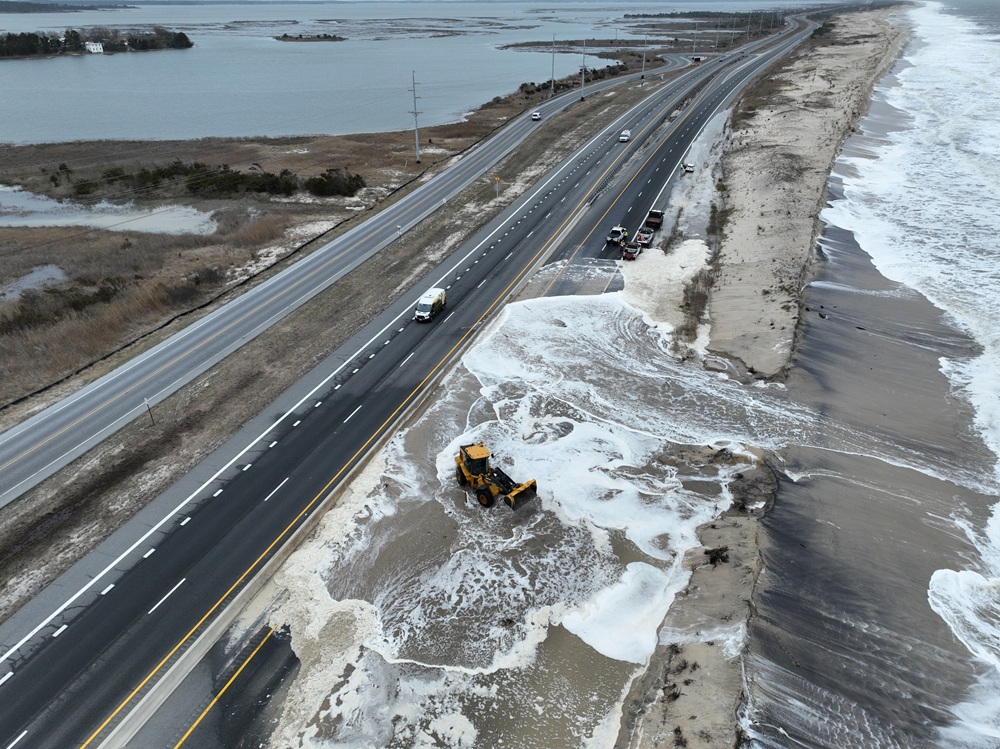
The sea level at the Lewes tide gauge has risen 15 inches since 1919 and could climb by more than a foot in just the next 25 years. Flooding considered a once-in-a-decade event not long ago is becoming increasingly common. Storms have grown more severe and less predictable. And the state’s average annual temperature, already up 3 degrees Fahrenheit since 1895, could rise by at least that same amount again by 2050.
From Delmar to Claymont, from Hartly to Little Creek, the impacts are clear: Climate change driven by greenhouse gas emissions is reshaping Delaware and will only grow worse unless we continue to take significant action.
And Delawareans are concerned and are asking for leadership. A 2025 survey from the Delaware Department of Natural Resources and Environmental Control found three-quarters of residents view climate change as a significant threat, and two-thirds believe the state can do more to address it.
Fortunately, policymakers are not just standing by. State, county and municipal governments have already taken steps to confront our changing climate, and those efforts are picking up speed.
Over the past 225 years, carbon dioxide levels in the atmosphere have risen roughly 50% and now stand at their highest level in 3 million years. The result is a planet that is warming faster than at any point in recorded human history, driven not by natural variation alone but by the choices societies have made about how to power themselves.
As the Delaware Climate Action Plan explains, the forces reshaping Delaware’s climate are not natural cycles or random fluctuations. Rather, they are the predictable consequences of human activities, specifically the burning of fossil fuels that have released carbon dioxide and other greenhouse gases into the atmosphere at an unprecedented rate since the advent of the Industrial Revolution.
While every person has a role to play in confronting this crisis, much of the foundational work is coordinated by DNREC, which released the updated Climate Action Plan earlier this year.
The plan serves as a guide to combating climate change, presenting hundreds of strategies and accompanying actions to achieve those strategies. It includes steps individuals can take, but underlying support from local governments, businesses, not-for-profits and the state is essential to fulfilling the plan’s mission.
First published in 2021, the Climate Action Plan was officially updated in 2025 after a multiyear process that included acquiring input from thousands of Delawareans. The plan simultaneously lays out a detailed series of adaptations that work together to help us adjust to sea level rise, hotter temperatures and more intense storms, while also proposing significant steps to lower greenhouse gas emissions and slow those changes at the source.
If fully implemented, it could reshape life in the First State for the better: improved public health, more walkable and bikeable communities, lower utility bills and effective safeguards against rising waters and temperatures.
Delaware doesn’t have to just continue weathering climate change but can lead by taking action. Bold and innovative leaders (something Delaware has no shortage of) can implement policies that benefit everyone and position the First State as a trailblazer for climate action.

Investments in our communities, our businesses, our infrastructure and, above all else, our people could pay for themselves many times over in the years to come.
DNREC already has programs in place aimed at reducing the emissions that cause climate change, from electric vehicle incentives to energy efficiency and renewable energy system upgrades. The Delaware Clean Vehicle Rebate Program, for example, provides a cash rebate for recent buyers of an electric vehicle. This helps make EVs more affordable for Delawareans while reducing transportation-related emissions — especially significant given transportation is Delaware’s largest source of emissions, accounting for nearly 30% of the state’s total.
Initiatives like these can reduce the impacts of climate change while saving taxpayers money by lowering energy usage, driving down health care expenses and reducing the need for frequent building and infrastructure repairs. According to a study by the U.S. Chamber of Commerce, every $1 invested in resilience and disaster preparedness generates $13 in long-term savings.
What’s more, these changes can also create a wealth of new job opportunities.
Currently, about 2.5% of jobs in Delaware are in clean energy, according to the Climate Action Plan, with most concentrated in energy efficiency. According to a 2024 analysis, the field is expected to grow 14% annually — almost 1,800 jobs per year by 2030. That tracks with research from the World Resources Institute, which found national clean energy job growth outpaced the broader market from 2021 to 2024.
Not addressing climate change would hinder our economy. Consider our tourism industry, which would take a major hit without meaningful action. Sea level rise threatens our beach communities and infrastructure around the state, while scorching temperatures and poor air quality, like we experienced in July, can force the cancellation of outdoor events and keep people indoors. The summer air quality issue, which stemmed from large-scale Canadian wildfires, was itself exacerbated by climate change, as hotter, drier conditions have made it easier for fires to start, grow and spread.
Projections recently issued by state experts indicate sea levels in Delaware could rise as much as 5 feet by 2100, enough to permanently inundate 11% of the state’s landmass. And that doesn’t even consider the salt water from our oceans creeping inland, threatening agriculture, drinking water and wildlife habitats.
Record heat also poses health risks, especially for already vulnerable populations like young children and the elderly, as well as outdoor workers. Days over 90 degrees Fahrenheit, typically uncommon in Delaware, could increase by 35 to 75 days in an average summer. Hot nights are also becoming more common, increasing the risk of heat-related illness by not giving the body a chance to cool down overnight.
Changing temperatures and precipitation patterns, coupled with longer growing seasons, intensify the danger of vector-borne illnesses carried by mosquitoes and ticks, such as Lyme disease and West Nile virus.
Some benefits, meanwhile, cannot be expressed purely in terms of dollars and cents. How do you put a price on interconnected communities where people are happier and healthier?
Imagine simply walking to nearby stores to run your errands or to a friend’s house instead of having to wait in traffic. Imagine lower energy bills, more green spaces, cleaner air, a more robust public transportation system and communities that are more resistant to extreme weather.
Delaware’s towns and cities aren’t starting from scratch either. Cities like Wilmington and Newark already have developed climate resilience plans, while Dewey Beach voted in March 2026 to develop its own plan.
“There is certainly a wealth of data that supports conclusions about increasing temperatures, sea level rise, and increasing intensity of coastal storms. We are trying to better define the risks the town faces, identify potential strategies for responsibly mitigating those risks and enhance the town’s resilience and ultimately its sustainability for the long term,” Dewey Beach Commissioner Gary Persinger said.
Increasingly, this sort of action is what Delawareans are demanding.
“My generation wants to see active action occurring at every level. We want governments and nonprofits to lead with bold solutions in order to combat this crisis, and we want individuals to push for change,” said Asvika Gobinathan, a 2026 graduate of the Charter School of Wilmington who was heavily involved with the Envirothon competition and the Youth Environmental Summit.
When Delaware invests in climate change adaptation and mitigation, we all win.
Related Topics: clean energy, climate action plan, climate change, climate coastal energy, economy, education, greenhouse gas, outdoor delaware, science, sea level rise
Delaware's Governor
State Agencies
Elected Officials
General Assembly
Delaware Courts
State Employees
Cities & Towns
Delaware State Code
State Regulations
Business First Steps
Phone Directory
Locations Directory
Public Meetings
Voting & Elections
Transparency
Health Insurance
Tax Center
Personal Income Tax
Privacy Policy
Weather & Travel
Contact Us
Corporations
Franchise Tax
Gross Receipts Tax
Withholding Tax
Delaware Topics
Help Center
Mobile Apps
E-mail / Text Alerts
Social Media


Built by the Government Information Center
©MMXXVI Delaware.gov