DNREC Menu

When Delaware announced its first confirmed case of chronic wasting disease this spring, many hunters had the same questions: What exactly does it mean? Can I still hunt deer? Is venison safe to eat? What happens next?
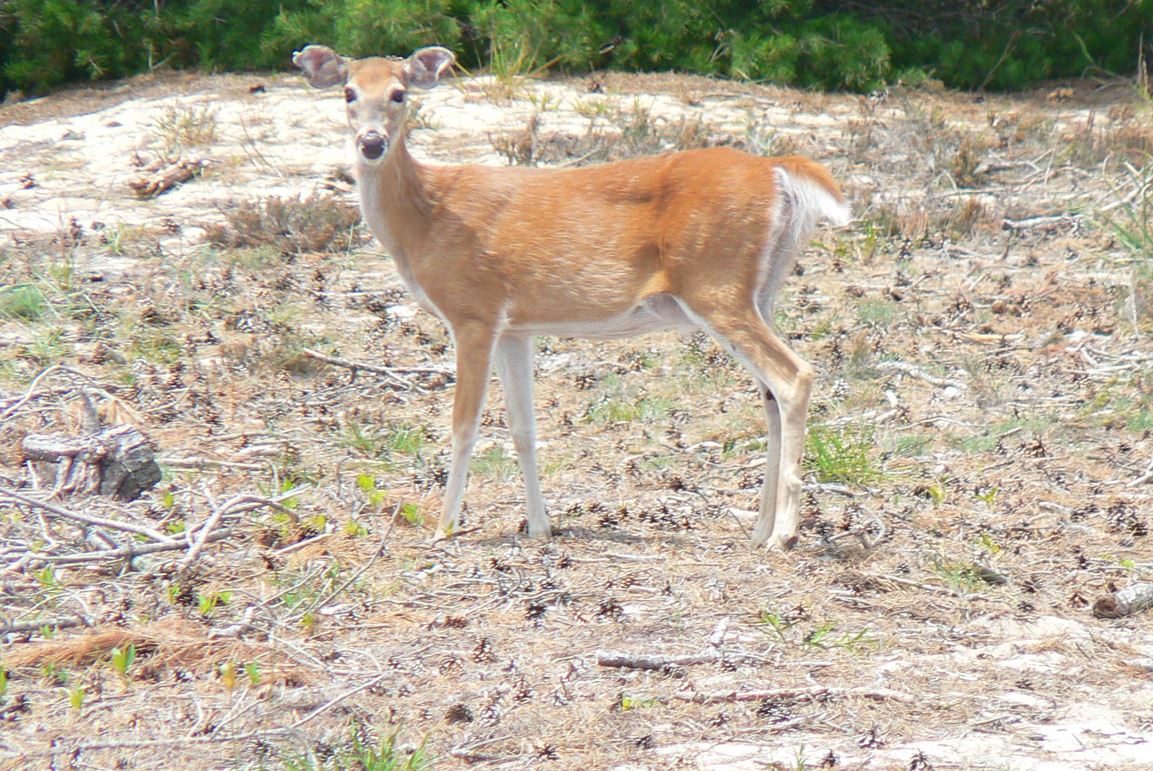
The short answer is that chronic wasting disease does not affect humans and hunters should not be discouraged from getting outdoors this fall.
“Please don’t be hesitant to donate the deer to Hunters Against Hunger, don’t be hesitant to go hunting,” said Sam Millman, a deer biologist with the Delaware Department of Natural Resources and Environmental Control. “That’s not what we’re trying to do here.”
The two deer that tested positive were harvested during the 2025-2026 hunting season in Sussex County. While they were the first known cases in Delaware, local wildlife biologists have been preparing for this possibility for decades and are working to better understand the disease and limit its spread.
First identified in the 1960s in captive deer, chronic wasting disease was not detected in wild ungulates for about 15 more years. It has since been found in 37 states, mostly concentrated in the Midwest and some of the Rocky Mountain states, and has steadily spread across North America for decades. Cases have also been observed in Canada, Norway, Finland, Sweden and South Korea.
In many ways, finding the disease is evidence that Delaware’s monitoring program is working. The First State has conducted routine surveillance for the disease every year since 2003, taking about 600 samples annually. Those samples are sent to a certified outside lab to test.
Over the course of more than 20 years, nearly 13,000 deer were tested before a case arose here.
“Our surveillance worked,” Millman emphasized. “We found it.”
The Centers for Disease Control and Prevention recommend as a precautionary measure people should test deer harvested in the same area as the infected deer for chronic wasting disease and not eat any meat that tests positive for the disease. In Delaware, that’s Wildlife Management Zones 14 and 16 in south-central Sussex County for now.
As part of its comprehensive plan to stop the spread, DNREC is working with the U.S. Department of Agriculture to collect more deer samples from the same area so as to determine the full extent of the issue. DNREC has already held a community meeting to inform the public and plans to host more.
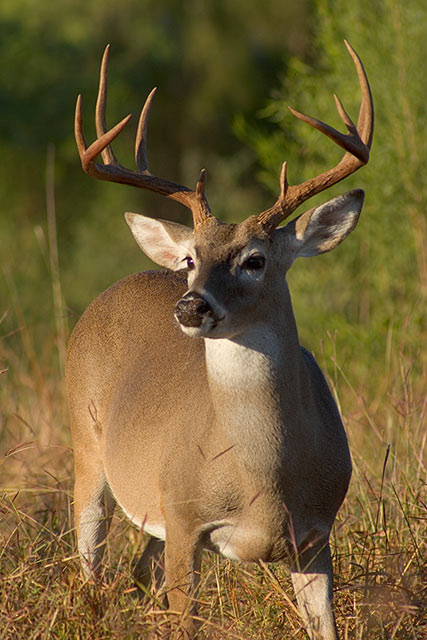
When deer season begins in September, DNREC will have a program available to enable hunters to have their deer tested. Specific details on how the program will work are still being considered, but hunters will be made aware of the procedures prior to the season opening. Further changes, such as mandatory testing within the affected Wildlife Management Zones during the November general firearm season, may also be implemented.
These collections will help DNREC better determine the extent of chronic wasting disease.
Measures will also be put in place for individuals who legally own deer in Delaware. Currently, there are three deer farms here, each of which are permitted and overseen by the Delaware Department of Agriculture: one near Hartly, one near Farmington and one near Millsboro.
There’s also no reason for hunters to shy away from DNREC’s popular Hunters Against Hunger program. Donations will be tested for chronic wasting disease before distribution, Millman noted, and venison from any deer testing positive will be discarded as a precaution.
Due to the geography of the Delmarva Peninsula, DNREC had expected to find the initial instance of chronic wasting disease in New Castle County, probably close to the Pennsylvania or Maryland state lines because the disease has previously been found in those states.
Exactly why it popped up in Sussex first isn’t clear, but there are several possibilities, including coming from a live deer that was infected and illegally released into the wild, from urine collected from deer as a hunting attractant that contained chronic wasting disease prions or from an infected carcass from a deer harvested in an area where chronic wasting disease occurred and the remains were disposed of in such a manner that wild deer came in contact with them.
Chronic wasting disease, or CWD, is a degenerative condition that essentially eats away at deer unlucky enough to have contracted it. It’s a transmissible spongiform encephalopathy, more commonly referred to as a prion disease, which occurs when proteins in the brain become misfolded.
Proteins are molecules fundamental to life as we know it. As part of the organic process, they fold, or change, from molecules arranged randomly to orderly three-dimensional structures able to fulfill vital functions. Sometimes, however, for reasons that are not very well understood, they fail to do so.
How Can I Limit Chronic Wasting Disease?
• Do not move live deer.
• Do not feed or provide water for wild deer.
• Dispose of unwanted deer carcasses by donating them to Delaware Hunters Against Hunger or taking them to a landfill. Do not bury them, as the disease can spread through the soil into plants and then to other deer that eat those flora.
• Do not bring deer carcasses into Delaware from another state.
• Use synthetic deer urine instead of natural urine.
• Do not eat deer brains, eyeballs, spinal cords, spleen or lymph nodes.
• When field-dressing or butchering deer, wear gloves, avoid cutting through bone, do not use household knives and make sure to clean utensils thoroughly with a mix of chlorine bleach and water.
• Avoid animals that appear sick or are acting strangely.
• Do not touch dead animals.
• Report sick or abnormal deer to DNREC at de.gov/reportsickwildlife. Signs may include weight loss, poor coordination, droopy ears, drooling, difficulty swallowing and frequent urination.
Though symptoms may take years to emerge, prion diseases disrupt cell functions, eventually leading to death. They can develop as a result of mutations or eating infected meat and can also be passed from mother to child.
Other prion diseases include mad cow disease in cattle and Creutzfeldt-Jakob disease in humans. Thankfully, prion diseases are rare, and some variants, including chronic wasting disease, are not known to affect humans.
While cases are reported around the globe from time to time, the best-known variant, mad cow disease, has mostly been eliminated since it was first identified in 1986. About 300 to 600 cases of Creutzfeldt-Jakob disease, the most common human prion disease, are reported in the United States annually.
There are no cures for any prion diseases.
Chronic wasting disease is a cousin that affects members of the deer family, including moose, elk and reindeer. A few studies have shown it can be transmitted to monkeys and mice in the right circumstances, but others have reported different results.
Deer that develop this condition suffer severe brain damage that worsens with time. Symptoms include significant weight loss (hence the “wasting” in the name), poor coordination, drooling, confusion, lethargy, excessive thirst, frequent urination, droopy ears and lack of caution around people.
Deer transmit chronic wasting disease to other members of the species through bodily fluids like saliva and urine. It can spread quickly in large populations kept in close proximity, although it can take years for an infected animal to show signs.
Chronic wasting disease invariably leads to death. Often, however, it’s not the disease itself but a side effect that kills the deer, such as catching pneumonia because of the frequent drooling or becoming so confused it walks into traffic.
Chronic wasting disease isn’t the only deer disease of note: Other conditions include hemorrhagic diseases such as epizootic hemorrhagic disease and bluetongue disease.
Among the signs of epizootic hemorrhagic disease are drooling, loss of appetite, weakness, internal bleeding and fever, which might cause the animal to lie in water to cool off. Bluetongue is similar and, as the name suggests, causes the animal’s tongue to appear blue due to loss of oxygen.
With both of these diseases, symptoms emerge about a week after exposure. The deer typically expires within two days from first showing signs, although some deer that contract the virus can develop a sufficient immune response to fight off the infection and recover. These surviving deer then carry antibodies that make them less susceptible to significant infections during future exposures. In the case of does, these antibodies are often passed down to their offspring, making them more resilient over time to outbreaks of epizootic hemorrhagic disease.
These diseases are transmitted by midges — small gnats, often called “no-see-ums” — typically when deer are drinking from bodies of water. They are quite contagious, meaning they tend to spread more easily during droughts when deer are clustered around the same watering holes as opposed to wetter periods when deer are more spread out because there are more drinking sources available. Cases mostly pop up during the summer, sometimes leading to large die-offs in a short period of time.
Similar to chronic wasting disease, epizootic hemorrhagic disease is not transmissible to humans or pets such as dogs and cats.
DNREC scientists keep an eye out for these conditions and test deer thought to possibly have contracted one of the diseases. That’s in contrast to chronic wasting disease, where the testing is more proactive.
Regardless, DNREC is on the case.
For more information on chronic wasting disease, contact Millman at Sam.Millman@delaware.gov or 302-735-8676 or visit de.gov/cwd.
Related Topics: animals, chronic wasting disease, deer, fish and wildlife, health, hunters, hunting, science
Delaware's Governor
State Agencies
Elected Officials
General Assembly
Delaware Courts
State Employees
Cities & Towns
Delaware State Code
State Regulations
Business First Steps
Phone Directory
Locations Directory
Public Meetings
Voting & Elections
Transparency
Health Insurance
Tax Center
Personal Income Tax
Privacy Policy
Weather & Travel
Contact Us
Corporations
Franchise Tax
Gross Receipts Tax
Withholding Tax
Delaware Topics
Help Center
Mobile Apps
E-mail / Text Alerts
Social Media


Built by the Government Information Center
©MMXXVI Delaware.gov