DNREC Menu
We often think of fire as purely destructive, a force that threatens property and lives alike. Anything bigger than a bonfire is inherently harmful and to be avoided for the damage it can bring — just consider the large wildfires in Canada and California that have been extensively covered by the news media over the past few years.
But, as wildlife experts can tell you, fire also has an important role in many ecosystems.
Fire can eliminate invasive species, remove dead vegetation and recycle nutrients into the soil. All this helps many species thrive, reduces the potential for major wildfires and promotes growth for numerous plants.
In the United States, the official policy for many years was to prevent fires. While this limited unintended damage, it also disrupted a cycle that had persisted since long before human intervention. Eventually, the importance of fire was recognized, and around the middle of the 20th century, the country’s stance on fire as a habitat management tool changed.
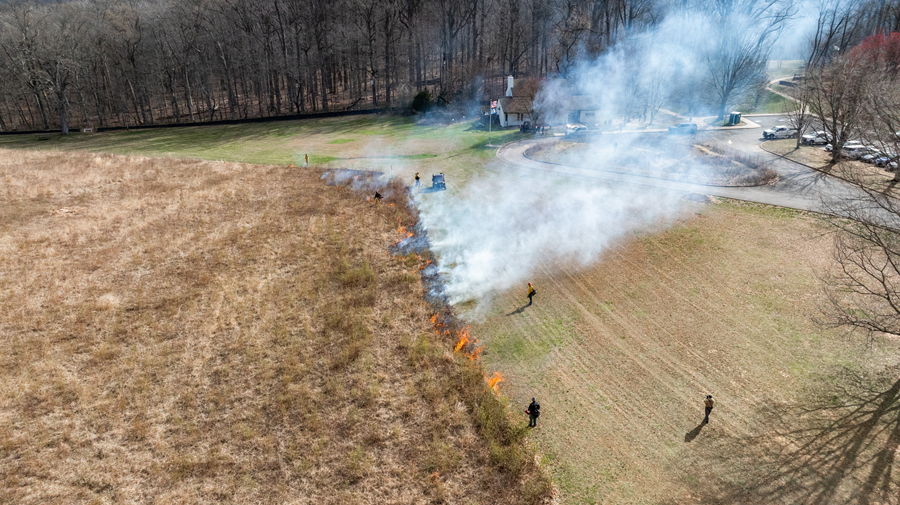
“Fire is part of a cycle in most ecosystems,” notes the U.S. National Park Service. “It reduces dead vegetation, stimulates new growth, and improves habitat for wildlife, many of the details park visitors imagine when they think of a national park. With fire suppression, fire was removed from the cycle and ecosystems began to get out of balance.”
In Delaware, both the Department of Natural Resources and Environmental Control and the Department of Agriculture use controlled burns. These agencies frequently work together to achieve an objective while also ensuring that negative effects from the burn, such as poor air quality and ash deposition, are minimized. The Delaware Forest Service, a unit of the state Department of Agriculture, is the state’s leading expert on prescribed fires.
“The Forest Service does a lot of work for fuel reduction, and we do a lot for habitat management,” said Eric Ludwig, a wildlife biologist with the DNREC Division of Fish and Wildlife.
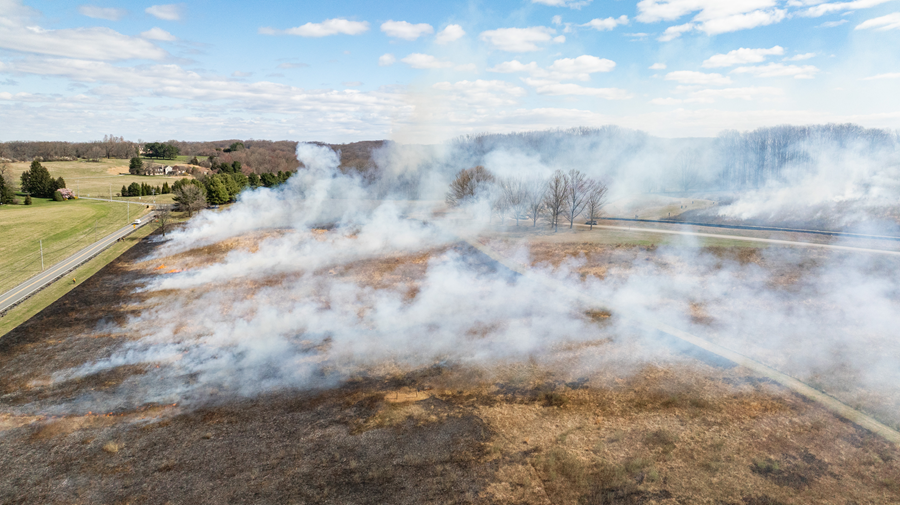
Prescribed burning can reduce invasive plants, clear underbrush, support healthy ecosystems and prevent wildfires by consuming fuel. While mechanical control methods such as mowing help keep flora in check and return nutrients to the soil, fire is quicker and more efficient.
“I can burn a field off that’s 15 acres to 20 acres in about 20 minutes. If I’m mowing it, you’re looking at three days,” Ludwig said.
DNREC can point to clear instances of prescribed fire helping animals thrive here by preventing grass and flowers from growing out of control. This ensures favorable habitats are available for key species.
“It helps pollinators, it helps a bunch of deer, turkeys, all the songbirds. For us, we’re really focused on the grassland habitat, and it’s one of the biggest losses in Delaware for habitat,” Ludwig said.
Controlled fire can also serve as a substitute for pesticides. However, this trade-off impacts the environment differently. While pesticides may contaminate the soil and water to clear weeds and other pesky plants, smoke from controlled burns contaminates the air — hence the importance of properly planning and managing a burn.
“It’s our belief that fire, when used responsibly, can be the least impactful, most environmentally friendly and most cost-effective method,” said Sam Topper, wildland fire supervisor with the Delaware Forest Service.
That’s not to say officials are out there burning acres up and down the state every week — the Delaware Forest Service was involved in 24 burnings totaling about 566 acres across federal, state and private lands in 2024.
An individual burn typically ranges from roughly 5 to 100 acres, as burns exceeding that size produce enough smoke that it can be difficult to control and the burning process can take multiple days, Topper noted.
Fire, of course, can be quite dangerous if it gets out of hand, and the smoke produced can negatively impact human health. Controlling a burn so it stays within a certain area requires significant expertise and planning. The biggest challenge, however, is ensuring the smoke won’t lead to any unintended consequences. To that end, staff involved with prescribed burns work closely with the DNREC Division of Air Quality in the planning phase to be certain they are following existing laws and regulations intended to protect our natural resources and health.
Because of the potential danger of uncontrolled smoke and the inherent risk of working with fire, the team lead on a controlled burn has a minimum of seven years of training. This is one of the main limitations related to prescribed burns, as burning requires qualified personnel, and there simply are not many people who have the proper certification.
That means the Delaware Forest Service assists with a lot of the burns that take place in the state.
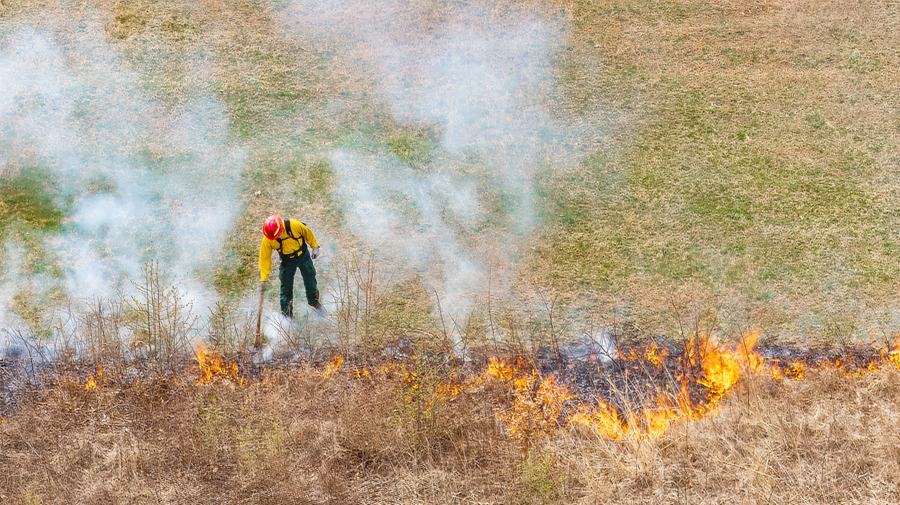
“There are a small handful of organizations and agencies out there that are implementing prescribed fire projects on their own property, but we’re the only ones out there providing the service,” Topper said.
The Forest Service works with local governments, other state agencies, nonprofits that manage land and individual owners of large properties.
Burns conducted by the Division of Fish and Wildlife typically occur on division property. Similarly, the DNREC Division of Parks and Recreation sometimes performs burns at Delaware State Parks. In both cases, the Delaware Forest Service often assists, and pre-approval from the Division of Air Quality is required.
For the Division of Fish and Wildlife, the most challenging type of prescribed fire is a marsh burn. While less frequent, these burns are larger and require extra preparation and experience.
The most recent prescribed burn in a state park was in March of 2024, when DNREC and its partners cleared about 22 acres of meadows at Brandywine Creek State Park. Though it was the first burn the Division of Parks and Recreation has conducted in 14 years, the division aims to perform another soon on the remaining 27 or so acres of meadows at the park.
While employees normally mow the meadows every year, fire is more thorough and has clear benefits for habitat, said Alison VanVorst, a natural resource management specialist with the Division of Parks and Recreation.
“That allows the meadow to reset,” she said.
The division hopes to start burning meadows in Delaware State Parks on a rotating basis and may expand to understory burns — burning brush and undergrowth in a wood — although those require more planning and equipment. All these efforts, ultimately, are dependent on assistance from the Delaware Forest Service and other partners.
For the Brandywine Creek State Park burn last year, VanVorst researched smoke dispersion and contacted nearby facilities, including Nemours Children’s Hospital and Wilmington Airport, as well as the New Castle County Fire Board, to notify them in advance of the burn.
She also had to obtain an open burning approval from the Division of Air Quality — something required for all prescribed burns. Open burning approvals define when and where the fire will take place. They also record the type and volume of vegetation burned so the air pollution created by each burn can be counted toward the annual maximum allowable concentrations of particulate matter, carbon monoxide and nitrogen oxides allowed in the air by the Clean Air Act.
Officers from Delaware Natural Resources Police shut down part of Brandywine Creek State Park in the interest of public safety, and the park published social media posts and scheduled programming about controlled burns to inform the public.
The Delaware Forest Service was a vital partner in this effort, assisting with preparatory work like applying for the approval and with the burn itself.
“The Forest Service provided the bones of the operation — the crew, the burn boss, all of the equipment, including utility terrain vehicles with water tanks, as well as personal protective equipment,” VanVorst said.
Trained staff from the Nature Conservancy also lent a hand.
An added complexity in all this is the timing, as Delaware has an open burn ban in effect from May 1 to Sept. 30. This prohibition exists to help improve air quality and limit the production of ground-level ozone, which can be harmful to human health. Additionally, open burning is restricted when air quality alerts are in place and when dry conditions make fires more likely to grow out of control.
For the Division of Fish and Wildlife, most burns take place in January, February and March. That’s similar to the Delaware Forest Service, which strives to begin burning once winter precipitation ends and to continue until spring blooms in earnest around mid-April. The service is typically able to perform about 12 to 20 burns in that multimonth window, though it is dependent on weather conditions.
Projects are ordered based on perceived importance in terms of public safety and habitat maintenance.
Among the planning that must be done for a prescribed fire is studying the wildlife in an area. Fortunately, there’s a lot of existing data about Delaware animals and their habitats, aided by the fact many controlled burns involve conservation-minded organizations that already have wildlife experts on staff.
“Our main concerns are timing the burns in the most beneficial period for the creatures’ life cycle, usually their reproductive cycle,” Topper said. “So, many of the animals that we’re burning for like those sites to be devoid of all that brush and grass during the spring and summer when they’re feeding on bugs and brooding young and such, but they like that cover in the winter when they’re trying to hide from the cold, rain and snow. So, we’re trying to time the burns such that we’re not stealing all their winter cover when they need it, but we’re also producing fresh ground for them in the spring and summer when they need it while not burning up their eggs or their nests or their young.”
The Delaware Forest Service performs controlled burns to reduce potential fuel sources, maintain habitats for wildlife or train personnel. Built-up underbrush can pose a fire hazard, and if it’s near infrastructure or a community, it’s best to be proactive and eliminate it. Doing so avoids the risk of an accidental spark igniting it at some point later and forcing authorities to scramble to protect people and property.
When considering a burn, experts must first judge if fire can achieve the goals at hand. If so, then they must also consider what the impact of the flames and smoke might be on nearby communities. The Division of Air Quality’s open burning regulation prohibits burns that could harm “a person’s health, comfort, use, or enjoyment of his or her real property.”
If it is determined a prescribed fire can be conducted without negatively impacting individuals, critical infrastructure or facilities like schools, hospitals or airports, the next question to be considered is whether the logistics work.
“Can we get the resources and equipment in there that we need to?” Topper said. “Then we move on to more operational planning — what does it take to do this, what kind of resources do we need, what kind of contingency planning do we need to do, what type of weather conditions and fuel conditions do we need to make sure we can implement this burn and maintain control of it the whole time?”
Once the planning is complete, it’s time to hurry up and wait. Because fire is so weather-reliant, the Forest Service carefully checks the forecast until a fitting day (one without precipitation or significant wind) appears. Even so, sometimes a date that was expected to be perfect turns out to be unsuitable, forcing the Forest Service to adapt and go back to watching the forecast.
When it’s finally time to burn, qualified personnel help limit the flames’ impact by removing potential fuels like sticks and grass ahead of time so the fire cannot continue spreading and growing. These fire breaks, which could be manmade areas or bodies of water, create a complete ring around the area.
Experts also frequently spray water into the center of the fire to keep the intensity down and prevent the blaze from jumping to other areas. Thus, once the flames run out of fuel in the center, they simply die out on their own.
Fire is only one method of controlling the environment, and despite its many advantages, there are clear limitations and even dangers associated with prescribed burns. Expertise and coordination between agencies are essential to ensure this tool is used well.
For more information, check out DNREC and the Delaware Forest Service.
Related Topics: agriculture, air quality, burning, conservation, fire, fish and wildlife, nature, outdoor delaware, parks and recreation
Delaware's Governor
State Agencies
Elected Officials
General Assembly
Delaware Courts
State Employees
Cities & Towns
Delaware State Code
State Regulations
Business First Steps
Phone Directory
Locations Directory
Public Meetings
Voting & Elections
Transparency
Health Insurance
Tax Center
Personal Income Tax
Privacy Policy
Weather & Travel
Contact Us
Corporations
Franchise Tax
Gross Receipts Tax
Withholding Tax
Delaware Topics
Help Center
Mobile Apps
E-mail / Text Alerts
Social Media


Built by the Government Information Center
©MMXXVI Delaware.gov