DNREC Menu

When European colonists began settling in what is today Delaware in the first half of the 1600s, they encountered several different tribes, primarily the Lenape and Nanticoke. The Lenape resided in the north along the lower Delaware River, while the Nanticoke were based in southwestern Delaware.
These tribes were related, with members all speaking Algonquian languages. Today, the Lenape and Nanticoke are grouped into the Eastern Woodlands, a region that stretches along the Atlantic coast into the Midwest that the tribes had inhabited for many centuries.

The Nanticoke made first contact with Europeans in 1608, when they crossed paths with the famous English colonist John Smith, who described them as friendly and good at trading. Europeans learned a lot from Native Americans, including the Nanticoke and Lenape, which helped them survive in this alien land.
Unfortunately, it didn’t take long for the proud indigenous peoples inhabiting the roughly 2,000 square miles that today make up Delaware to become not just a distinct minority but legally inferior in the eyes of the foreign settlers and their descendants who founded the United States.
From 1600 to 1700, the Lenape population in the area fell by 90% due to disease, according to Chief Dennis Coker of the Lenape Indian Tribe of Delaware. Native inhabitants were rejected as backward and discriminated against for not following the Christian faith, with many being chased away.
In 1778, Lenape living near what is today Pittsburgh signed the first formal treaty between the United States and indigenous peoples. Relations between the tribe and the government quickly broke down, however, a sign of things to come.
For centuries, the United States’ relations with Native Americans were defined by unabashed racism that considered the continents’ original inhabitants primitive savages and their land ripe for the taking. Indigenous Americans were moved farther and farther west, sometimes forcibly, and at the cost of many native lives.
Those few who stayed were allowed to do so only because they converted to Christianity and adopted European culture. Coker, who can trace his ancestry back to 1765, considers it incredible that some descendants of the indigenous inhabitants of the area still reside here, when so many others were driven away.
“In order to Christianize, we had to divorce ourselves of our culture. We had to divorce ourselves from our language, our customs, our tradition, our practices because they were not accepted by the Christian predominant community. We lost everything,” Coker said.
Today, the descendants of those inhabitants are working to revitalize their heritage. They take pride in their roots and seek to educate the current inhabitants of Delaware about the peoples who predate them. There’s also interest from some people without indigenous heritage, as many Americans now feel native practices should be respected and desire to learn from them.
“I think we’re unique. Being the first people of the First State, we take lot of pride in that,” said Dr. Bonnie Hall, the historian of the Nanticoke Indian Tribe. “We were the first stewards of the land, and we have a moral obligation and sacred obligation to protect the land that we live on and the waterways.”
The Delaware Department of Natural Resources and Environmental Control is a partner in some of these efforts. One of DNREC’s tenets is to preserve and promote cultural heritage, and the experiences of the people who resided along the lower Delaware River and the Delaware Bay for many years before European colonization are an important part of that.
Today, the state of Delaware recognizes two tribes: the Lenape and the Nanticoke. Descendants of the Lenape who did not assimilate have federally recognized tribes in Oklahoma and Wisconsin, as well as state-recognized tribes in New Jersey. The Lenape in Oklahoma are known as the Delaware Indians, although “Delaware” derives from English rather than a native language.
Delaware had acknowledged the Nanticoke by 1881 and recognized the Nanticoke Indian Association as a nonprofit in 1922, but both they and the Lenape still lacked some formal recognition from the state. In 2016, that changed, with legislation passed by the General Assembly and signed by then-Gov. Jack Markell recognizing the Nanticoke and the Lenape as tribes with formal governing bodies“carrying out and exercising substantial governmental duties and powers.”
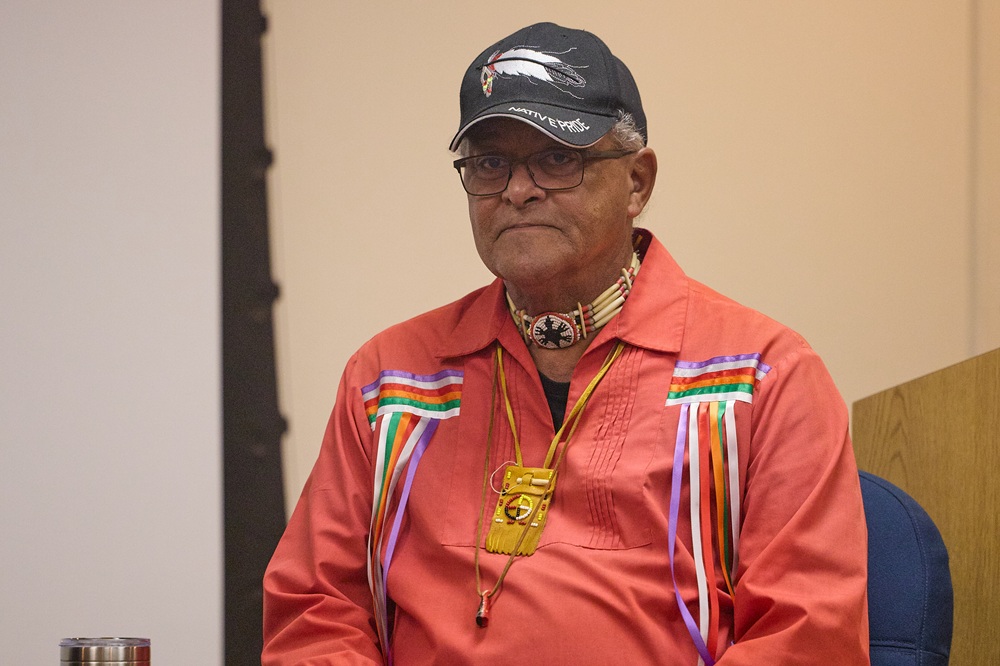
For both tribes, it was the culmination of a long and arduous journey made possible thanks in part to assistance from DNREC, particularly some unsung heroes working in its Division of Parks and Recreation.
Around 1980, the division began conducting cultural resource surveys, according to Chazz Salkin, the former director of the DNREC Division of Parks and Recreation. DNREC placed an emphasis on safeguarding sites of historic significance, including ones related to the area’s original inhabitants.
Over the course of about a decade, a handful of employees hired for this purpose conducted research across the state, including archeological digs.
That research, which was led by anthropologist Cara Blume, helped DNREC with determining where to build trails and structures like bathrooms and which areas should be protected. DNREC was also able to work alongside other state agencies to preserve some of the sites.
In 1990, lawmakers established the state’s Open Space Program, creating a new impetus to protect sites of historic significance, including providing funding to buy land containing cultural assets.
It was around that time the Lenape of Delaware reorganized and decided to embrace their culture rather than hide “in plain sight,” as Coker put it.
In 2000, the Lenape applied to the Delaware Department of State for recognition but were denied because of a lack of supporting evidence, which members felt was largely a political decision.
Nearly a decade later, the Lenape worked with Blume as they prepared to try again. She provided a wealth of information from historians and anthropologists about the tribe’s roots in the area, which convinced the Department of State to grant both the Lenape and the Nanticoke recognition.
Legislation solidified that status in 2016.
The Nanticoke tribe currently has more than 700 members, many of whom are spread out across North America, while the Lenape have about 200 tribal citizens enrolled. Not all people with strong links to the tribes are registered as members, however, in part due to old wounds from centuries of discrimination.
The 2010 U.S. Census allowed individuals to designate themselves as Lenape or Nanticoke for the first time, a clear sign of progress.
The Nanticoke operate the only Native American museum in the state, as well as a cultural center, though the latter is currently being renovated. Both facilities are located in Millsboro. The tribe also owns land in the area acquired in 2021 with the help of the Conservation Fund.
The Nanticoke Indian Center, which serves as the tribe’s headquarters, was built about a century ago as a school for Native Americans. Prior to its opening, indigenous children were educated in “colored” schools largely built by philanthropists.
The enrolled members of the Nanticoke can all trace their lineage back to one of the original 31 founders of the Nanticoke Indian Association, Hall said.
But you don’t have to be part of the tribe to support their efforts. The Nanticoke have held an annual powwow for the past 47 years, with 2025’s iteration taking place in Milton. Members of about three dozen tribes from across the United States and Canada participated in the most recent powwow in September, which featured traditional singing and dancing and offered a chance for folks with indigenous ancestry to show pride in their heritage and connect with their roots.
“It’s a good way for us to come together as a native family and community, but more importantly it’s a chance for us to share our history, our heritage and our culture with the public at large,” Hall said.
The sheer number of visitors, whether they’re fellow participants with indigenous heritage or simply curious drivers passing by, is a point of pride, Hall noted.
It’s a sea change from most of the past few centuries, which has seen the Nanticoke and the Lenape (both of whom have in the past been referred to as the Moors) described as by one historian as “Delaware’s forgotten folk.”
The Nanticoke are working to revitalize their language, whose last native speaker died in the mid-1800s. They published a book about their language in 2023 and now host language classes.
“We are very committed to teaching elders and young folks alike our Algonquian language,” Hall said.
The Nanticoke, whose name means “People of the Tidewater,” are currently considering pursuing federal acknowledgement as well.
They are one of three sister tribes in the area, along with the Lenape and the Nanticoke Lenni-Lenape of Bridgeton, New Jersey. The three share a great deal of heritage and often intermarried over the centuries.
The Lenape Indian Tribe of Delaware is based around Cheswold, where members are working to raise funding for and build a cultural center that will provide a wealth of information about the tribe and its history.
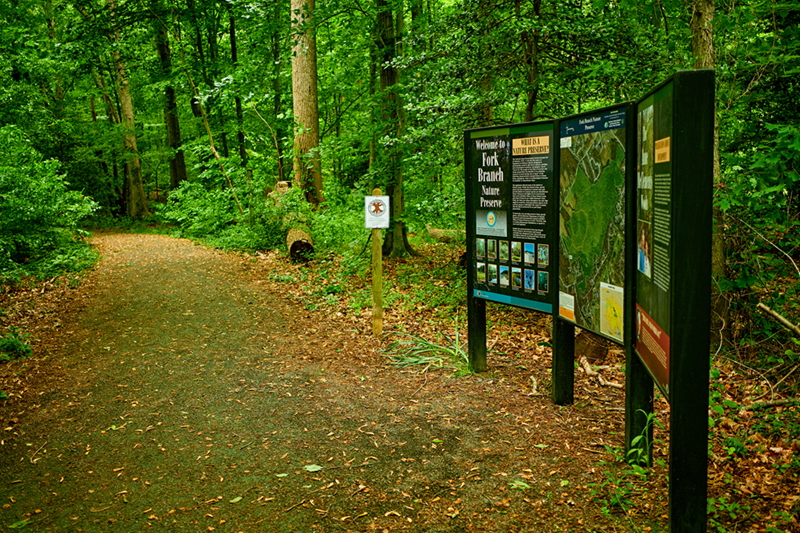
In 2022, the Conservation Fund donated a conservation easement adjacent to Fork Branch Nature Preserve in Dover, including providing ownership rights to the Lenape. The donation ensures the site will be protected from development and the Lenape will have a say in what happens to it.
The tribe also signed an agreement with DNREC in 2023 granting members access to the preserve.
“The Lenape’s original instructions were to be caretakers of the environment. We take that very seriously,” Coker said. “DNREC is pretty much in the same boat with caring for the environment, albeit maybe in different ways. But certainly, working together we can find some mutual ground to collaborate on.”
He believes one of the ways the Lenape, whose name means “the people,” can work with DNREC is by providing guidance on what preservation and conservation look like according to indigenous ideals, which hold that nature is sacred and everything, from rocks to wildlife, has a spirit and a purpose.
Colonists’ “voracious” appetites and their view of the world as full of resources to profit from stood in contrast to Native American ideals of living in harmony with the land, Coker noted. As a tribal leader, he is tasked with looking out not just for his family and neighbors but their descendants, keeping in mind the next seven generations. Such an attitude promotes sustainability, something Coker strongly feels would benefit our society today.
In 1990, DNREC acquired a property located in Rehoboth Bay known as Thompson Island. A significant spiritual site for the Nanticoke, the island contains not just habitats like wetlands that are home to many animals but sensitive material culture related to Native American occupation, including a sacred burial ground.
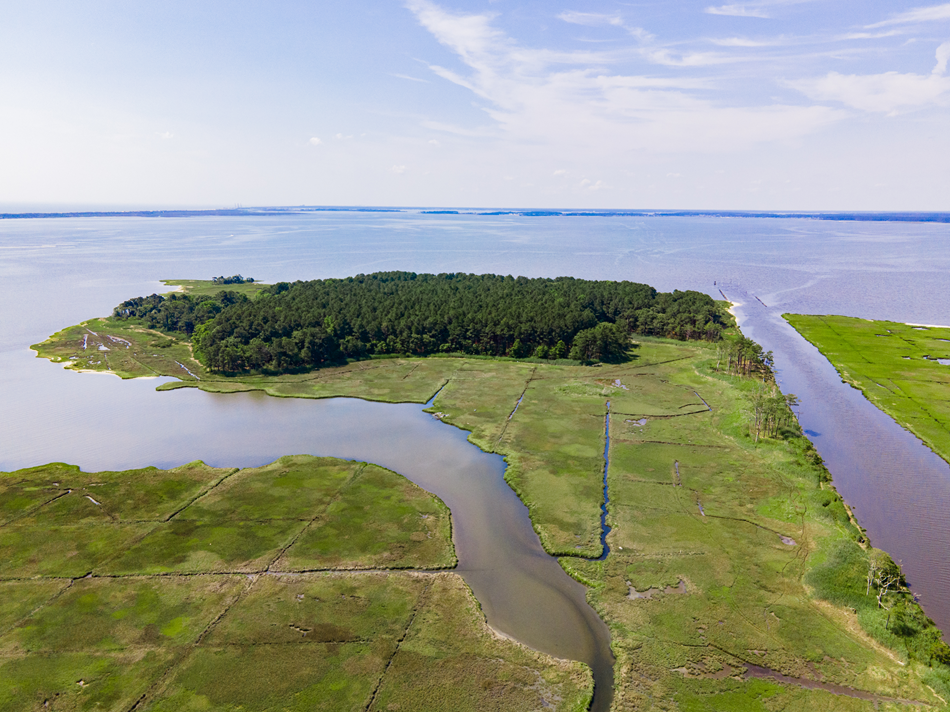
In recognition of its importance to the descendants of the area’s original inhabitants, the Division of Parks and Recreation formally dedicated the island (known as “Tawundeunk” in the Nanticoke language) as a nature preserve in 2000 to safeguard its natural and cultural resources.
As part of the dedication, the agency signed an agreement with the Nanticoke creating a partnership between the tribe and the state, restricting access to the island and giving the Nanticoke a say in how it is managed. As a result, visitors who are not part of the tribal organization are prohibited from setting foot on the island.
Today, DNREC is working with partners like the Delaware Center for the Inland Bays to combat erosion on Thompson Island to ensure critical resources are protected and the tribes can use it for many years to come.
In 2021, a new playground highlighting the Nanticoke’s heritage opened in Laurel. Known as Tidewater Park, the project was supported by the University of Delaware, Delaware Sea Grant, Laurel town officials, legislators and the Division of Parks and Recreation’s Outdoor Recreation, Parks and Trails grant program. The design is based on Nanticoke culture, with playground equipment shaped like animals, logs, a canoe and more.
Plaques and QR codes set up around the site tell traditional Nanticoke stories, such as how the beaver got its tail.
Laurel itself sits on land that once made up the Broad Creek reservation that was home to the Nanticoke from 1710 to 1767 — a reminder of the historic injustices done to so many peoples.
Some Delaware State Parks currently offer programming that explores elements of the history of Native Americans. First State Heritage Park created a garden with plants traditionally grown by indigenous inhabitants of Delaware, and Delaware Seashore State Park has a program allowing people to take a trail to an overlook where they can see Thompson Island from a distance and learn about pre-contact history.
Through Delaware State Parks, individuals can also take part in an initiative known as Time Travelers that allows volunteers to explore archeological work and participate in preserving cultural resources.
This promotion of indigenous heritage ties into DNREC’s work on environmental justice, which seeks to lift up under-resourced and historically marginalized communities and ensure they can weigh in on projects and gain access to environmental benefits.
Delaware’s parks aim to take a comprehensive view of history that looks at everyday individuals and how they lived, rather than just talking about our most significant people and events.
Salkin, the retired director of the Division of Parks and Recreation, takes pride in Delaware government’s attempt to provide an authentic and detailed look at Native American history in the First State.
“It’s not about hypothetical ‘Indians,’ it’s about the indigenous people of this place, and I think people value that quite a bit more than the inaccurate and biased history they learned in a textbook as a kid. I think to stand in Lums Pond State Park in a particular spot and to have somebody tell you what we have learned about prehistoric people of that spot is fascinating and appeals to people in a way that a generic presentation on Native American history might not,” he said.
Preserving native heritage is only right, opined Taylor Reynolds, chief of cultural resources with the Division of Parks and Recreation.
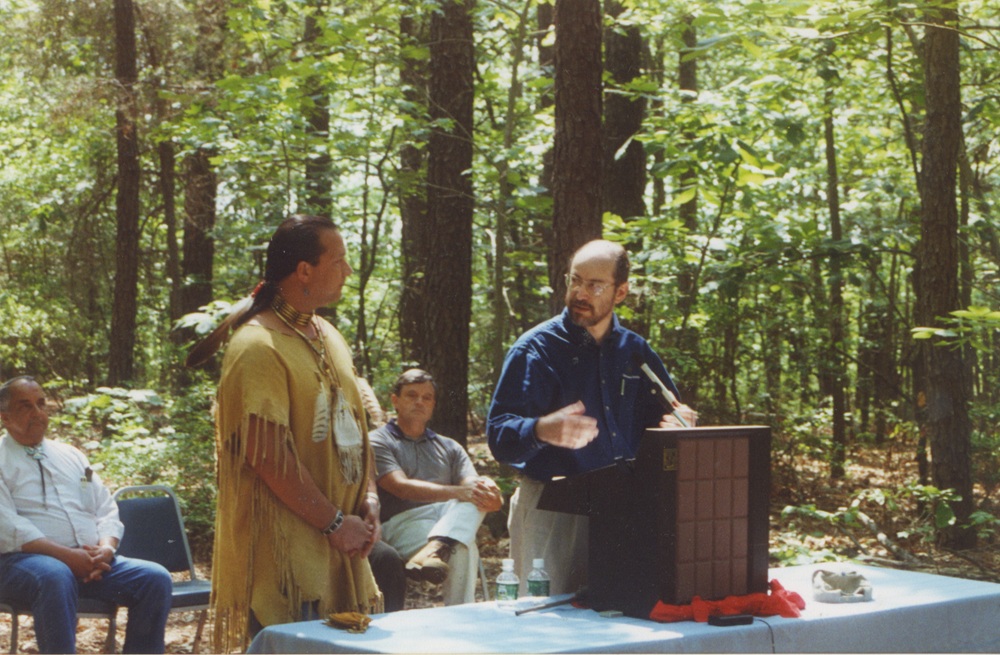
“I think it’s a major component that is an important story to tell, and being able to connect with the tribes and the people who have a direct lineage and a direct connection to that history is really important to include,” he said.
Today, Coker and Hall are proud of the way their culture, which in living memory was seen as backward and shameful, has spread and been embraced in some circles. There’s a renewed interest in recognizing and righting historic wrongs, such as the University of Delaware’s Faculty Senate acknowledging in 2021 the campus “occupies lands vital to the web of life” for the Lenape and Nanticoke.
Still, there’s clearly more progress to be made. After all, it was only in 1978 — less than half a century ago — Congress lifted a ban on traditional Native American religions and practices. Even today, many people with indigenous heritage still face both explicit and structural discrimination, and reservations across the country have poverty rates much higher than the national average.
“I believe personally that if we’re going to heal as a society, as a people, we need to take that baggage that we’re carrying around on our backs and get it up on the table and discuss it and everybody owns their part of it. And then once that takes place, we could move forward to begin that healing process because there’s still a very evident discord between the traditional native peoples and the current social structure that we have, and we need to get that out of our rearview mirror and begin to heal,” Coker said.
Related Topics: delaware state parks, education, heritage, indigenous, lenape, nanticoke, outdoor delaware, parks and recreation, people, preservation
Delaware's Governor
State Agencies
Elected Officials
General Assembly
Delaware Courts
State Employees
Cities & Towns
Delaware State Code
State Regulations
Business First Steps
Phone Directory
Locations Directory
Public Meetings
Voting & Elections
Transparency
Health Insurance
Tax Center
Personal Income Tax
Privacy Policy
Weather & Travel
Contact Us
Corporations
Franchise Tax
Gross Receipts Tax
Withholding Tax
Delaware Topics
Help Center
Mobile Apps
E-mail / Text Alerts
Social Media


Built by the Government Information Center
©MMXXVI Delaware.gov