DNREC Menu

You may not see the tell-tale fin, but if you’re in the water in Delaware there are probably sharks swimming nearby. Researchers say more than a dozen species of sharks could be swimming as close as 10 feet to you in the Atlantic at any given time. But so are fish and all kinds of other marine species because, after all, the water is their home. We’re just visitors in their sphere, and they are almost always not interested in getting to know us better.
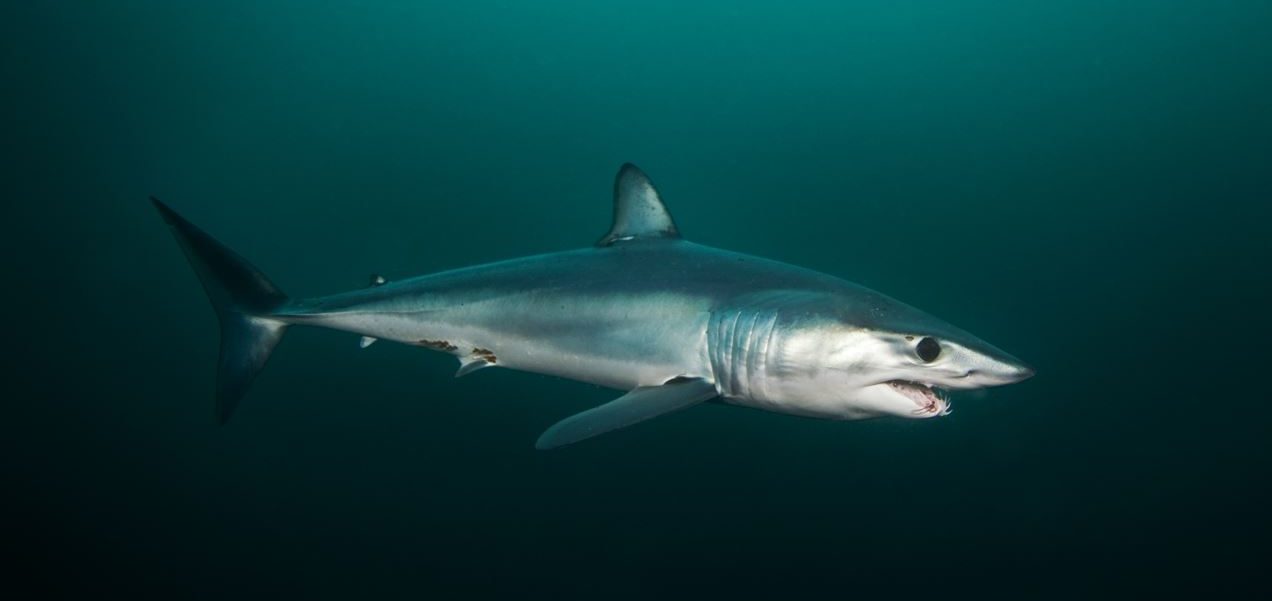
It’s a sign of summer that sharks migrate from south to north this time of year, although they do migrate year-round — we just notice them more in the summer. The five most common sharks in Delaware waters are sandbar, spiny dogfish, smooth dogfish, sand tiger and Atlantic mako sharks. But as many as 62 total species can be found in the Atlantic Ocean, Delaware Bay and the Inland Bays. The record catch for Delaware was a 975-pound mako shark caught in 2000 by Thomas Barnes.
You’re probably wondering about white sharks, also known as great white sharks, made famous by the movie “Jaws.” Yes, they’re around, but they are the least common shark species found in Delaware waters.
Like us, sharks eat shrimp, fish, squid, turtles, eels and crustaceans like crabs and lobster. Larger sharks will eat dolphins, seals, sea lions and even smaller sharks.
Sharks keep ocean ecosystems in balance. They limit the abundance of their prey, which in turn affects the prey of those animals, and so on throughout the food web. Because sharks directly or indirectly affect all levels of the food web, they help to maintain structure in healthy ocean ecosystems.
Sharks tend to stay away from humans. But shark-human interactions do occur. Most of these encounters happen when people are surf fishing. It’s rare to actually touch a shark while swimming. However, in June 2020, what was most likely a sandbar shark bit a 12-year-old boy at Herring Point in Cape Henlopen State Park. The boy had to be hospitalized and the beach was temporarily closed. But Delaware has seen only four confirmed unprovoked shark attacks since 1837, according to the University of Florida. We have no record of a death caused by a shark in Delaware.
The reality is that sharks should be more afraid of us than the other way around. Sharks have been known to attack humans when the animals are confused or curious. If a shark sees a human splashing in the water, it may try to investigate leading to an accidental attack.
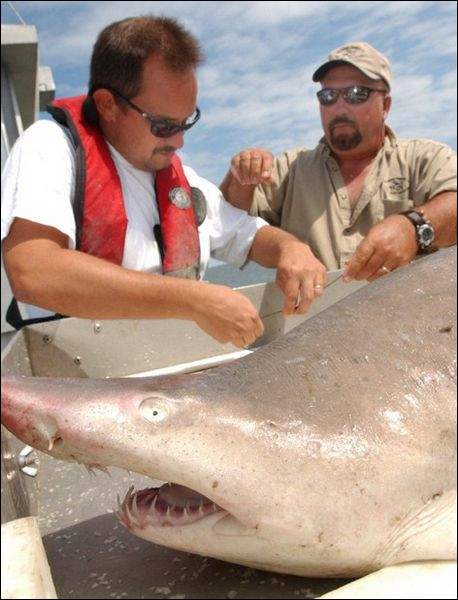
But sharks have more to fear from humans than we do of them. Humans harm sharks mainly as “bycatch,” when anglers using nets catch them along with other fish. Their fins are also harvested for shark fin soup. And climate change and warming sea temperatures play a role in the declines of some shark species.
The Delaware Department of Natural Resources and Environmental Control’s Division of Fish and Wildlife has very specific rules about handling sharks if you catch one while fishing. You must keep a shark in the water because not only can it not breathe out of the water, its internal organs are not designed to support its weight. The stress caused by being caught can harm a shark, as can a barbed hook. The division encourages barbless circle hooks for most fisheries and especially for shark fishing. Anglers are encouraged to avoid violations and fines by following the relevant laws and regulations.
Many shark species, including sandbar and sand tiger sharks, are vulnerable and are not allowed to be caught. They are top predators, can live as long as 30 years and do not reproduce as frequently as prey species. White sharks can live 50 to 70 years or even longer. The only other non-human shark predator is the orca, also known as the killer whale, which often strikes in a group known as a pod. Orcas are the apex predators of the seas.
Many sharks found in Delaware are misidentified, including the smooth dogfish and sandbar shark.
Since we’re visitors to their home, there are some common-sense steps we can all take to avoid human-shark interactions. Ocean swimmers should stay in groups, avoid straying too far from shore,
The best way we can help sharks is to learn as much as we can about them. But we can also help them by avoiding products containing shark extracts, from meat to liver oil used in some cosmetics. Spreading awareness, supporting organizations that work to protect sharks and decreasing your seafood consumption are important steps that can help these majestic creatures.
We should respect, not fear, the sharks in Delaware’s waters.
Delaware's Governor
State Agencies
Elected Officials
General Assembly
Delaware Courts
State Employees
Cities & Towns
Delaware State Code
State Regulations
Business First Steps
Phone Directory
Locations Directory
Public Meetings
Voting & Elections
Transparency
Health Insurance
Tax Center
Personal Income Tax
Privacy Policy
Weather & Travel
Contact Us
Corporations
Franchise Tax
Gross Receipts Tax
Withholding Tax
Delaware Topics
Help Center
Mobile Apps
E-mail / Text Alerts
Social Media


Built by the Government Information Center
©MMXXVI Delaware.gov