DNREC Menu

Outdoor Delaware is the award-winning online magazine of the Delaware Department of Natural Resources and Environmental Control. Articles and multimedia content are produced by the DNREC Office of Communications.
Significant progress has been made in combating forever chemicals in Delaware in recent years, and we continue to learn more about presence of these emerging contaminants in our land, water and bodies.
The chemicals, officially known as perfluoroalkyl and polyfluoroalkyl substances but more commonly referred to simply as PFAS, have been used in thousands of products, including cookware, clothing and firefighting foam, for decades following their creation in the mid-20th century. Extremely strong chemical bonds of carbon and fluorine atoms form molecules that are resistant to heat, grease, water and oil.

However, we now know these chemicals, which come in many thousands of forms, break down extremely slowly and thus exist in soil, water and tissue over extended periods of time. Almost every person on the planet has some quantity of PFAS in their bodies, whether from exposure at work, drinking water contaminated with PFAS, eating foods like fish that may contain PFAS, breathing PFAS molecules through the air or using products that were packaged with or have PFAS included.
Like legacy contaminants such as polychlorinated biphenyls, or PCBs, PFAS are persistent, bio-accumulative and toxic, meaning they linger in the environment for a long time, build up in organisms and can have harmful health effects. Unlike PCBs, however, many types of PFAS are still intentionally produced, used and released in the United States. They are also a much larger group of chemicals, encompassing some compound groups that act differently than others and thus may persist in different ways and in different places.
Scientists continue to learn more about PFAS on seemingly a daily basis, but what is known is that exposure to these chemicals can lead to decreased fertility, developmental delays, cancer risks and a weakened immune system, among other effects. Factors such as the degree of toxicity, the genetics of an exposed individual, when the person was exposed and how frequently they were exposed can impact the outcome.
Here in Delaware, we have learned enough to regulate these substances through the Hazardous Substance Cleanup Act while further research continues. This research will undoubtedly lead to increased scrutiny of PFAS in the environment.
The U.S. Environmental Protection Agency initially implemented an unenforceable Health Advisory Limit of 70 parts per trillion, or ppt, for PFOA and PFOS in 2016. PFOA and PFOS are the first two types of PFAS the Delaware Department of Natural Resources and Environmental Control began regulating, doing so in 2015 under the Hazardous Substance Cleanup Act.
In 2025, the General Assembly passed, without opposition, legislation that will require the Delaware Department of Health and Social Services’ Office of Drinking Water to develop a website providing information about the PFAS levels in each regulated public drinking water system and how they compare to threshold values adopted through the legislation.
These thresholds, officially known as Maximum Contaminant Levels, or MCLs, are standards set to keep potentially harmful substances out of public drinking water systems. More than four-fifths of Delawareans get their water from such systems.
Under the bill, if any water system exceeds an MCL, DHSS must notify the water utility, which is required to then pass that information along to customers.
EPA originally set nationwide limits in 2024, though most of them were rescinded a year later before they could officially take effect. Delaware’s MCLs are based on those proposed levels. Expressed in parts per trillion, the state’s thresholds for notification are as follows:
The federal government still has some PFAS drinking water compliance regulations expected to be finalized in 2026, and consequences for water systems that exceed the MCLs will take effect in 2031. Delaware’s notification process, by contrast, will take effect in January.
In 2014, PFAS were detected in groundwater on Dover Air Force Base, and subsequent investigations discovered it off-base in private wells. Filtration systems for the affected private wells were later installed to help keep residents from being exposed through contaminated drinking water.
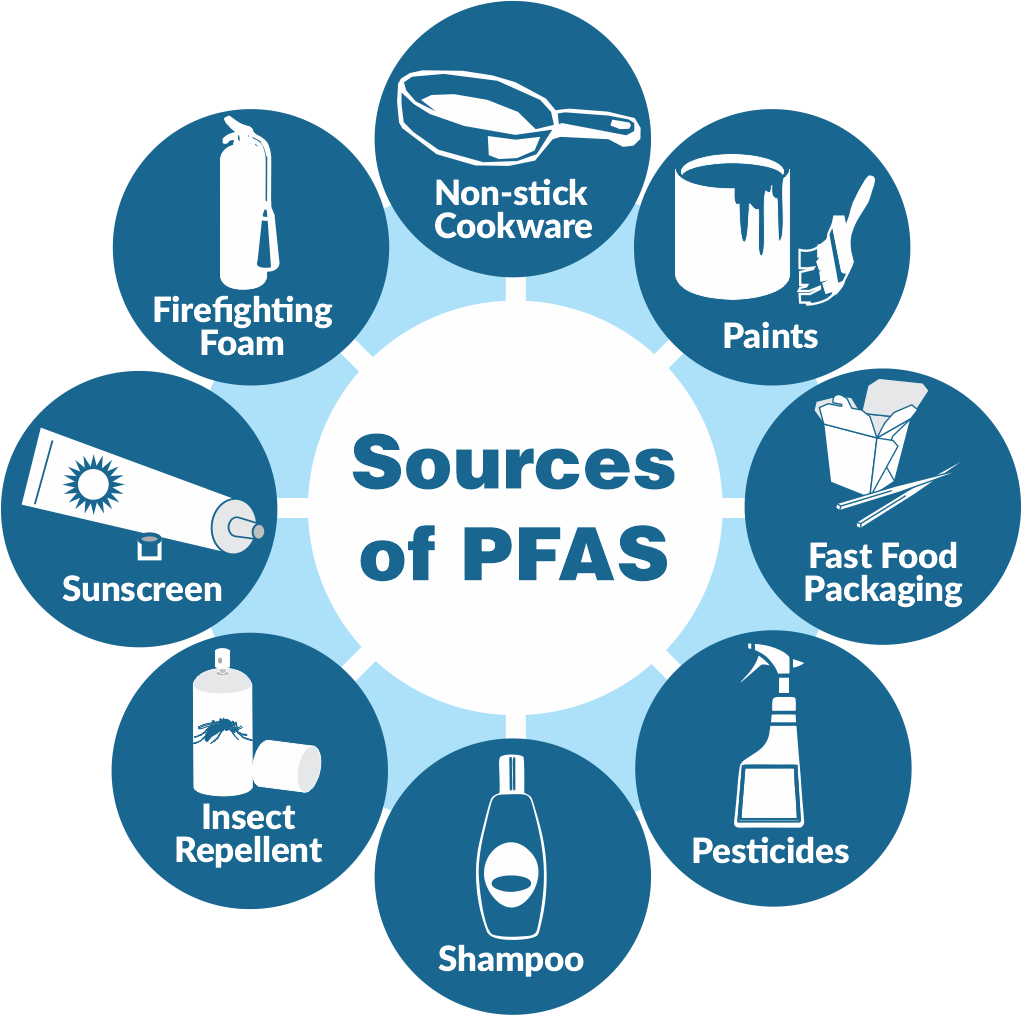
Around the same time, drinking water systems near New Castle were found to have PFAS, believed to be due to the New Castle Air National Guard Base. Both Dover Air Force Base and the New Castle Air National Guard Base used aqueous film-forming foam, or AFFF, for training for decades. It was also used to prevent and put out fires, such as when a C-5 Galaxy cargo plane crashed just short of a runway at Dover Air Force Base in 2006.
Though knowledge of PFAS is still varied today, it’s certainly grown by leaps and bounds compared to a quarter-century ago. In 1999, a West Virginia farmer whose livestock were stillborn or born with defects filed a lawsuit against chemical giant DuPont, alleging a nearby factory owned by the company contaminated a stream from which his cows drank. It was the first act of litigation related to PFAS in the country.
In the ensuing years, knowledge of PFAS would emerge, and today, it’s an issue every state is dealing with, though certainly not to the same extent.
According to Todd Keyser, a hydrologist in the DNREC Division of Waste and Hazardous Substances, states with a significant history of manufacturing are more likely to have PFAS problems. Though not among the states with heavy industry in their pasts, Delaware has a rich history of chemical research and manufacturing thanks to companies like DuPont and Hercules calling the First State their home, and nearby states have their own legacy of manufacturing and chemicals.
Geography also plays a role, with the rocky Piedmont Plateau limiting water in northern Delaware to that which collects on the surface or travels through structures and fractures in the bedrock underground. Most aquifers in the Piedmont lack an overlying impermeable layer, meaning water they contain is more susceptible to being contaminated. PFAS can travel through underground cracks in the rock, while the rocky ground limits the number of places where water can be readily obtained.
New Castle County uses both groundwater and surface water for drinking water, while Kent and Sussex counties rely solely on groundwater. About two-thirds of Delawareans use groundwater for potable drinking water.
In 2018, Blades’ three municipal wells tested positive for PFAS, prompting officials to provide residents with portable water tanks and add a carbon filtration system that lowered levels from above 70 ppt (the Health Advisory Level at the time) to less than 4 ppt. That year also saw Delaware form a multiagency workgroup consisting of DNREC, the Delaware Department of Health and Social Services, the Delaware Department of Transportation and the Delaware Department of Agriculture to collaborate and leverage resources to better tackle the overarching issue. Blades was later added as a federal Superfund site, enabling greater access to federal funding to investigate and clean up the area.
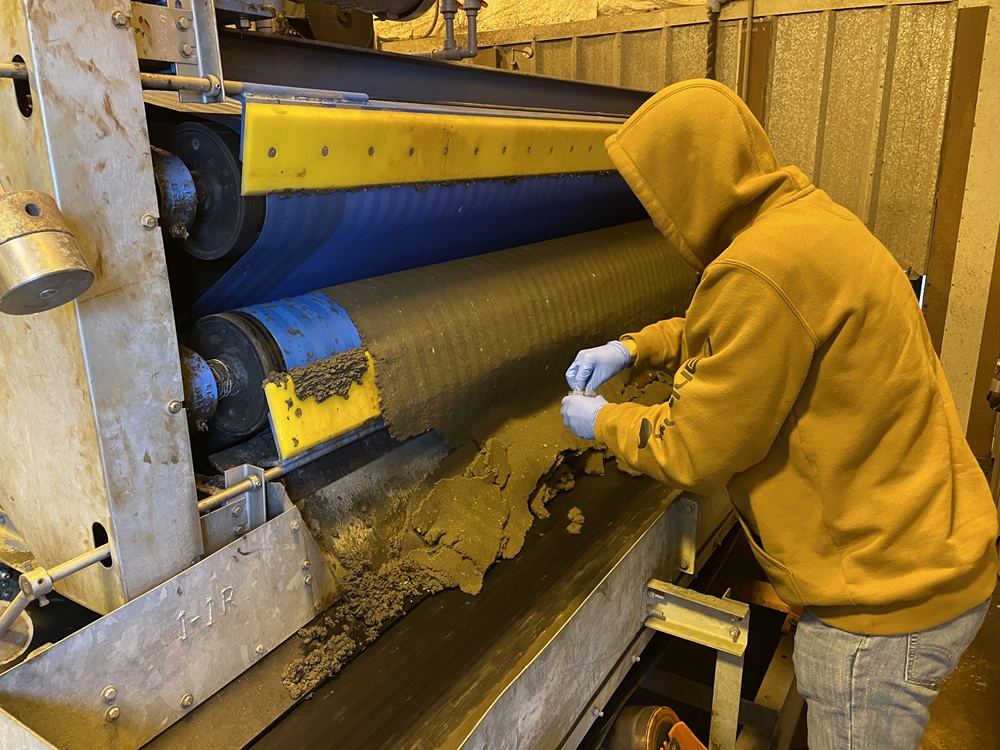
In 2019, testing found four private wells near Dover Air Force Base had PFAS levels greatly exceeding the federal advisory standard in existence at the time. The wells served five businesses, two homes and one office building, which initially were given bottled water by Dover Air Force Base. In 2020, following further sampling, the base installed water filtration systems.
In 2021, a water system serving Bethany Crest, a mobile home community of about 50 households near Millville, was found to have PFAS as part of a proactive sampling of public water sources throughout the state. DNREC and DHSS acted quickly with the water system owner, and an ion exchange treatment already in place at Bethany Crest water system was proven to significantly lower PFAS levels to make the water safe to consume again. DNREC has implemented an investigation in this area to determine the source of the impact.
Today, several places in Delaware are being investigated by DNREC for PFAS.
While water providers are not required to test for and treat certain types of PFAS under federal regulations, Delaware is increasing its focus on these chemicals, with DNREC helping lead the charge. The law passed earlier by state legislators this year “basically directs Delaware to go back on the same notification schedule” of the since-revised EPA regulations, Keyser said.
Partners DNREC and DHSS seek to be constantly learning and innovating in this area, aiming to be proactive in efforts to protect residents’ health.
Keyser noted some water systems, including but not limited to Veolia Water Delaware and the Municipal Services Commission of the City of New Castle, are ahead of the curve in implementing safeguards and notifications. They’re among the utilities making investments in clean water infrastructure even though they aren’t actually required to ensure PFAS amounts remain below the notification MCLs. DNREC and its partners throughout state government view their responsibilities similarly.
Delaware agencies are also in regular contact with other state, county and city environmental and health entities regarding PFAS, both seeking to pass information along to and learn from their counterparts around the country.
Why “Forever Chemicals” Might Not be Forever
“Forever chemicals” is a useful, plain-English shorthand for PFAS — thousands of water-, grease- and stain-resistant compounds. It’s widely used by journalists, public health authorities and even the Delaware Department of Natural Resources and Environmental Control. We all use this term because it’s clearer than “perfluoroalkyl and polyfluoroalkyl substances.” Still, a nickname can be misunderstood. “Forever” describes unusual persistence, not literal permanence or a guarantee that every PFAS will last for eternity. Here’s what the term gets right and what readers of Outdoor Delaware should know:
Why it Works
PFAS were built to be tough. Their carbon-fluorine bonds break down very slowly, so many PFAS can linger in soil, water and living tissue for long periods. That durability made lots of pans nonstick, carpets stain resistant and jackets water repellent. The nickname captures that challenge in a single word.
Where it can Mislead
PFAS are not just one chemical. They’re a large family that behaves in different ways. Some of the older, long-chain PFAS can remain in people for a lifetime; others are cleared more quickly. Levels in people and wildlife tend to rise with ongoing exposure and fall when exposure drops. In short: time and source control matter.
What “Break Down” Really Means
In the environment, breaking down can take many, many years (millennia, even) without intervention. PFAS resist sunlight, microbes and heat that would dismantle many other pollutants. Still, “forever” is a signal to take persistence seriously, not a verdict that progress is impossible. Phasing out certain uses and reformulating products will reduce what enters air, water and land. Granular activated carbon, ion exchange and membrane systems can remove many PFAS from drinking water. Our combined efforts in Delaware focus on these strategic goals. You can’t control every source, but reducing exposure matters. Product choices, certified home filters where appropriate and source cleanup can lower PFAS levels over time. “Forever chemicals” is a helpful way to talk about a complex topic. Keep the term, keep the clarity, but let’s also understand the full context: PFAS are persistent, not permanent; varied, not monolithic. There are still miles to go, but real strides are being made.
“With limited federal direction, we’re all playing our own game in each state, but we spend a lot of time and effort learning from what the other states are doing and sharing what we’re doing as well, so we can refine things based upon somebody else’s lesson,” Keyser said. “The fact that we can share with our neighbors and they’re happy to share is great.”
Although drinking water falls under DHSS’ purview, DNREC is an important partner in the effort to keep Delawareans safe and healthy. DNREC’s goals when it comes to PFAS revolve around steadily increasing the state’s knowledge about the chemicals, protecting the public from contamination and mitigating risk when consumption or contamination does occur.
Throughout it all, DNREC is driven by data, using comprehensive research to determine areas most affected.
The notification MCLs set through the new legislation are supported by research DNREC has directed and conducted, such as a sampling survey of 30 public water wells in 2018 by the U.S. Geological Survey and the follow-up sampling of most public water systems statewide in 2021 and 2022 with the assistance of the Delaware Department of Health and Social Services. That latter analysis detected compounds in untreated water at about 55% of the 226 sampled locations.
A 2022 project, meanwhile, took 83 surface water samples from 33 watersheds across the First State. As a result, DNREC is conducting further testing on six bodies of water: Red Clay Creek, Hershey Run, Shellpot Creek, Long Branch, Little River and the St. Jones River. The first four are all in New Castle County, while Little River and the St. Jones River are in Kent County.
“Each of these project builds upon something we’ve learned, and from a lot of these projects we’re attempting to inform potential policy and regulations or inform when others write laws that we must implement as regulations. So, we’ve been doing a ton of data gathering,” Keyser said.
That data collection includes testing private wells, which are not regulated past installation.
In 2023, DNREC received an inquiry from a Little Creek resident who, concerned about PFAS in his private well water, sampled his own water. PFAS were detected above the Delaware action levels, which were based on ones proposed by EPA at the time.
A subsequent sampling by DNREC and DHSS scientists found the same, suggesting other homes in the area had likely been contaminated too.
DNREC held a public meeting to share information with residents and offer to sample their water for free. When detections above the action levels were found, point-of-use filtration systems were provided to the community at no charge. Testing determined the issue was likely widespread enough to require a long-term solution: a whole-house filtration system, connecting to the City of Dover’s water or a new well that extends deeper into the ground and thus is safe from PFAS.
In the end, installing new wells was determined to be the optimal and most popular answer, and so DNREC and DHSS embarked to provide wells to residents who were interested. The state was able to use money acquired in a 2021 PFAS settlement with DuPont, Corteva and Chemours to pay for the installations.
PFAS had likely seeped into the water supply from firefighting foam used for years by the local volunteer fire company. Because the fire company had no knowledge of the hazards the foam could pose and has fully cooperated with DNREC, the Department does not plan to issue any fines related to the case.
DNREC has held additional public forums about Little Creek water, including one earlier this summer, and is currently conducting further research on Little River for what may be a separate topic. That investigation should be finished by the end of 2025, at which point the Department’s experts should have more information about the scale of the problem and thus what sort of solution is required.
Although significant attention and resources are directed toward PFAS today, Keyser cautioned Delawareans should not expect this to be a problem that is solved within a few years. He urged individuals to read about forever chemicals in their own time and take steps to minimize risk, including buying products that were not made with PFAS.
Keyser also recommended Delawareans visit DNREC’s PFAS webpage, which contains a variety of information, including links to research. The Department continues to add more facts and findings.
“It will take time, and we need Delawareans to be engaged,” he said. “We need the citizens to be part of that process, even if they just seek to understand what DNREC and other agencies are doing.”
Related Topics: cleanup, health, outdoor delaware, PFAS, PFOA, PFOS, science, waste and hazardous substances, water
Delaware's Governor
State Agencies
Elected Officials
General Assembly
Delaware Courts
State Employees
Cities & Towns
Delaware State Code
State Regulations
Business First Steps
Phone Directory
Locations Directory
Public Meetings
Voting & Elections
Transparency
Health Insurance
Tax Center
Personal Income Tax
Privacy Policy
Weather & Travel
Contact Us
Corporations
Franchise Tax
Gross Receipts Tax
Withholding Tax
Delaware Topics
Help Center
Mobile Apps
E-mail / Text Alerts
Social Media


Built by the Government Information Center
©MMXXVI Delaware.gov