DNREC Menu

They help find missing persons, sniff out poaching and subdue criminal suspects. And they do it all for the love of the job — well, and squeaky toys.
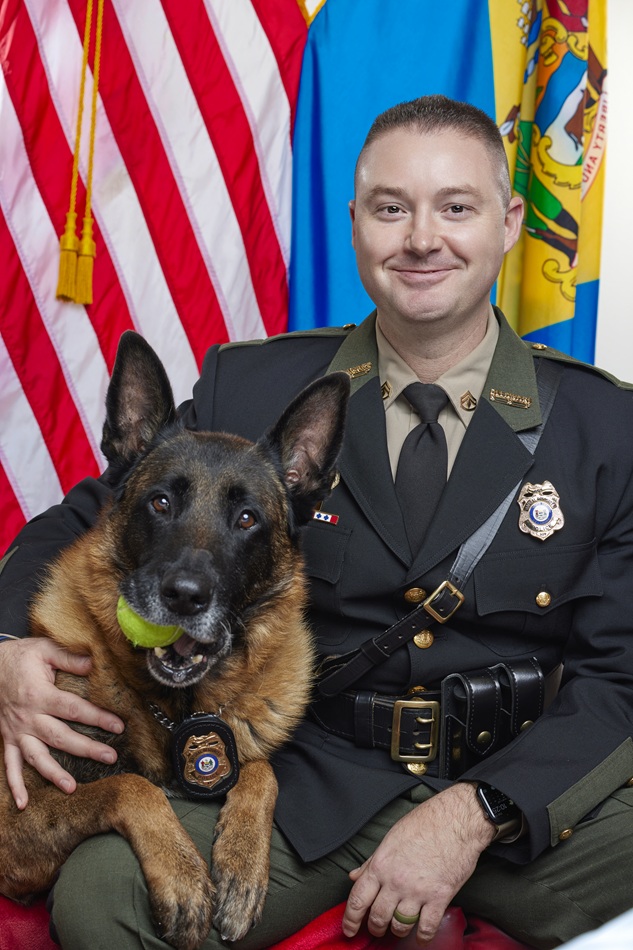
They’re part of Delaware Natural Resources Police within the Delaware Department of Natural Resources and Environmental Control, and they wear police-identified vests and badges (and sometimes even body armor when a situation calls for it), but these dedicated public servants have four legs, a tail and a fluffy coat. They’re German shepherds, Belgian Malinois and labradors, and they are vital members of DNRP.
All three components of DNRP — the Environmental Crimes Unit, the Fish and Wildlife Unit and the State Parks Unit — contain a K-9 member who helps officers enforce environmental laws and regulations. DNRP officers are essential to keeping our parks and wildlife areas safe and accessible, investigating pollution and preventing poaching, and they are aided in this noble mission by some four-legged friends.
DNRP has had a K-9 program for approximately 20 years, typically with about five dogs. Currently, the agency employs five pups:
These good dogs each have a designated handler with DNRP. The handlers and dogs have a special bond — after all, these K-9s are partners, not just pets.
“They definitely become part of the family. Not just your family but really the whole group you’re working with too,” said Capt. Josh Hudson.
Hudson would know — he worked with a K-9 partner, Rosco, for six years before the chocolate lab was retired and sent to live with him full-time in 2022.
As one would expect, K-9 companions are carefully selected and receive a great deal of training before starting their jobs. (In case you’re curious, some dogs come with names they keep, while others are christened by DNRP.)
DNRP purchases dogs from breeders across the country, paying special attention to genetics and temperament. Police dogs must be in good health — hip issues are a particularly common problem for labs and shepherds — and should be intelligent.
Successful K-9s also possess what is known as a high ball drive, meaning they’re motivated by toys rather than food. After all, it’s much easier for an officer to carry a squeaky ball and toss it to a dog for a job well done than it is to keep a continuously diminishing supply of treats.
“You want these dogs to be happy, excited to work,” Hudson said. “That’s what they live for.”
The exact training a dog receives can vary a bit depending on what the K-9 will be doing, but patrol dogs go through the Delaware State Police patrol program, where they (and their handlers) receive months of instruction. They also obtain certifications for various categories, such as detecting narcotics or explosives, which must be updated annually.
Fish and Wildlife dogs are a bit more specialized and receive training to identify wildlife and detect hidden or hard-to-locate evidence, which aids in catching poachers. Some of this knowledge comes from outside specialist groups, such as the nonprofit Conservation Canine Officers Association, which Hudson sits on the board of.
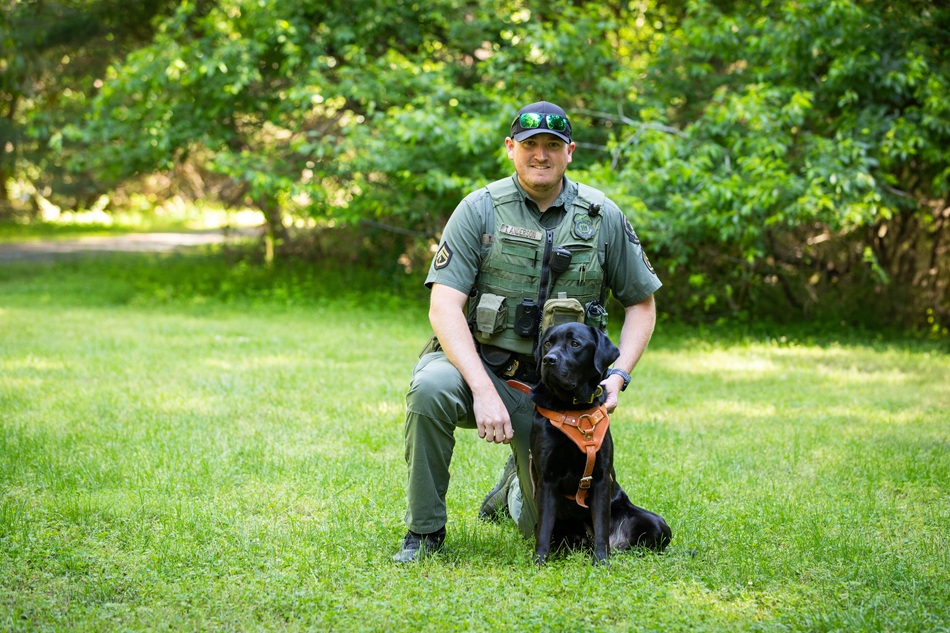
One of the main ways K-9s aid DNRP is with their extraordinary sense of smell. The dogs can be used to trace the scent of a lost individual, a criminal suspect, gunpowder residue, animals, drugs or explosives. This helps officers recreate hunting accidents, track poachers, clear a scene after a bomb threat and in general halt criminal activity.
“K-9 Cash is certified trained in trailing, tracking for human suspects or lost or injured people,” said Sgt. Travis Anderson with DNRP Fish and Wildlife. “He also does article detection, which is basically evidence detection. Anything with human odor. So, if you throw something out of your vehicle, or if you lose something while you’re out in the field, he is trained on the detection of human odor, and he is also trained in the odor of white-tailed deer.”
Dogs help keep their handlers safe by assisting on patrol. Thanks to their athleticism, dedication and top-notch training, they can subdue individuals believed to be dangerous as well as those fleeing the scene. Handlers receive extra confidence when on patrol because they know they have a K-9 partner dedicated to protecting them and getting the job done.
Leo, for instance, has helped calm down heated situations simply by being alongside his handler, as the mere presence of a German shepherd can be enough to dissuade a suspect from resisting arrest.
“When I first met Leo, I was like, man, this guy is going to be mine for basically the rest of my career. He’s going to be my backup. He’s going to be basically my lifelong partner,” Master Cpl. Trevor Ditmore, a member of DNRP’s State Parks Unit, said. “And I was excited when I first saw him. He was a very green dog, so I didn’t know what to expect going into it. But I was very excited to start with him and basically see what he can do.”
DNRP’s K-9s accompany their human officers almost everywhere when on duty. One of the few exceptions is during the summer, when Fish and Wildlife officers might spend all day out on a boat checking to ensure boaters are following all the applicable state rules and regulations. In that case, they’ll often leave their K-9 at home or in the office.
Officers interested in becoming a K-9 handler submit an application and interview with DNRP leadership. If selected, they then undergo a suite of training, including six months with Delaware State Police or another Canine Conservation program. Handlers and their K-9 partners also perform numerous hours of training focused on patrol and scent work each month to stay current and prepared.
Dogs do not serve for a fixed amount of time but keep working until they’re limited by age or other health issues. The maximum amount of time a K-9 companion might serve for is about a decade, at which point they’re taken off the force.
For these dogs, whose lives have revolved around their jobs for years, retirement can be quite a change. Rosco, for instance, had to adjust to not accompanying Hudson to work at first.
“When you spend that much time with somebody every day in and out, that’s what that dog lives for,” Hudson said.
K-9s remain very well-cared-for in retirement, with the state picking up a portion of veterinary bills for former police dogs.
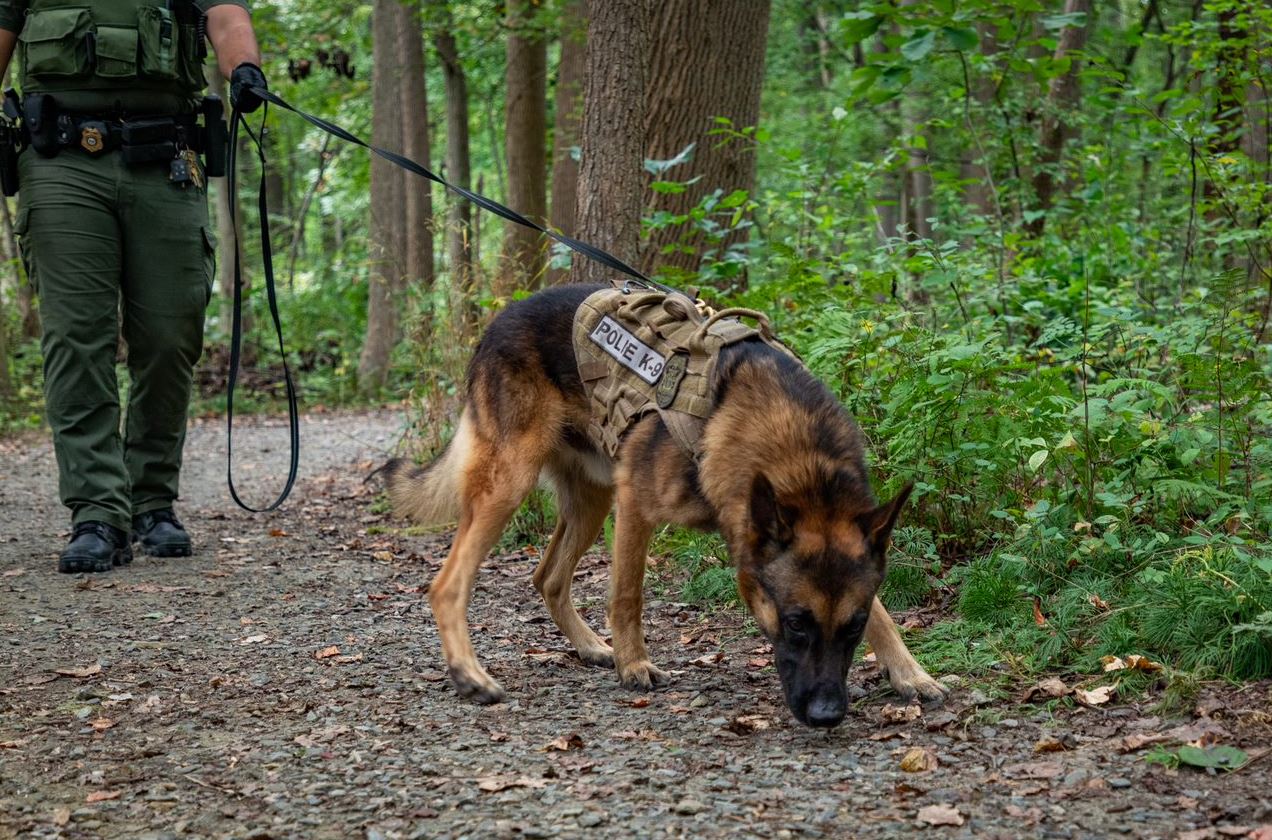
Temperament does tend to vary a bit between different breeds.
“We joke in the patrol side of things that the best way to describe it is if there’s a bad guy behind a wall. The German shepherd is trying to figure out a way to get around that wall to get to them. And the Belgian Malinois is running through the wall to get to the bad guy. So, we like to joke that the German shepherds tend to think a little bit more where the Belgian Malinois tend to act,” Ditmore said.
Over time, individual dogs can build up a reputation and even be called on by other law enforcement in the state to assist them — with their handlers right there as well, of course.
Working with an animal can pose some initial challenges for a handler as the dog and the officer are getting to know one another, but it doesn’t take long for the two sides to build a bond. Many handlers join the program because they already have an affinity for man’s best friend, and some describe it as a calling that makes them excited to go to work every day.
“I joke that I spend more time with Leo than I do my own family, because he’s in the car with me when I’m in the car and he’s at home with me when I am at home,” Ditmore said.
One word of warning for the public — while these dogs are adorable and may look like they would love to be petted, please keep in mind they are working dogs generally focused on important tasks. If a dog is wearing a vest or other police identifier, that’s a sign they are on-duty and should be left alone.
If you’re interested in owning a stuffed miniature K-9 of your own and supporting our DNRP, check out the Delaware State Parks online store! You can also purchase one for the same price ($22) at the DNREC licensing desk inside the Richardson and Robbins Building, located at 89 Kings Highway in Dover.
Related Topics: animals, dnrp, natural resources police, outdoor delaware, people, police, safety
Delaware's Governor
State Agencies
Elected Officials
General Assembly
Delaware Courts
State Employees
Cities & Towns
Delaware State Code
State Regulations
Business First Steps
Phone Directory
Locations Directory
Public Meetings
Voting & Elections
Transparency
Health Insurance
Tax Center
Personal Income Tax
Privacy Policy
Weather & Travel
Contact Us
Corporations
Franchise Tax
Gross Receipts Tax
Withholding Tax
Delaware Topics
Help Center
Mobile Apps
E-mail / Text Alerts
Social Media


Built by the Government Information Center
©MMXXVI Delaware.gov