DNREC Menu

The air outside is brisk, but the ocean waters around Delaware are still warm. Are you planning to go swimming or surfing? If so, you may encounter jellyfish because they love warm water. And there are several species of jellies you should keep a watchful eye on as you venture out for a dip.
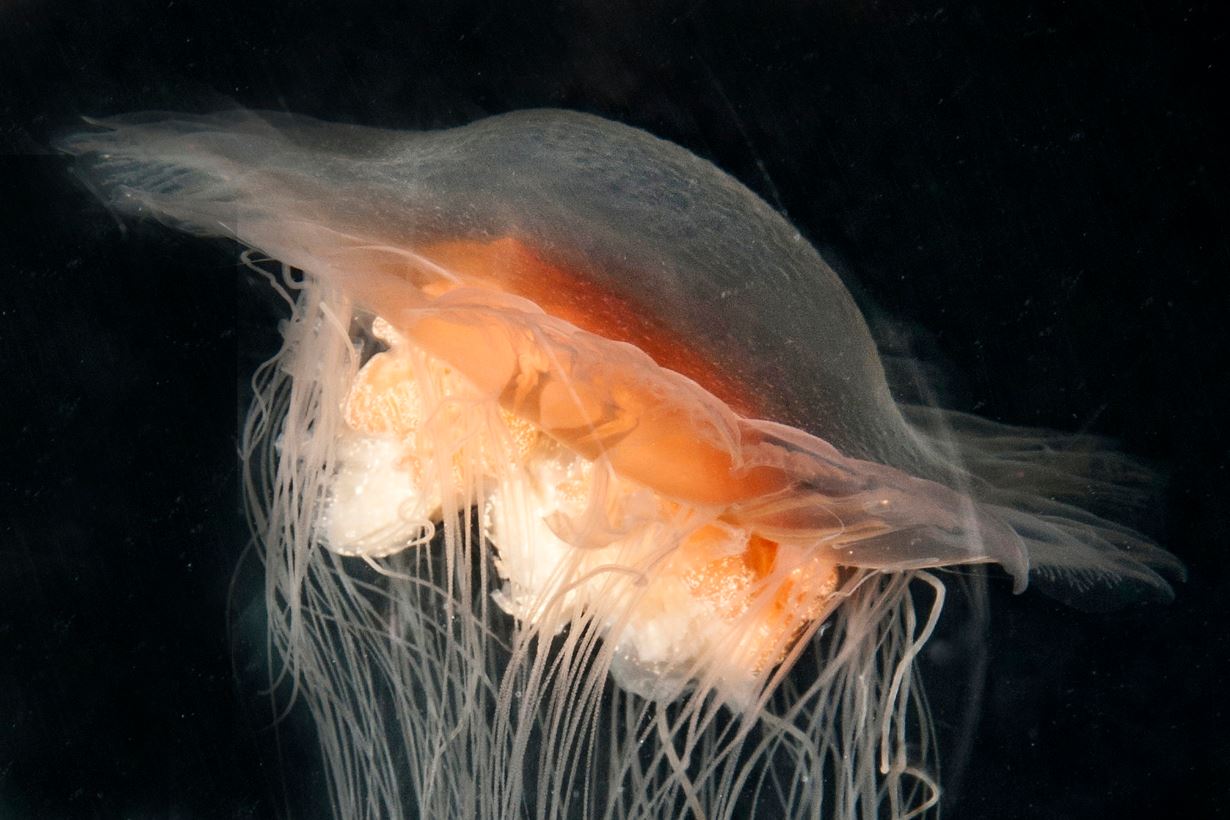
The largest jellyfish found in our waters is the lion’s mane. In fact, it is the largest known jellyfish species in the world. They got their name because their bright trailing tentacles look like a lion’s mane. They’re also easy to spot because of their orange color.
The species can be as large as 6 to 12 inches across at the bell, which is the rounded part at the top. The largest lion’s mane ever found was on a beach in Massachusetts Bay in 1870. Its bell measured 7 feet 6 inches across, and the tentacles were 120 feet long.
The lion’s mane uses its stinging tentacles to capture, pull in and eat fish and smaller jellyfish that get too close to their tentacles. The stinging cells are not known to be fatal to people. But the sting site will be very red and painful.
What eats the lion’s mane jellyfish? Sea birds, giant ocean sunfish, sea turtles and other jellies will feed on them.

The Atlantic sea nettle is carnivorous, meaning it will eat other jellyfish and crustaceans like crabs, lobsters and shrimp. Their mouths are located in the middle of their bodies near the bell and are attached to a stomach-like opening used for munching their prey.
This species is somewhat clear, with small white dots and reddish-brown stripes. Their sting is strong to severe but not deadly to humans. However, it will hurt.
The predators of the sea nettle are mostly sea turtles, ocean sunfish and larger jellyfish.
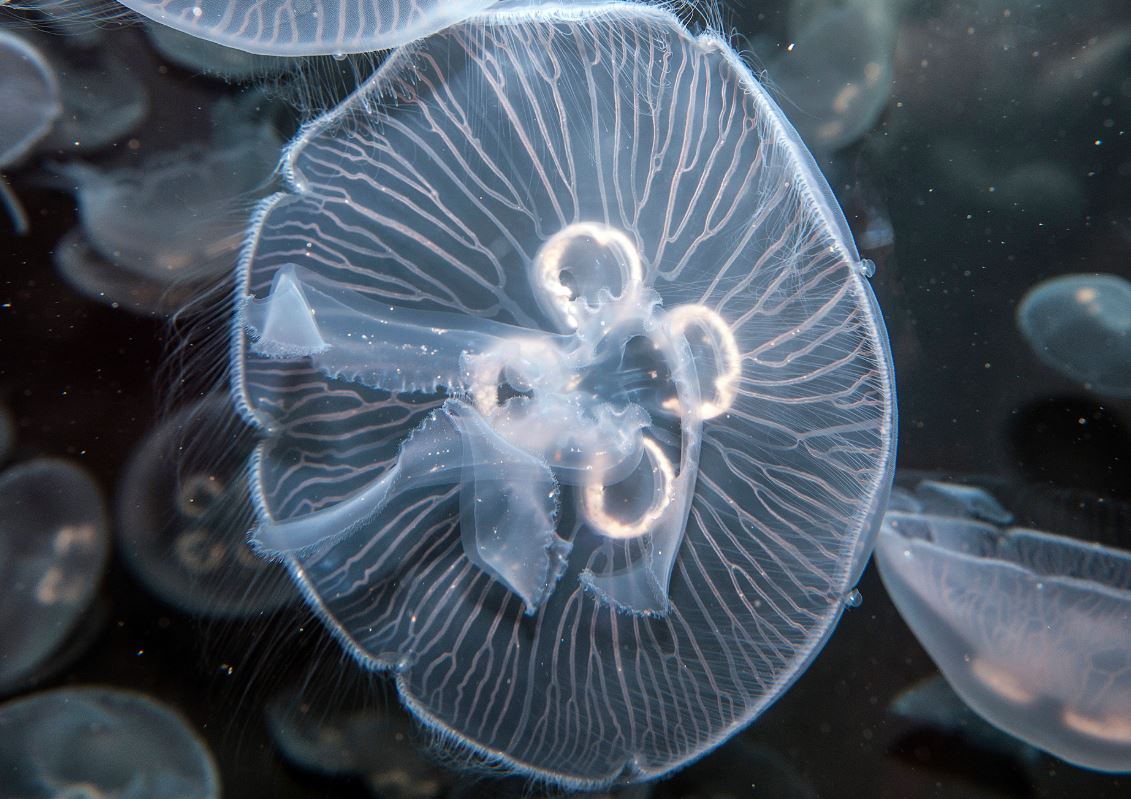
Some think the moon jellyfish is one of the coolest jellies because it looks like an underwater flying saucer and lights up at night. Moon jellyfish are clear in color and average about 6 to 8 inches in diameter, though larger moon jellies have been known to grow as large as 20 inches across at the bell. They have four horseshoe-shaped reproductive sacs in the center of their bells and short tentacles.
Moon jellies are usually found from early June to October, when they show up in harbors and bays en masse.
They feed on plankton and mollusks, like snails, whelks and conchs, using their tentacles to pull in their victims. They are only able to move slightly by themselves, so they rely on ocean currents by pulsing and relaxing their bells.
They don’t have strong enough stinging power to penetrate our skin, but if you happen to get brushed by one, you will feel a minor stinging sensation.
Ocean sunfish and sea turtles like to snack on them.
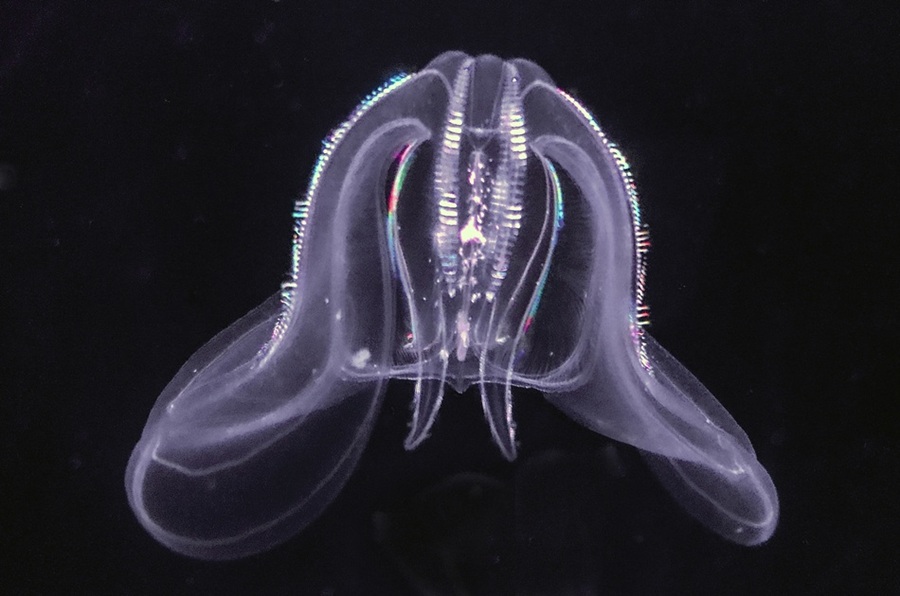
Have you ever seen a sea walnut? They’re not true jellyfish, but ctenophores, or comb jellies. Their population changes with each season but they can be found swimming along our coast all year. Don’t worry if you see one because they’re harmless to people.
It can grow up to several inches long, but adults don’t have tentacles.
A sea walnut is shaped like a walnut and is transparent or white, though it gives off a rainbow spectrum of colors when disturbed by a light source. At night, they can be seen “flashing” brightly in the waves of passing boats.
They move through the water by using eight rows of hair-like structures, or combs.
If you get stung by a jellyfish, the best action you can take is to rinse the site with vinegar. Then wash the area with hot water or cover it with a warm blanket or towel.
It’s a good idea to bring a small bottle of vinegar with you to the beach in case you or someone with you is stung so they can be treated right away. If you’re swimming and get stung in the face or neck area, seek medical help as soon as possible.
A second way to treat a jelly sting is to use Adolph’s Original Unseasoned Meat Tenderizer. It’s the brand of choice because it contains the enzyme papain. Mix some of the powder with water to make a muddy compact and place it over the sting.
Despite what you may have heard, you should not urinate on a jellyfish sting. Doing so may actually exacerbate rather than relieve the pain.
Delaware's Governor
State Agencies
Elected Officials
General Assembly
Delaware Courts
State Employees
Cities & Towns
Delaware State Code
State Regulations
Business First Steps
Phone Directory
Locations Directory
Public Meetings
Voting & Elections
Transparency
Health Insurance
Tax Center
Personal Income Tax
Privacy Policy
Weather & Travel
Contact Us
Corporations
Franchise Tax
Gross Receipts Tax
Withholding Tax
Delaware Topics
Help Center
Mobile Apps
E-mail / Text Alerts
Social Media


Built by the Government Information Center
©MMXXVI Delaware.gov