DNREC Menu

Two hundred fifty years ago, delegates to a colonial assembly gathered in Delaware’s first capitol building to declare independence. In doing so, they established Delaware as entirely separate from not just the Kingdom of Great Britain but also Pennsylvania, which had for the prior century possessed a degree of control over what was then known as the Three Lower Counties on the Delaware.
On June 15, 1776, a month after the Second Continental Congress in Philadelphia advised the colonies to be prepared to establish their own government, representatives of New Castle, Kent and Sussex counties cut all ties with the British crown as well as our immediate neighbor to the north.
The rest, as they say, is history.
To celebrate the United States’ semiquincentennial, Outdoor Delaware put together a list of the locations in the First State with strong ties to the country’s birth. If you’re interested in learning more about the 250th anniversary and attending events commemorating the occasion, check out DE250.
As the original capital of Delaware, New Castle has places deeply connected to the American Revolution. Perhaps nothing in the First State carries the gravitas of the New Castle Court House Museum, the original capitol building of the Delaware colony and then state. It was here the assembly met to declare independence all those years ago, and the first constitution of Delaware was approved on the grounds on Sept. 20, 1776.
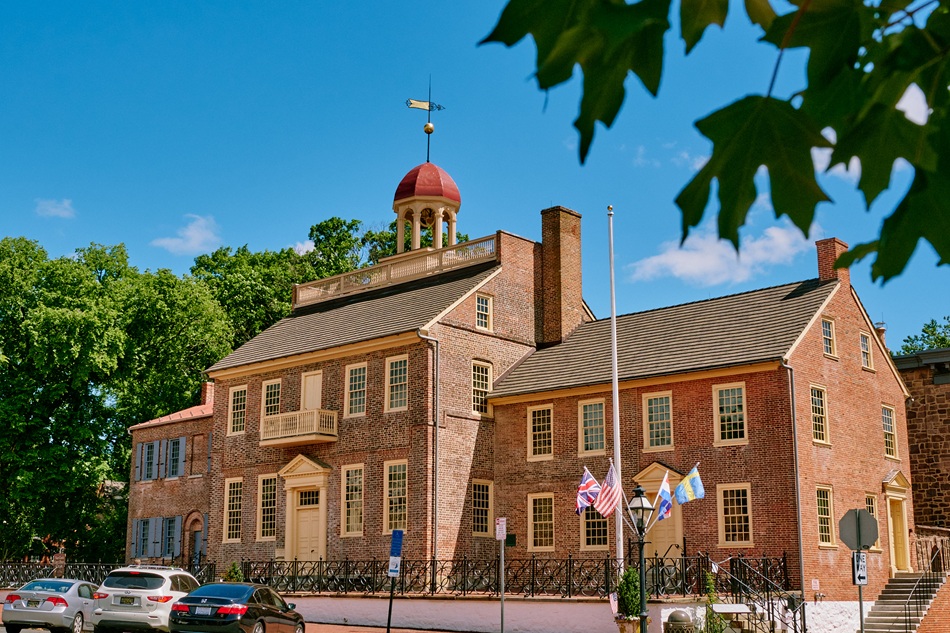
Built in 1732 over the remains of a courthouse constructed in the 1680s, the site is one of the oldest surviving courthouses in the country. It’s played host to various state and federal courts over the years, and though New Castle wasn’t the state capital for long — Dover was selected in 1777 because it was more defensible — it remained as the county seat for another century.
Over the centuries, the community has remained proud of the town’s strong connection to Delaware’s history, including celebrating Separation Day in mid-June annually.
“People from Delaware and New Castle were deeply involved in the struggle of American independence during the second half of the 18th century,” states a new exhibit from the New Castle Historical Society. “New Castle residents including George Read, Thomas McKean and Nicholas Van Dyke served in the Continental Congress. They and others served in the Delaware Assembly, Delaware Regiment of the Continental Army and local militia companies. Still others served in political office or worked on committees of the independence movement.”
Today, admission to the museum is free, and guided tours are offered Wednesday through Sunday. Like many of the sites that appear on this list, it is run by the Delaware Department of State’s Division of Historical and Cultural Affairs.
If you visit, also consider stopping by the Amstel House. Built around 1738 on the site of a structure established decades earlier, this historic residence was once owned by Nicholas Van Dyke, president of Delaware (as the office of governor was originally known) from 1783 to 1786. It also briefly hosted no less a luminary than George Washington, who visited in 1784 for Van Dyke’s daughter’s wedding. The home is open for guided tours on Saturdays and Sundays from April through December.
Centered around the Dover Green, First State Heritage Park is “Delaware’s first urban park without boundaries.” Part of Delaware State Parks, it consists of the John Bell House, Legislative Hall, the Old State House, the Delaware Public Archives and a few other attractions. With most of the attractions no more than a quarter-mile from one another, it’s perfect for walking on a warm, sunny day.
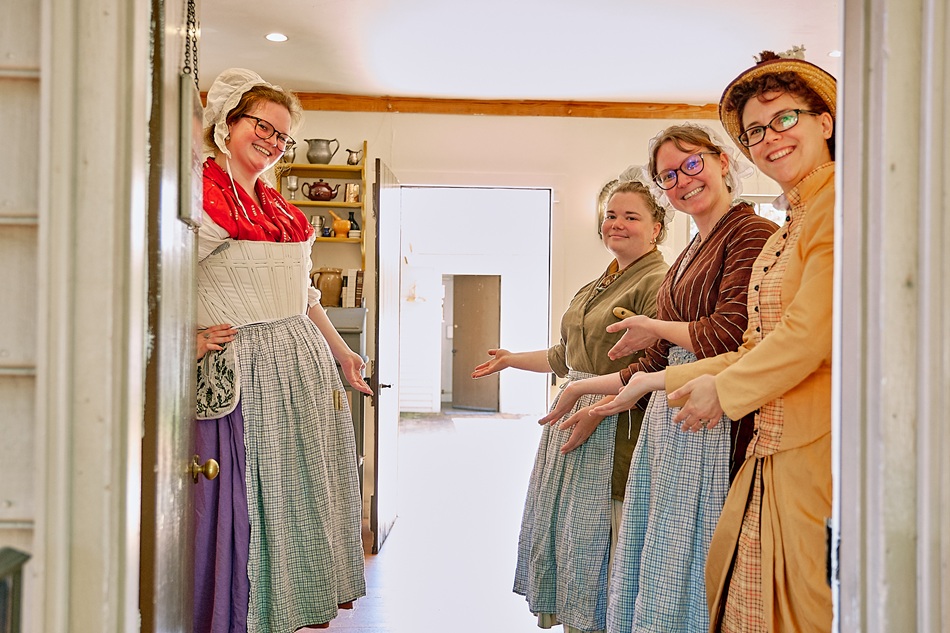
Start at the John Bell House, a small wooden structure that sits by the Kent County Courthouse. Built before the American Revolution, today it serves as the park’s interpretive center and is open Wednesday to Saturday from April to November and Thursday to Saturday the rest of the year. Walking tours of the Green led by costumed interpreters able to answer almost any question one might have about ye olden days depart from here twice a day.
Next, move to the Old State House a stone’s throw from the John Bell House. This building served as the state capitol from 1791 to 1933. It’s open for guided tours Wednesday through Saturday at select times.
The first floor features a courtroom as it would have looked in the 1700s, while the second floor includes chambers once used by the state Senate and House of Representatives. Hanging on the walls of the upper floor are portraits of Jacob Jones and Thomas Macdonough, Delawareans who served in the War of 1812, as well as one of George Washington commissioned in 1800 shortly after his death.
The building has seen many changes over the years but was restored to its original appearance in 1976 to commemorate the United States’ bicentennial.
Now that you’ve seen the first permanent meeting place for the state legislature, you’ll probably want to visit Legislative Hall. This elegant building has housed the General Assembly for 93 years, undergoing several renovations during that time. You might be surprised how cramped the Old State House feels in comparison!
Leg Hall, as those in the know call it, is open to the public Monday through Friday during normal working hours, with guided tours available on specific days and at certain times.
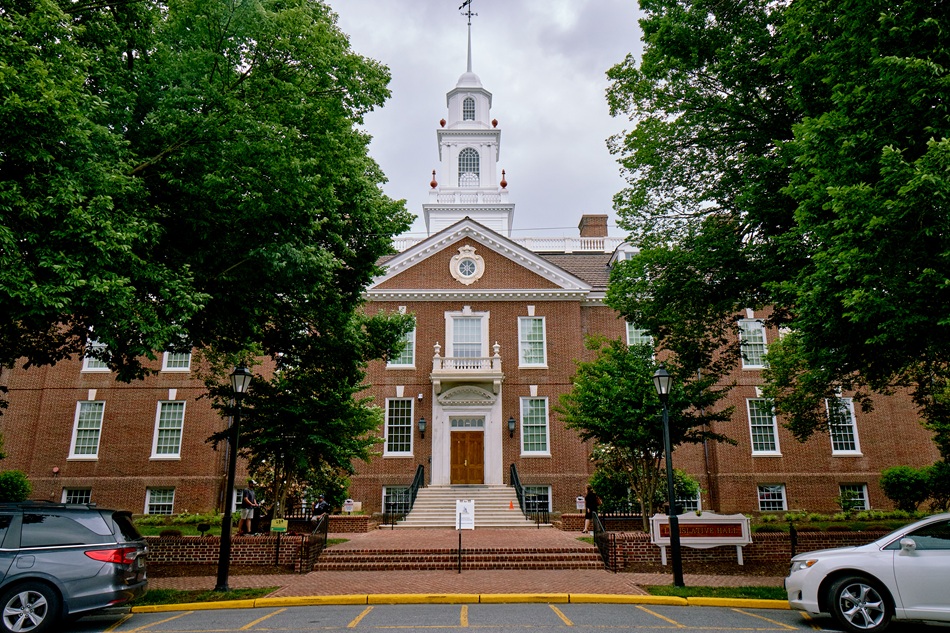
Because it is one of the state’s centers of government, you’ll have to go through security, so leave most of your personal effects aside from an ID in the car. While here, you can pick up packets offering a brief history of the state, including activity booklets for children. Keep in mind legislators are often in session Tuesday, Wednesday and Thursday from January through June.
Outside the building are several monuments honoring Delawareans for their roles in military conflicts and social movements. These can make great tools for teaching people about major historic events like 9-11, Brown v. Board of Education and the struggle for women’s suffrage.
Another worthy stop on your trip around First State Heritage Park is the Delaware Public Archives, which is open Monday through Friday. Offering a veritable treasure trove of documents dating back to colonial times, the facility is visited by historians working on research, students preparing major projects and fans of Delaware history. Much of the really old stuff is kept safely stored away to preserve it, but there’s certainly plenty to appeal to history lovers. Not only are free programs held here on occasion, such as a recent talk on Delaware’s contributions to the American Revolution, but the Archives also houses First State Heritage Park’s Welcome Center.
The location of the only Revolutionary War battle on Delaware soil is today about a mile-and-a-half from Delaware Stadium in Newark. Cooch’s Bridge Historic Site is a bit unique because it is transitioning from private to public ownership and thus is generally only open by reservation. In other words, make sure you call before visiting (or wait until it opens as a museum in 2027).
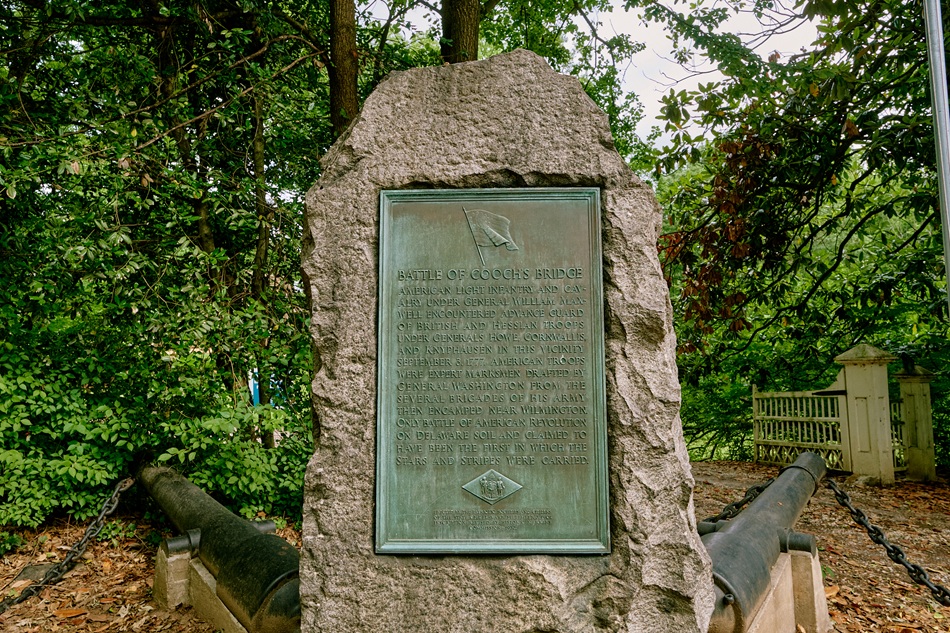
Still, history buffs won’t want to miss the chance to view a battlefield site in our backyard. It may not be Gettysburg, but the Battle of Cooch’s Bridge in September 1777 preceded the Battle of Brandywine, the largest battle of the Revolutionary War, by just a week.
The clash at Cooch’s Bridge pitted Americans led by William Maxwell against a contingent of British and Hessian (German) troops led by William Howe, the commander-in-chief of British forces for the first years of the war.
The Americans fought hard and, despite being outnumbered, managed to delay the enemy forces moving north to Philadelphia. Patriot troops eventually retreated when ammunition ran out.
Interestingly, there’s a chance this was the first battle featuring the national flag of the nascent American republic, although other sources dispute this.
Likely built in 1750, the Hale-Byrnes House in Stanton is notable for hosting George Washington and other top officers on Sept. 6, 1777, three days after the Battle of Cooch’s Bridge.
Washington and army leaders, including Alexander Hamilton (from “Hamilton” fame), Nathanael Greene, the aforementioned Maxwell and the Marquis de Lafayette, drew up plans for the defense of Wilmington here. Five days later, they would lead American troops against British and Hessian soldiers just a few miles north of the state line.
After some stiff fighting, the Americans were defeated, enabling the British to capture Philadelphia and hold it for the next nine months.
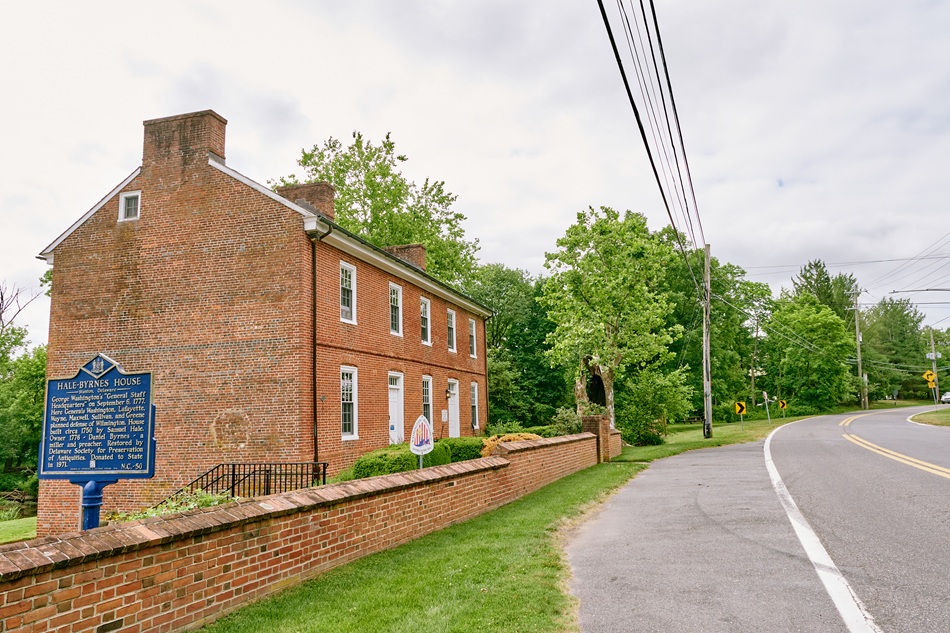
According to legend, the men gathered outside the house under a tree now known as the George Washington Witness Tree. Unfortunately, after roughly three centuries, the tree is nearing the end of its lifespan, so you might want to see it soon.
The Hale-Byrnes House itself was slated to be demolished in the 1960s but was preserved, restored and donated to the state due to public pressure. Today, it is a stop on the Washington-Rochambeau National Historic Trail, a 680-mile trail that traces the route taken by Washington’s Continental Army and Jean-Baptiste de Rochambeau’s Special Expedition as they marched from Newport, Rhode Island, to Yorktown, Virginia, in 1781.
The house itself, which now sits little more than a mile from the Christiana Mall, is open for a few hours on the first Wednesday of every month from April to December.
Located about five miles south of downtown Dover, this is the home of the “Penman of the Revolution.” Dickinson, a member of the first two iterations of the Continental Congress and one of five Delawareans to sign the U.S. Constitution in 1787, famously declined to sign the Declaration of Independence, which is likely part of the reason he is often overlooked nationally among Founding Fathers.
Dickinson inherited substantial land and grew up at the plantation home but seldom resided there after childhood. The original structure was built by his father around 1740 but destroyed roughly half a century later, meaning this is a reconstruction.
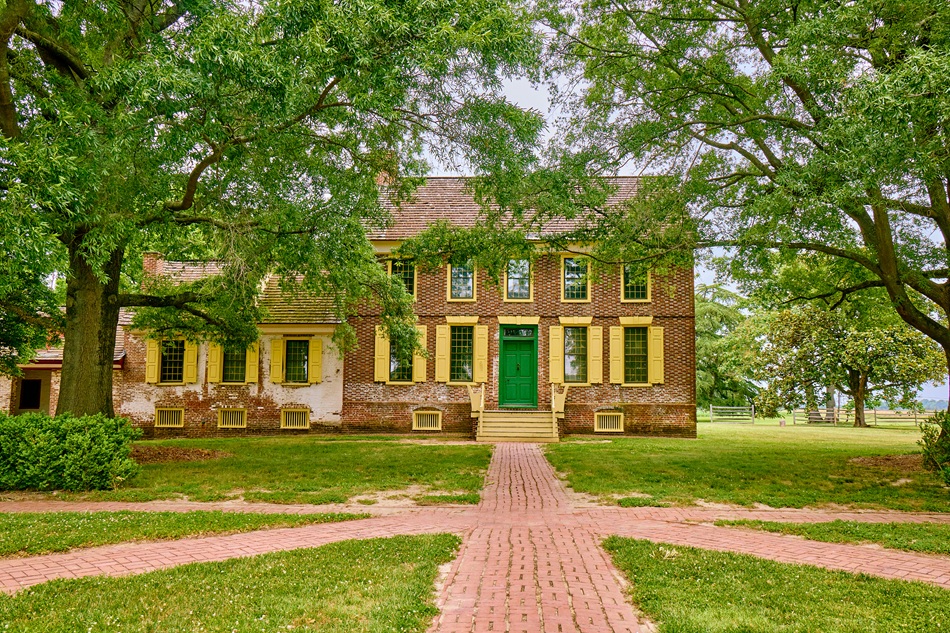
Also known as Poplar Hall, the home served as the headquarters for Dickinson’s agricultural enterprises. Sadly, that included dozens of enslaved people, though Dickinson freed them conditionally in 1777 and unconditionally nine years later.
Today, the plantation tells the story not only of Dickinson but of the enslaved Black men and women whose exploitation helped enable his contributions to Delaware and the United States.
It is open for outdoor visitation on Tuesdays, with the grounds and visitor center open Wednesday through Saturday. Guided tours of the mansion are offered on Thursdays, Fridays and Saturdays.
The site’s measured approach that seeks to highlight both a Founding Father and dozens of far less fortunate others can make it a good way to introduce children to one of the ugliest and sometimes-overlooked aspects of this country’s early days.
Lewes, which boasts of being the first town in the First State, has been continuously inhabited by Europeans and their descendants for almost 350 years, though the first settlement, Zwaanendael, was established here by Dutch colonists in 1631.
It’s because of this early settlement (which saw the colonists wiped out after a conflict with the indigenous people of the area) that Delaware initially became part of Pennsylvania rather than Maryland. The oldest buildings in Lewes predate the United States proper, dating to the late 17th century.
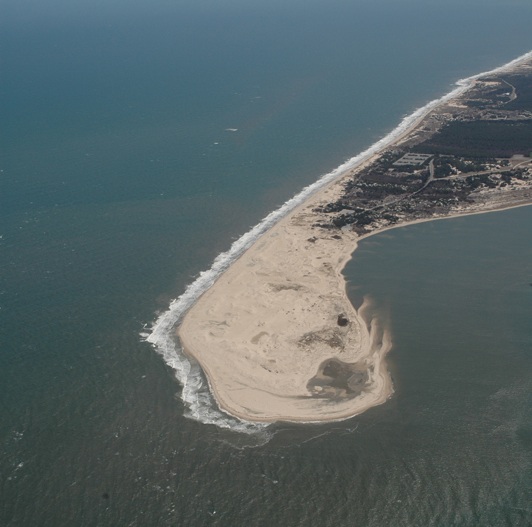
At the time of the American Revolution, Lewes was a maritime town of about 500. As the first port of call on the waterway up to Philadelphia, the nation’s original capital, Lewes’ strategic location came into play when the 13 Colonies declared their independence.
British warships actually appeared offshore to blockade the Delaware Bay a few months before those crucial early-summer votes. About 1,000 patriot troops were stationed in Lewes during the war, and the town had cannons set up for defense.
An alarm post, one of several stretching up the Delaware Bay and River, was stationed at The Point at Cape Henlopen State Park so patriots could issue a warning and notify Philadelphia by horse or boat if British activity was detected in the area.
“So, in terms of the Revolution it’s a very significant location because it controls the mouth of the most important waterway of the Revolution,” said Ryan Schwartz, the director of interpretation for Historic Lewes.
Historic Lewes runs a museum and several other historic sites, including Cannonball House, a still-standing edifice damaged when the British shelled Lewes during the War of 1812.
A few other spots deserve mention as well, even if their ties are a bit more fleeting or there’s not as much commemorating them today.
George Washington stayed at Wilmington’s Quaker Hill Historic District, the city’s oldest neighborhood, in 1777 leading up the Battle of Brandywine and even visited the no-longer-extant Sign of the Ship Tavern on Market Street. He’s also thought to have stopped at what is today Deer Park Tavern in Newark, meaning he has something in common with Edgar Allan Poe.
We can’t forget the former site of the Golden Fleece Tavern in Dover either. Though the tavern was torn down around 1830, it’s just around the corner from the establishment today known by that same name. Amusingly, the tavern essentially served as the state capitol building from 1777 until the Old State House was completed in 1791, and it’s there that the U.S. Constitution and Bill of Rights were ratified. Today, Parke Green Galleries sits on that spot.
These are by no means the only places in Delaware with historic significance, but they are the locations most closely associated with the founding of the United States. Which is your favorite?
Related Topics: adventure, delaware colony, fun and education, heritage, history, outdoor delaware, parks, people
Delaware's Governor
State Agencies
Elected Officials
General Assembly
Delaware Courts
State Employees
Cities & Towns
Delaware State Code
State Regulations
Business First Steps
Phone Directory
Locations Directory
Public Meetings
Voting & Elections
Transparency
Health Insurance
Tax Center
Personal Income Tax
Privacy Policy
Weather & Travel
Contact Us
Corporations
Franchise Tax
Gross Receipts Tax
Withholding Tax
Delaware Topics
Help Center
Mobile Apps
E-mail / Text Alerts
Social Media


Built by the Government Information Center
©MMXXVI Delaware.gov