DNREC Menu

The Delaware Department of Natural Resources and Environmental Control is a broad agency with hundreds of employees up and down the state responsible for safeguarding wildlife, preventing pollution, conducting research and much more. A key part of that is enforcing environmental protections so our natural resources remain plentiful.
To that end, DNREC has its own law enforcement agency tasked with stopping poaching, investigating polluters and keeping our lands safe and welcoming while generally ensuring residents and visitors alike follow all applicable laws and regulations.
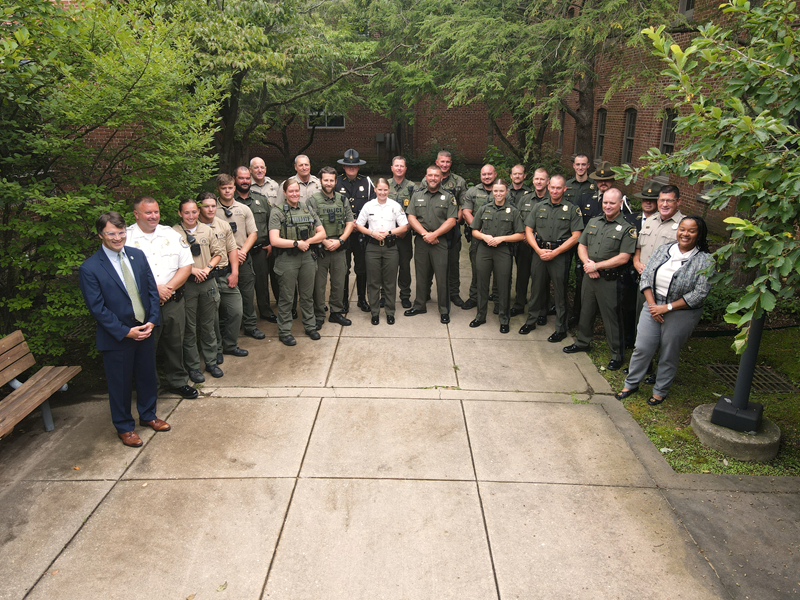
A fully sworn police department, Delaware Natural Resources Police has statewide authority to enforce criminal law as well as hunting, fishing, boating and environmental regulations and laws. Its 77 dedicated officers serve Delawareans on waterways and land both public and private, playing a vital role in enabling Delawareans and visitors alike to enjoy nature to its full extent. These diligent men and women act as a key line of defense against environmental violations, striving to preserve the environment and keep the outdoors safe and accessible.
After a 2024 reorganization, DNRP is now made up of three groups under one umbrella: the Environmental Crimes Unit, the Fish and Wildlife Unit and the State Parks Unit.
Duties vary from more traditional policing to handling tasks which require a greater degree of specialization and hyper-focused knowledge, but to explain it in “very simple terms is the three P’s: parks, poaching and pollution,” said Lt. Rebecca Salmon.
Of course, it would do a disservice to the hard-working men and women of DNREC’s police agency to suggest their jobs are always perfectly straightforward and clearly delineated.
Like all police in Delaware, they spend six months training at a certified police training academy. Following that, they receive several months’ worth of specialized field training from their assigned unit.
DNRP officers work regularly with local, state and federal law enforcement agencies, some of which will contact DNREC’s law enforcement as needed when they respond to a situation, such as a large-scale illegal dumping or an occurrence taking place in a state park.
The Fish and Wildlife Unit has a wide variety of duties. An officer might spend a morning out on a boat checking crab pots for the proper tags and then go to popular fishing spots to ensure anglers have fishing licenses and are releasing undersized fish, for instance, or they might venture outside at night on land looking for poachers. In this way, they help secure Delaware’s natural resources for others to enjoy in the years ahead.
“Fish and Wildlife is responsible for enforcing the laws pertaining to fishing, hunting and boating safety as well as making sure that the numerous state wildlife areas in the state are being patrolled and are a safe and desirous location for the people of Delaware,” Capt. Joshua Hudson said.
The unit employs 30 sworn officers as well as seven casual/seasonal folks. The casual/seasonal pathway not only helps swell the unit’s numbers but offers an opportunity for individuals to test out law enforcement and see if the career is right for them. In fact, some current officers started as part-time employees.
Officers must know much of the same information as traditional law enforcement but also have to memorize hunting and fishing rules and regulations.
The exact hours an individual officer is on duty can vary greatly depending on the season. They might work well into the evening on a weekend during the summer when many people are out boating, while during the fall hunting season, they could be done by the early afternoon because they began their shift at the crack of dawn patrolling wildlife areas to ensure hunters are following state laws and DNREC policies.
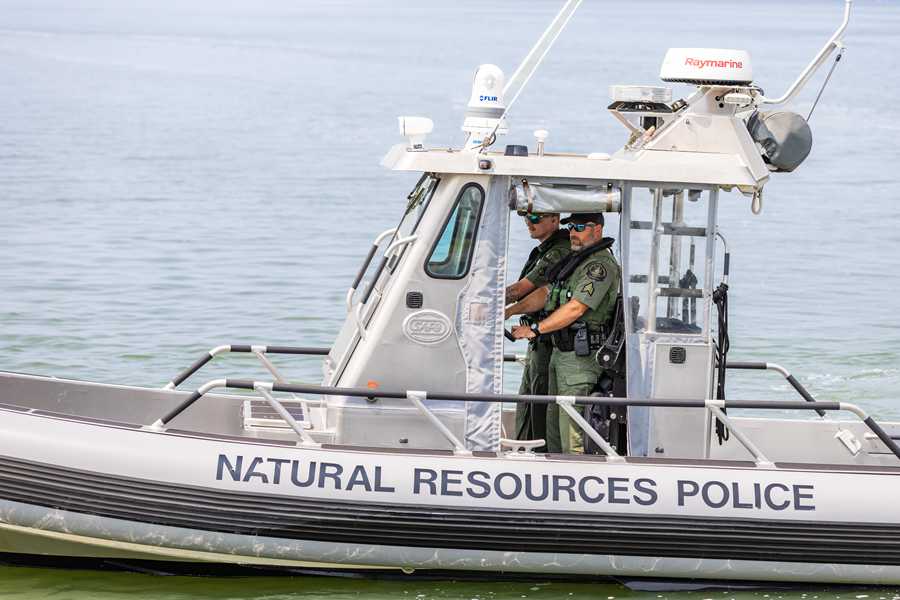
Certain issues dominate in certain areas — boating violations are much more prominent around the Inland Bays, for obvious reasons, just as hunting-related offenses are less common in the more urbanized northern New Castle County.
Part of the job is educating the public on hunting, fishing and boating regulations, and to that end they have outreach duties, including the Youth Fishing Tournament DNRP hosts annually. The event helps spark interest in angling among youngsters, demonstrating the excitement of fishing and recognizing those who catch the most fish. Officers take great joy in participating and seeing the happiness on children’s faces every year as they feel a tug on their lines.
Education also pops up as they enforce laws and regulations. Members of the Fish and Wildlife Unit ticket boaters who aren’t wearing life jackets, for instance, but they use these opportunities to teach people about boating safety as well. It’s not merely punitive — lifejackets are mandatory in Delaware for those younger than 13 because they play an important role in preventing drownings.
A key component of the unit’s job is enforcing laws aimed at protecting our flora and fauna. DNRP Fish and Wildlife officers ensure folks only take a certain number of fish or other animals and don’t keep any that are too small. This can include driving by popular fishing spots in the summer and checking in with anglers there, as well as going out on a boat and checking with commercial fishing vessels in the Delaware Bay.
In doing so, law enforcement helps preserve Delaware’s abundant natural resources for future generations.
The 28 sworn officers overseeing Delaware’s 17 state parks are in some respects the most like traditional police, handling common crimes like vehicle thefts as well as cases of trespassing, damaging park property or illegal hunting or fishing on the grounds.
Officers are assigned to specific parks or regions. While they do patrol in their car, they also frequently conduct foot and bike patrols around parks to ensure they are covering areas that might otherwise be missed. It also makes it easier to interact with members of the public, whether that’s taking a noise complaint, answering a question or simply greeting a park-goer.
Being able to spend substantial time outdoors is a real benefit for DNRP officers too.
Enforcement is an important part of the job, but the officers also help visitors understand the rules of the parks.
“Traditionally, they’re called park rangers, but a park ranger in other states or locations may be an interpretive position. They can be more like a naturalist or an educator, not a law enforcement officer, but they still have the park ranger name. Changing the name to Delaware Natural Resources Police helps to clear up any confusion the public may have when contacting them,” Deputy Chief John McDerby said.
The State Parks Unit oversees more than 26,000 acres in total. Fortunately, officers are up to the task of covering all that ground.
(Delaware DNREC/Lisa Moy)
The Environmental Crimes Unit is responsible for open burnings, illegal dumping, sewage discharges, unauthorized asbestos removal, chemical spills and the like. Each of the 14 sworn officers is tasked with handling incidents in a specific county.
The Environmental Crimes Unit is in some ways the most technical of the three groupings, requiring specialized knowledge, training and gear for dealing with hazardous materials. Members of the unit assist the State Emergency Response Team, which coordinates actions by a variety of state and local entities to respond to major incidents like oil spills, release of hazardous materials and threats involving deadly weapons.
ECU officers play important roles in keeping our land, air and water safe, making sure fuel doesn’t leak into the soil and illegally burned tires don’t pollute the sky. They’re always being on the lookout for illegal dumping, ready to issue citations and explain how the state’s strict laws around disposal of waste help safeguard our natural resources.
“As an officer with the Environmental Crimes Unit, we’re charged with enforcing five different regulations of five different divisions of environmental protection: Water; Air Quality; Waste and Hazardous Substances; Climate, Coastal and Energy; and Watershed Stewardship. Because of those five different divisions, we have multiple different regulations that cover air, soil and water protection,” Lt. Robert Young said.
ECU officers use specialized gear like firefighting equipment, hazmat suits, evidence collection kits and self-contained breathing apparatuses to perform their duties, which sometimes see them placed in situations involving dangerous substances, like a major gasoline spill or the discovery of a clandestine drug lab.
Officers are often dispatched to investigate outdoors, such as walking through the woods in search of the source of a spill. Members find the duties rewarding, noting the unique challenges they face and the value they take in knowing they’re helping keep our environment clean and our population healthy.
During ozone season, which runs from May through September, officers will issue citations for public open burning of tree limbs, brush and branches. Burning can be a health risk, especially during warmer months, contributing to the release of ozone and particle pollution. Officers promote the message of learning before you burn — better safe than sorry when dealing with fire, after all!
Specially trained officers in all three units also have K-9 partners. Dogs in the Fish and Wildlife Unit are sometimes called upon to help detect missing individuals or articles. The State Parks Unit relies on canines to assist with patrol as well, and the Environmental Crimes Unit uses them to help address issues like intentional pollution, accidental chemical spills and even bomb detection.
These good dogs spend six months doing training, such as patrolling and tracking scents, which can include narcotics, explosives and game. Even once the pups are deemed ready and placed into service, they still receive regular training to ensure they’re in tip-top shape.
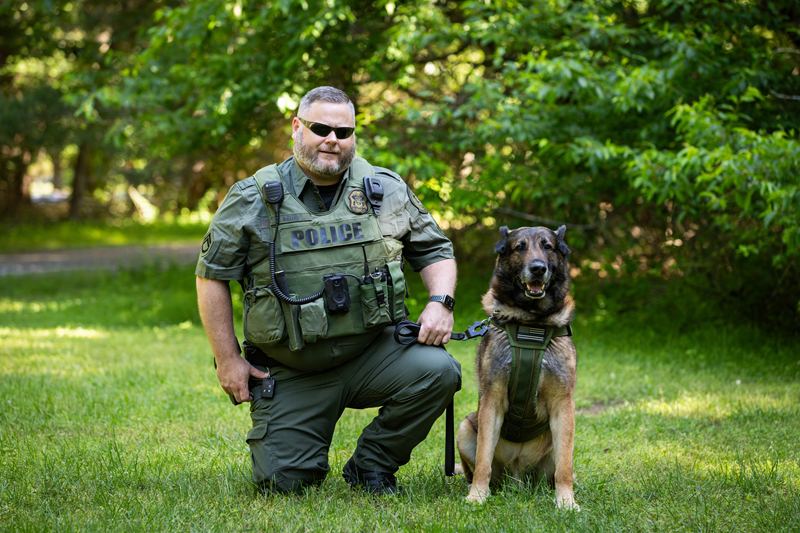
Of course, DNRP handlers are quick to give their dogs treats, toys and words of praise for a job well-done. The dogs also show up at public events at times, helping to put a friendly face on the agency and attract the interest of passers-by.
It’s a partnership the handlers find rewarding and meaningful and the dogs seem to enjoy as well.
If you happen to be out in public and spot a DNRP handler with a canine, don’t just assume you can pet the pup. These are working dogs handling important duties, and if the dog is wearing a vest, that’s typically a sign he or she is on the job and shouldn’t be interrupted.
In addition to canine companions, officers utilize technology to help them do their jobs. A few are drone-certified, enabling DNRP to, for instance, search the Inland Bays for an overturned boat and its passengers.
DNRP even has an Honor Guard Unit, responsible for honoring fallen police officers and presenting the colors at official ceremonies. Being named to the team is considered very prestigious, as the members are tasked with representing the agency, including at solemn events like funerals or commemorations. The team even travels out of state at times to represent DNRP at ceremonies for fallen officers, events honoring law enforcement and sports contests.
Officers with each of the three units noted how much variation occurs in the day-to-day duties, something they described as a positive because it helps keep the job interesting and allows officers to focus on what they find most rewarding. Many had a passion for the outdoors before joining DNREC, and each and every one cares about their communities.
“DNRP officers play a crucial role in fulfilling DNREC’s mission by exercising their responsibilities with integrity, professionalism and transparency in the protection of our natural resources,” Chief Wayne Kline said. “What we do is our core and fundamental to ensuring environmental preservation for generations to come.”
Related Topics: boating, conservation, dnrp, education, fishing, hunting, K9, law enforcement, natural resources police, outdoor delaware, people, pollution
Delaware's Governor
State Agencies
Elected Officials
General Assembly
Delaware Courts
State Employees
Cities & Towns
Delaware State Code
State Regulations
Business First Steps
Phone Directory
Locations Directory
Public Meetings
Voting & Elections
Transparency
Health Insurance
Tax Center
Personal Income Tax
Privacy Policy
Weather & Travel
Contact Us
Corporations
Franchise Tax
Gross Receipts Tax
Withholding Tax
Delaware Topics
Help Center
Mobile Apps
E-mail / Text Alerts
Social Media


Built by the Government Information Center
©MMXXVI Delaware.gov