DNREC Menu
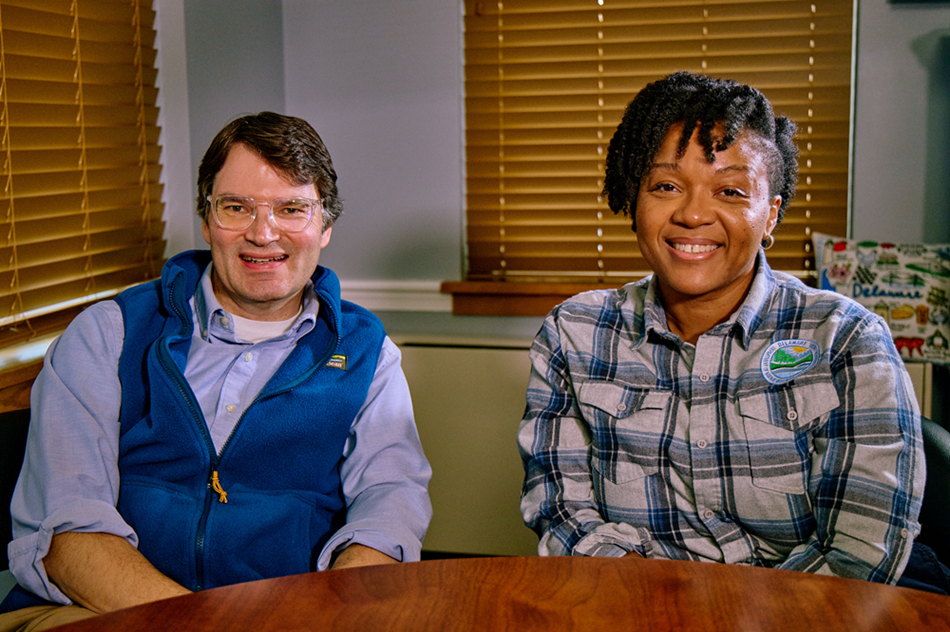
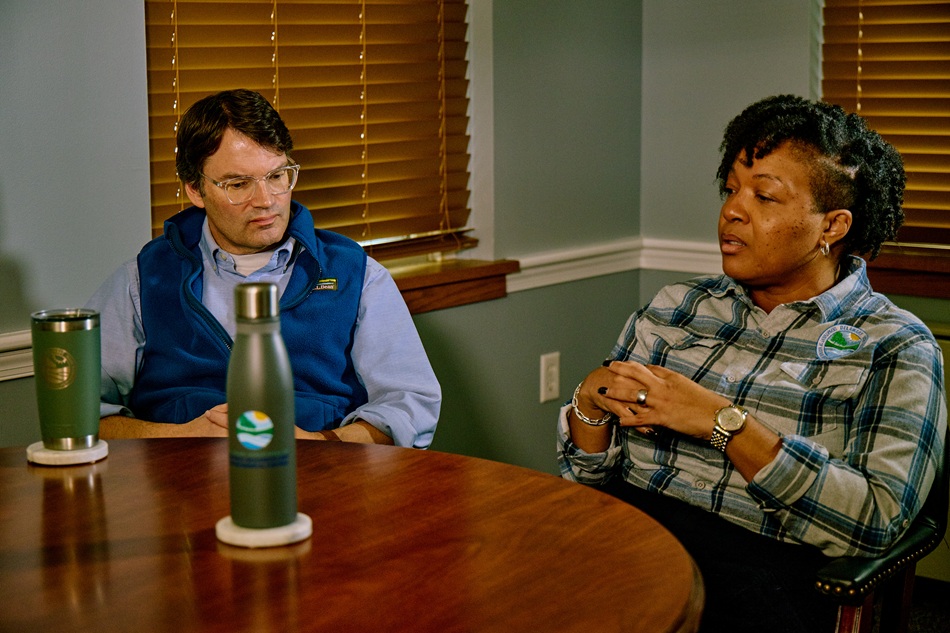
On Jan. 30, 2025, Secretary Greg Patterson and Deputy Secretary Dayna Cobb stepped into the top leadership roles at the Delaware Department of Natural Resources and Environmental Control. To mark the occasion, Outdoor Delaware sat down with Patterson and Cobb to reflect on what surprised them most, the progress they’re proud of and what they’re focused on next for Delaware’s environment and the people who protect it every day. A transcript of the conversation is below. Check out the video version of the interview as well.
(Delaware DNREC)
Outdoor Delaware: Mr. Secretary, Madam Deputy Secretary, thank you very much for your time. I look forward to talking with you today about your first year in office. So, to start with, and this is for both of you: One year into your service in these tough roles, what’s one thing that’s been exactly what you expected and one thing that surprised you?
Greg Patterson: You should go first.
Dayna Cobb: I think the one thing that is exactly what I expected is the passion of the people who work for DNREC. I knew coming in how passionate our employees and staff are. And I’m not surprised by that. They are here because they believe in the mission. The one thing that I was not expecting was how diverse your day can be in this role. You can deal with anything from a mammal on a beach to worrying about the next energy source coming online. So, it is a huge array of topics we deal with.
Greg Patterson: Yeah, I don’t know that my answer is that different than Dayna’s, which is not surprising. So, the number of things that you deal with in the course of a day in these jobs and the speed sometimes at which you have to deal with them is a surprise in some ways. I’ve worked in governor’s offices and other agencies at management levels, and so I was used to some of that, but just the breadth of this agency and dealing with wildlife issues and dealing with energy issues and dealing with contamination issues and some emergencies every once in a while, it really does keep you on your toes.
Outdoor Delaware: This next question is for both of you as well. When you think about this job on a great day, what does a great day at DNREC look like?
Greg Patterson: So, for me, every day is a great day in some respects, because of being able to be here and support the work of the 700-plus people who are experts in their fields. But the decisions that get to our level, we don’t get the easy decisions. You know, if they’re easy decisions, someone else makes them before it even comes to us. And so, a great day is a day where you feel like you have had a lot of conversations about a lot of different topics, gotten really good advice and made decisions on policies or actions that you think are the right ones for the state of Delaware.
Dayna Cobb: Agreed with what the secretary said. He says it all the time. Our job is to make the employees of DNREC’s job easier. And so, a great day is when we’ve had those meetings that we can remove some of the barriers so that the great employees of DNREC can do their job.
Outdoor Delaware: This is for you, Mr. Secretary. You talked about coming in with four main priorities: climate change, environmental justice, permitting and employee morale. Looking back, what’s the most meaningful progress in each? And what is still ahead?
Greg Patterson: So for climate change, one of our accomplishments just within the last couple of weeks is an update to the state’s Climate Action Plan, which is our plan and strategies and potential actions adapting to the effects of climate change here in the lowest-lying state, where we are seeing the effects of flooding and the effects of storms and the effects of sea level rise on a regular basis, especially in our coastal areas. But we also want to do what we can to prevent it from getting any worse. And that means goals for reducing the greenhouse gases that contribute to climate change. And we actually have now a mandated goal of trying to be net-zero by 2050, which is basically a way of saying we need to drastically reduce our greenhouse gas emissions. And this plan has all sorts of ways that we as a state government, other partners and members of the public can act to achieve those goals. That was a big, huge undertaking that involved more than 2,300 people through a variety of surveys and town halls and engagement sessions and lays out a strategy that we can use for the next 20 years to try and achieve some of those goals. So, that is a big one on climate change.
On environmental justice, this agency has a responsibility, especially in some communities that have been either traditionally left out of environmental decisions or have been overburdened by environmental decisions, to make sure that they are a part of that. And part of that is doing extra reach-out, making extra efforts to make sure they know what is going on in their community. From a DNREC perspective, what permits may be coming, what emissions may be happening and whether or not they are things to be concerned about. It could be air, it could be in the soil, it could be water. Those are all things that people have concerns about. And one of the things we have worked really hard on for this first year is to open the lines of communication and establish some trust with some of those communities. And we have done some town halls, in some communities, where there were people who were upset and concerned. And we went to those communities and took the hard questions for a couple of hours and hopefully have started to regain some trust as environmental experts that they can turn to when they have questions and that they can trust when we’re making decisions on their behalf about what may be happening in their communities from a permitting perspective.
We really want the people who work here and do all these important environmental jobs to know how valuable that is, to know that their leadership values what they do and to hopefully communicate to the people of Delaware all the great work that is being done here, all the science that goes into it, all the thought that goes into it, so that they are, for some people, maybe less quick to criticize or misunderstand what our roles are, and the only way we get any of the work done here at DNREC is through the employees. We are just the facilitators for that. So, making sure the employees know that that we value what they do has really been a priority, and we’ve tried to get out there and have conversations with them and make sure they feel that.
One of the things the governor was very interested in and we are interested in is there are hundreds of different types of permits in our regulatory sections that people need to do their jobs, to run their businesses, to run their industries. And some of those have gotten a little slow in DNREC over the last couple of years, in part because of staffing challenges that we have, in part because of technology challenges that we have. So, we’ve gone through a number of steps to fill positions, to change our processes, to cut out steps, to speed things up. We need to make sure that we continue to do our environmental job, and that those things are being done safely and without harm to the environment or public health. But there’s a way to do that and be a little more predictable and be a little faster. And we’ve taken a number of steps, and we’ll continue to take some, to do that.
Outdoor Delaware: That’s great to hear. So, next question. This is for both of you again. What’s a moment from this past year that made you think, this is why this work matters?
Dayna Cobb: I think that one of the moments was a difficult moment. And I wasn’t even the person in action. It was the secretary. But the one of the conversations and one of the difficult town halls, and his ability to explain a really complex environmental issue to people where they believe something was happening and having them understand, No.1, we understand what’s happening. Let me put it in plain language and the look of relief that those people had and then afterward, the conversations where they were so appreciative of the fact that the secretary took the time to come and explain this to him. This is why this matters. Being able to explain to Delawareans how we are a resource, how we have the scientific backing for the decisions that are being made and how we’re a step ahead, and I think the ability to have it in common John Q. Delaware language was really impactful, and it was value added for me.
Greg Patterson: It’s hard to narrow it down to one moment. But especially over the last couple of months, we have started to get some really positive comments from community members, from local elected officials, from stakeholders about the way this agency has been approaching a lot of these issues. That we are open to conversation. Even if we’re going to disagree, we’ll at least listen and explain ourselves and see if we can find some common ground.
I give the credit to the employees who have kind of taken to heart my approach over my time in state government of where you should always be open to a conversation. We should always be willing to have a meeting or a phone call. And we should always be open to other ideas. I have made it a career to understand that I’m not the smartest guy on pretty much any issue that I deal with. We have lots of smart people, both within the agency and outside of the agency. And my job is to listen to them and try and figure out the right path forward. And I think the employees of this agency have started to take that as their approach as well, and really from the reception that I’m getting out in the community over the last couple of months, people are seeing that.
Outdoor Delaware: Mr. Secretary, you mentioned four priorities and elaborated on some work DNREC has done with those. Aside from those, what’s a win from this past year that may not have made headlines that you think people should know about?
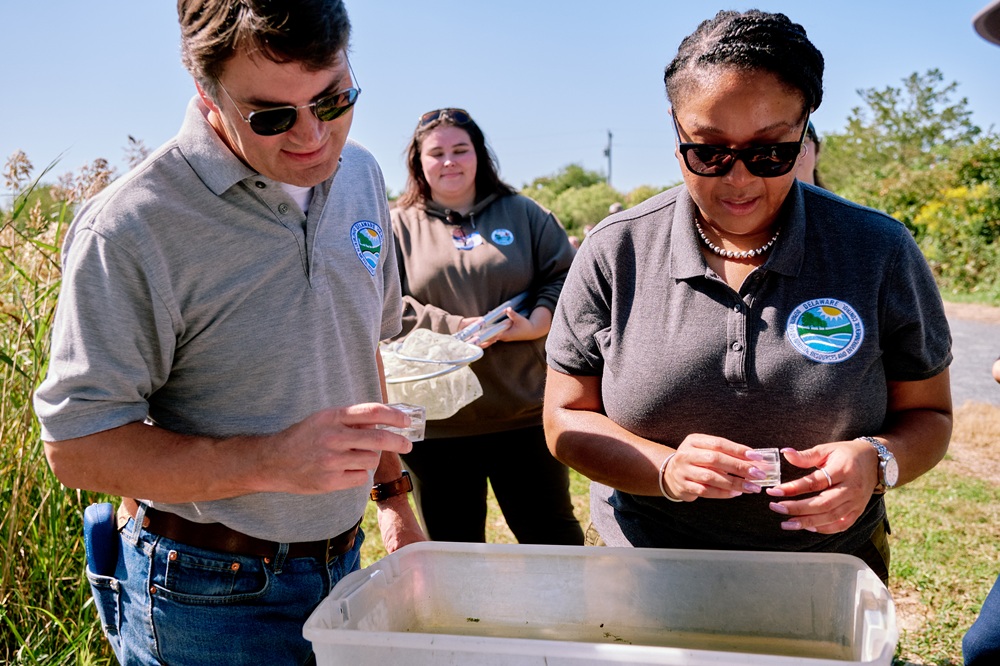
Dayna Cobb: I think it won’t be highlighted, and it’s nothing that we can pinpoint that we’ve done, but the energy that is in this agency is a win. People are happy when they see us in the hallway. They want to have conversations with us. I think that you should like where you work. And I feel that our employees let us know. The smallest things of us passing someone in the hallway and asking them how their day was, they are appreciative of the fact. You remember my name and you ask me how my day was!? But, I think the win for me would be the positive workplace that I’m not saying is by any chance because of us, but just how people have embraced us, how they are working as hard if not harder for this administration, that is a huge win, not only for our administration but for Delawareans.
Greg Patterson: So, for me, part of what I’m proud of is kind of the cumulative collective effort that we have made to tell the stories of DNREC over the last year. We don’t do this just for ourselves. We do all these jobs for the good of the people of Delaware and taking the opportunities, whether it’s through Field Trip Fridays, whether it’s through speeches, whether it’s through events, to really try and let the people of Delaware know what this agency does. I think this agency does amazing things, things that people have no idea about, some things that I didn’t know about before I became secretary, that I find out in the course of doing the job or going out on field trips. And creating a little fuller understanding for the people of Delaware what we’re doing on their behalf, and again, the smart, talented people who are doing it here, that, for me, has been a win.
Outdoor Delaware: What challenges do certain federal actions, such as opposing climate change initiatives, pose for DNREC?
Greg Patterson: So, we came in to try and manage this agency at a time when the traditional federal support, from both a policy perspective and a funding perspective, has changed. We quite frankly cannot count on the federal government from an environmental policy or funding perspective in the way that we used to. And that has certainly been a challenge. We have the rest of the state government and our attorney general who has gone to bat in the courts where necessary, legislatively where necessary from our congressional delegation to try and preserve as much of that as possible. So, we are thankful for that. But our responsibility is to try and keep doing the next right thing. On all of these issues, we can’t just stop. We have to do what we can within the resources that we have. And so, we have reached the point where we have to kind of tune out the noise. A lot of what is threatened or talked about has not come to pass. And that is a good thing. The agencies in the federal government and Congress haven’t always gone along with some of those threats. So, we just keep going until we reach a point where we really have a problem, and then we have to work together as Delawareans to figure it out.
Outdoor Delaware: You each were previously with DNREC before taking your current roles. How did that experience help you? How has that been able to allow you to transition to your current positions?
Dayna Cobb: So, before this role, I was a division director for the Division of Climate, Coastal and Energy. And I had a leadership role, but my focus was very narrow. I think it has helped me because I understand what it’s like to be in the division. And so that helps when we’re having leadership meetings or understanding the needs of some of our staff. It gives me a different perspective. But — I think I’ll speak for the secretary, and not look at him — I think for both of us, we’re both staffers, we’re both workers and so we’re not just sitting behind a desk. We’re literally in laboratories or we’re in the field trying to see what is happening. And, if we don’t know, we’re open to learning, because that helps us make the best decisions when we do have to sit behind the desk and make the tough decisions.
Greg Patterson: So, I was here as chief of staff for a few years a few years ago. So, I had kind of a baseline understanding of what the agency does. But what I also have from the other parts of my career is a perspective both from the governor’s office and high-level policy perspective, because I was in the governor’s office a few times and from being in this agency and other agencies, I can put those two perspectives together and understand, what does the governor want? What do legislators want? What do stakeholders want? What do the employees of the agency who are subject-matter experts think we should do? What do we have the resources to do? Managing an agency like this is a constant balance between the expectations and hopes and plans that you have and that other stakeholders have for you with the resources and the people that you actually have to try and get things done, and not just get new things done, but continue to do all the responsibilities that you’ve always had for years. And so, hopefully my time here at DNREC before, but also in the other parts of my career, put me in a good perspective to try and balance those and explain those both to the governor and the General Assembly and the advocates in the public but also to the employees.
Outdoor Delaware: People have noticed that you do have a good, perhaps even playful, rapport. You’re not afraid to needle each other in meetings, for instance. Where did that come from? And what does it look like when you’re at your best as a leadership duo?
Greg Patterson: That is a dynamic that is a result of the fact that I think Dayna is amazing, and she barely tolerates me.
Dayna Cobb: I think No. 1, we have been working together. I think it was early on when you were chief of staff, I would go to Greg for clarification. That was my very first role in public service, and he was very open in showing and giving me his advice from his years of experience in state government. And so, we developed a relationship, and I trust him so I could be my full self. I show up best as my full self. And he allows me to do that and is never like an us versus them type dynamic. We’re very much a team. I respect him as my boss, but he lets me give my opinion. And I also have a lot of those. And so, it works for us. And I think our leadership style is like that, as he said multiple times, we don’t know all the things. And so, in order to get the best out of the people that we work with, we have to be open to other opinions. And so, we can’t always be such, I’m the deputy secretary. It is very much, this is Greg and Dayna. And they can see when we have disagreements that we still are our team, even in our disagreements.
Greg Patterson: So, we have different backgrounds and different perspectives that we brought to these roles. She is a scientist. I’m very much not. I have a long time in state government. She has a private sector background and then has been in state government for the last few years, so that is a strength. But the thing that we also have in common is that we know that we have to try and have a little fun in order to get through this. We probably both use humor as a coping mechanism. So even when we’re having stressful times, we’re trying to have fun with each other and with the people around us. Because that’s the only way you get through jobs like this, where sometimes it is really stressful.
Outdoor Delaware: As you alluded to, Mr. Secretary, you’ve had a number of positions in state government, including some management roles. What’s it like now being the guy at the top, so to speak, the head of an agency and dealing directly with the dedicated people DNREC employees?
Greg Patterson: It is an adjustment to go from being a staffer for other people, as I have been through most of my career, to being the person who’s being staffed. I’ve been told I need to let go and delegate a little more. And I’m still working on that, but the thing that kind of stands out to me is when you are the secretary, you are always kind of the center of attention of wherever you are, whatever meeting you’re in, whatever event you’re attending. And the days that I may have had in the past where I can half pay attention to a meeting and do some emails on the side and keep up, you know that those days are kind of over, because any meeting that I’m in, it’s an opportunity for me to learn, to make sure I have the information that I need to make decisions. And so, my email inbox at the end of the day is a little more full than it used to be, because I need to be present and pay attention in all the things I’m doing.
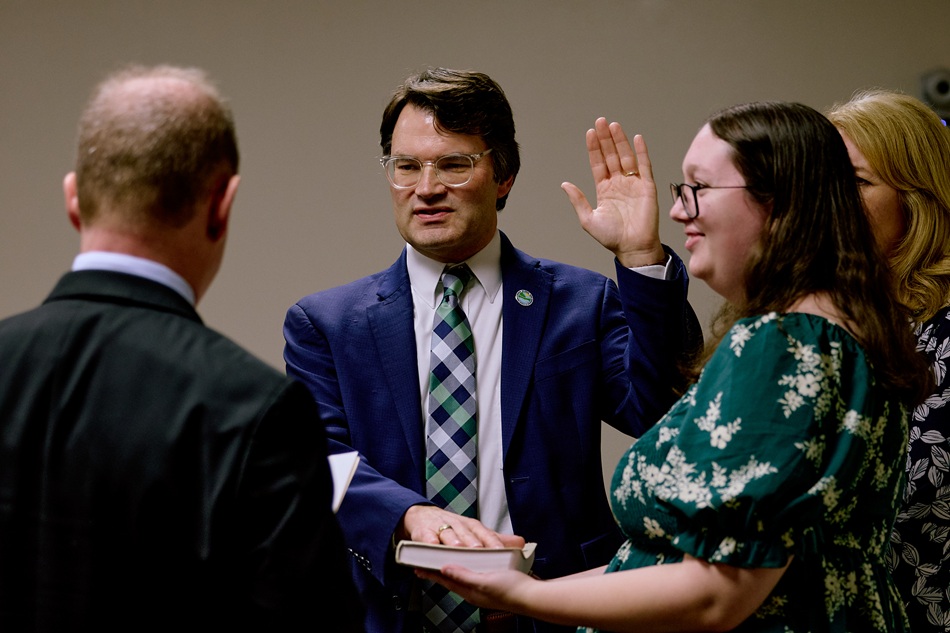
I got nominated by the governor and confirmed by the state Senate, got to swear an oath to take this job and move into a nice office. And for me, I was still the same person that I was before all those things happened. But the title means that people look at you a little differently, and it means something, especially to our employees, when we show up at events, when we have meetings where we let them ask us questions, where we participate in award ceremonies. And it means something to people outside of the agency as well. This secretary of a state agency is spending some of their time and attention on their meeting, on their issue, on their event. And to me, I’m still the same old guy I’ve always been, and why does anybody care when I walk in the room? But I’ve tried to understand that that it does mean something to people and to make sure I take the time to do those things.
Outdoor Delaware: Madam Deputy Secretary, Outdoor Delaware readers may remember the STEM Women of DNREC feature, where you talked about working in the private sector in chemistry. So, you’ve seen environmental issues from both sides, corporate and public service. What’s one misconception you wish each side understood about the other, and how do you bridge that gap now?
Dayna Cobb: So funny story. When I was in private industry, I had a lot of misconceptions about the regulatory realm and how fast things should take. And, I was like, I’ll just go in there and fix it. And, I wish that I understood how hard and the vast universe by which the regulatory teams have to work in and with very limited resources, whether it be time and/or funding. But, they are really trying to get it done. People are putting in lots of hours for this. That was lost on me because in the private sector, time is money. And we have a little bit more money so we can have more people. And so, I didn’t understand that realm from where I am now. I think that our team does an amazing job of understanding that time is money, and they’re trying their very best to do that. And they’re working to have more process efficiencies without having the funding resources to do that. And I’m grateful that our team was open to hearing those things and to get the feedback that they often get from applicants of permits. But that is the biggest misconception from both sides. But, I think that now I understand that everyone’s doing their very best with the resources that they have.
Outdoor Delaware: What’s been your favorite Field Trip Friday, Mr. Secretary?
Dayna Cobb: Oh, that’s like picking a favorite kid.
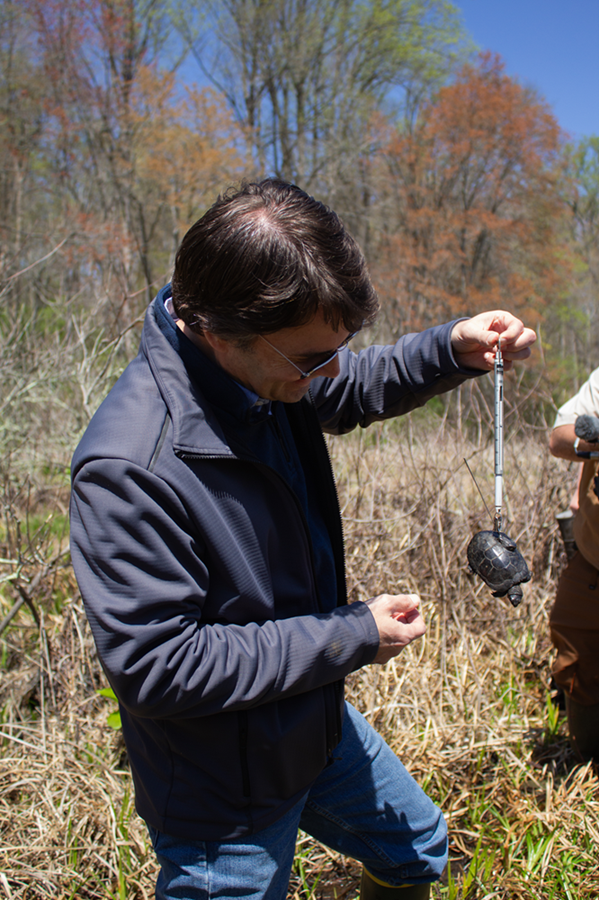
Greg Patterson: Yeah, that’s a tricky one. They’re all great, and they’re all valuable. But you have to give an edge to the ones that involve animals. You know, going to the Brandywine Zoo, being part of the shorebirds, tagging and weighing and release. But there are two that when I put them together that really gave me a tremendous respect for the work and the perspective that the employees here have. Very early on, I went to visit one of the few bog turtle habitats here in Delaware. It is an endangered species, and in the first month that I was here, there were only 18 known adult bog turtles in Delaware. And when we were there, our wildlife staff, who spend a good chunk of their time on bog turtles and other animals that need to increase their populations, talked about having a 15- and a 20-year plan for increasing the population, and for somebody who has been in the jobs that I’ve been in where you’re just focused on getting through the day or the week, having a 15-year timeline is just remarkable to me.
A few months later, I was at a wildlife area where there has been a 15-and 20-year project to try and bring back a quail population and I listened to them talk about the techniques that they have used to create habitat for quail to come back to, to track them, to watch their growth, to see what works year to year, to help the population rebound. And suddenly the 15-, 20-year plan that I had heard about the bog turtles didn’t seem so crazy because here was an area with a different species where they had actually done it.
And so, as I talk about the remarkable work that this agency does, thinking about, looking over a decade or two and having goals over a decade or two or more to improve the environment is just remarkable to me. And we see that in water quality. We see that in air quality. We see that in increasing renewable energy sources. All the areas that DNREC works in. People have this time horizon that I have traditionally not had because I have worked on the issue of the day for much of my career. So, the field trips that have showed me the way employees here work and how far-sighted they are and they just keep working at it day after day, month after month, year after year, those are the ones that have really made an impression.
Outdoor Delaware: This is for both of you, and you’ve touched on this subject, but what would you say makes DNREC special as a workplace and a public service agency?
Dayna Cobb: I think that this is not a self-serving agency. The plans, the permitting, this is all for a better tomorrow. And I think that makes this such a unique and amazing place to work for. This is truly public service. And work.
Greg Patterson: So, I have said to employees over the course of the year and said to those outside the agency, this is really a challenging time to be a government employee. It is very easy to criticize what we and other public employees do at multiple levels. But the people who work here do it for the right reasons. They don’t get paid as well as they could elsewhere. They do get criticized a fair amount of the time. But what I have said to them as I visited with them is, I have continued in my career in public service because there are some things that only an agency like DNREC can do. There is nobody else who can do the things that we do to protect the air and water. You have to have the ability to have laws and regulations and permits and things like that, and that’s what we do here. And that’s what I think makes it special.
Outdoor Delaware: All right, well, thank you very much for your time. We really enjoyed hearing about your first year and what DNREC has done.
Related Topics: administration, climate change, environmental justice, office of the secretary, outdoor delaware, people, permitting, secretary
Delaware's Governor
State Agencies
Elected Officials
General Assembly
Delaware Courts
State Employees
Cities & Towns
Delaware State Code
State Regulations
Business First Steps
Phone Directory
Locations Directory
Public Meetings
Voting & Elections
Transparency
Health Insurance
Tax Center
Personal Income Tax
Privacy Policy
Weather & Travel
Contact Us
Corporations
Franchise Tax
Gross Receipts Tax
Withholding Tax
Delaware Topics
Help Center
Mobile Apps
E-mail / Text Alerts
Social Media


Built by the Government Information Center
©MMXXVI Delaware.gov