DNREC Menu

Electric vehicles are the future — but they’re not some far-off dream like flying cars. Rather, they represent the present as well as the possibilities to come. And they have a history that’s far deeper than you were likely aware.
In 2024, 10.5% of all new cars sold or leased in Delaware in 2024 were EVs, just above the national average. Battery electric vehicles and plug-in hybrid electric vehicles may have accounted for just 1% of all Delaware vehicles in 2023, according to the Delaware Department of Natural Resources and Environmental Control, but this figure is expected to increase. By the end of the decade, we could have well over 100,000 cars on Delaware roads running mostly or solely on electricity.
Many manufacturers are shifting to EVs in response to consumer demand motivated by a mix of environmental concerns, a desire to save money on gasoline and an interest in cutting-edge technology.
Encouraging Delawareans to adopt electric vehicles is a critical part of the Delaware Climate Action Plan unveiled by DNREC in 2021 and updated in 2025. Transportation accounts for about 30% of Delaware’s greenhouse gas emissions, with about half of that coming from passenger vehicles we use for daily tasks like going to work, running errands and taking our kids to school. These automobiles put out pollutants that can impact Delawareans’ health as well as the environment, meaning reducing the use of gas-powered vehicles is a critical aspect of our state’s long-term plan for adapting to a changing climate and keeping our residents healthy.
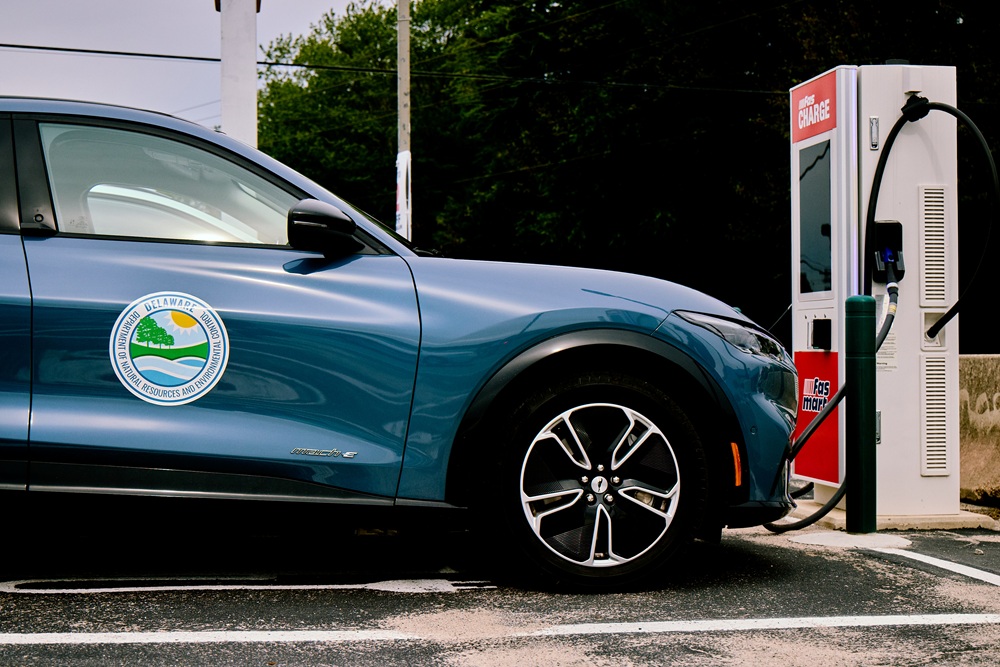
“The more vehicles we can get on the road that have zero tailpipe emissions, the better off we are with fighting against climate change here in Delaware,” said Breanne Preisen, clean transportation program manager in the DNREC Division of Climate, Coastal and Energy.
Delaware has already taken strides in this area, cutting its greenhouse gas emissions 24% from 2005 to 2021, and continuing to get cleaner vehicles on the road will help drive emissions levels down further.
According to the U.S. Department of Energy, a gas-powered vehicle emits 12,594 pounds of carbon dioxide equivalent per year on average. In comparison, a typical plug-in hybrid emits 4,599 pounds (about 63% less), roughly a third of which comes from the electricity required to charge the battery. A fully electric vehicle has an even smaller footprint, with pollutants stemming from the generation of electricity rather than the car’s tailpipe.
Exactly how that electricity is generated, and thus the precise environmental impact, can vary — electricity provided via hydropower or solar is cleaner than coal, for instance — but experts say it’s clear EVs are better for the environment than internal combustion engines regardless.
Minimizing carbon emissions is key because carbon dioxide is causing temperatures to increase globally, leading to sea level rise and contributing to more intense storms and ocean acidification.
Over the next few years, DNREC is focusing on promoting zero-emission vehicles by allocating funding to support installation of charging stations in key locations, educating the public and working with local governments and developers to remove barriers preventing people from shifting to electric.
“Just as infrastructure for gas and diesel vehicles was built out over time in the early to mid-20th century, electric vehicle fueling infrastructure can be built over time, keeping pace with deployment of electric vehicles. The same is true for hydrogen and other fuels as vehicles adopt new technologies,” states DNREC’s 2025 Electric Vehicle Roadmap.
The federal government under the current administration has actively worked against efforts to go electric by ending several grant and rebate programs. But DNREC leaders and scientists have a different message for residents of the First State: We’re still here, and in fact, we’re more eager than ever to help power a switch to EV technology.

Delaware continues to offer several programs that can benefit current or prospective electric car owners as well as businesses.
Individuals looking for a new or used vehicle can take advantage of the state’s Clean Vehicle Rebate Program, which offers incentives in the form of a cash rebate to buy or lease a new or used plug-in hybrid or battery electric vehicle.
The exact amount a participant receives varies from $1,000 to $2,500 based on the cost of the car. A rebate can be redeemed at the time of purchase from a participating dealership, or it can be gained by applying within 90 days of buying or leasing a vehicle. More information is available at the driveelectricdelaware.org website.
But that’s not all. Business and property owners can apply to the Electric Vehicle Charging Equipment Rebate Program to obtain funding for the purchase of charging stations at workplaces or public places or for fleets. The program has a specific focus on multifamily dwellings by providing funding to support installation costs, with higher rebate amounts for properties in under-resourced areas.
The Electric Vehicle Charging Equipment Rebate Program funding is available on a first-come, first-served basis, with 70% of the initial $1 million set aside from multi-family dwellings and the remainder reserved for public access locations, workplaces and fleets.
For information on potential incentives for single-family homes, visit the energizedelaware.org/residential/residential-electric-vehicles-charging webpage.
Statewide, Delaware currently has almost 250 public charging station locations, including 450 AC (alternating current) level two ports and nearly 300 DC (direct current) fast-charging ports. A DC fast-charging port is capable of almost fully charging a vehicle in less than an hour and is generally found along heavily trafficked roadways. A level two port, in contrast, takes longer to charge, meaning it’s typically used at home or in areas where the vehicle is parked for several hours, such as a shopping center or at work. Level two ports consist of the majority of EV chargers nationwide.
(A port is a connector from a charging station. A station may contain multiple ports, as many in Delaware do.)
Delaware plans to operate charging stations only at state-owned locations, with most of the sites elsewhere being built by private companies — hence why incentives are so important.
Under the National Electric Vehicle Infrastructure Program, funded through the Bipartisan Infrastructure Law, the Delaware Department of Transportation is set to receive $18 million in funding over five years to build out a national network of EV charging.
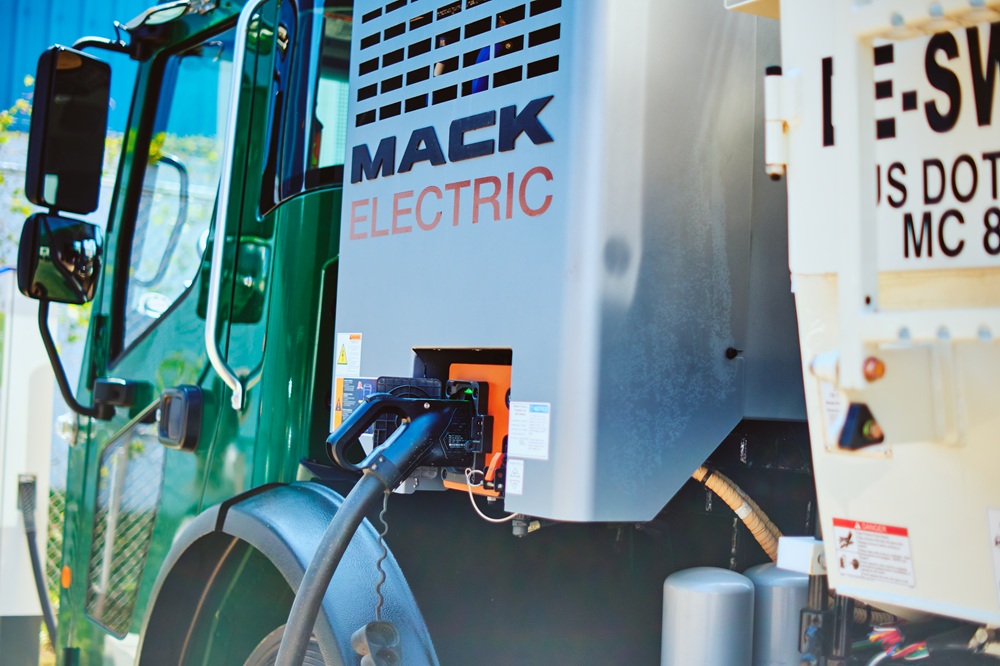
So far, two locations have opened along U.S. Route 13, one in Camden and one in Harrington. These locations use battery energy storage systems to alleviate potential pressure on the electric grid.
The focus on electric vehicles is beneficial to public health and can also create jobs and grow the economy.
While the EV conversion is a lengthy and complicated process, our state is earning some plaudits already. A 2025 report from HERE, a company focused on mapping-related technology, ranked Delaware first among the states in access to chargers for the second year in a row.
That ease of access, in turn, should spur greater adoption of EVs.
Electric cars may seem like a quintessentially 21st century invention, but their roots go way back, as histories from entities like the Department of Energy and Hankook explain.
In fact, Delawareans interested in seeing an early electric car need only visit the Marshall Steam Museum at Auburn Valley State Park. There, they can check out a 1916 electric Rauch and Lang car that’s since been restored, including with new batteries. It’s a true testament to technological development.
Though this car is more than a century old, a number of prototypes can beat it by decades.
Scottish inventor Robert Anderson created a relatively simple electric carriage circa 1832, while Vermont blacksmith Thomas Davenport developed an electric motor around the same time.
The rechargeable battery was invented in 1859, and an English inventor named Thomas Parker built a prototype electric car around 1884, with German inventor Andreas Flocken doing the same a few years later.
William Morrison, a chemist from Iowa, introduced his own electric car in or about 1890. Though its maximum speed of 14 mph seems quaint today, it was a paradigm shift at the time.
Cars continue to develop and gain in popularity in the late 1800s, and around the turn of the century, roughly one-third of all automobiles in the United States were electric.
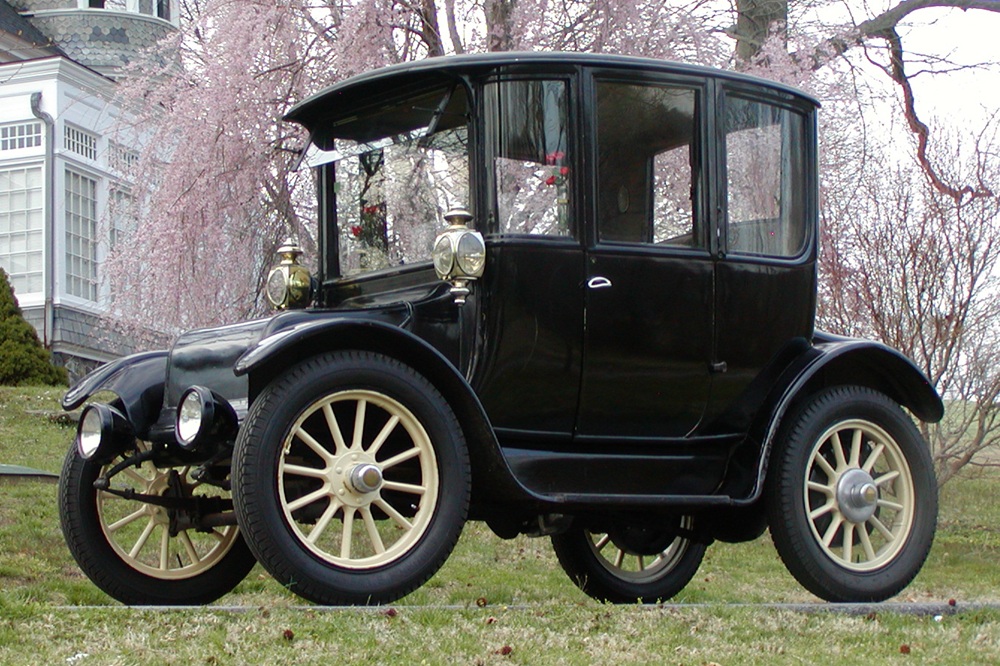
Electric cars had some notable advantages at the time: They were quieter, didn’t smell and were generally easier to operate. Additionally, their limited range was largely nullified by the poor road conditions that made it difficult to travel via car outside urban areas.
New York had a fleet of electric taxis, and even legendary inventor Thomas Edison devoted some of his efforts to trying to build a better EV. Across the pond, Ferdinand Porsche developed the world’s first hybrid car in Austria in 1901. That same year also saw William McKinley become the first American president to ride in an electric car.
In the 1910s, however, the electric car suffered a decline. New technology, including the muffler and the electric starter, made gas-powered vehicles more popular. Chief among these was Henry Ford’s mass-produced Model T. Released in 1908, it became a sensation due to its affordability and reliability, as well as its greater speed and range compared to EVs.
The electric automobile’s popularity continued to drop, especially as gasoline become more readily available, and by the end of the 1920s, EVs were all but a relic.
Still, electric vehicles didn’t completely vanish after they went out of style. The United Kingdom used electric vehicles known as milk floats to deliver milk door to door, filling the role once played by the horse-drawn cart. Japan encouraged development of EVs after World War II due to gas shortages, and Apollo 15, the fourth NASA mission to successfully land humans on the moon, used an electric lunar rover. Meanwhile, an EV known as the Henney Kilowatt was introduced in the United States in the late 1950s, but production only lasted a few years due to its high cost to consumers.
However, as energy prices rose in the 1970s, renewed interest in electric cars developed. Several companies unveiled prototypes, but these models were dogged by limited range and speed.
Curiosity died back down, but it would pick up again in the 1990s, in part due to greater environmental awareness and more protective air standards put in place by California.
General Motors released the EV1, a battery electric car, in 1996, marking the first mass-produced electric vehicle, though sales proved to be limited and the car was discontinued a few years later.
In 1997, the Toyota Prius, a hybrid designed to be more environmentally friendly, was released, with the first models going on sale outside Japan in 2000.
Tesla began producing electric vehicles in the 21st century, and other manufacturers would join the game in the coming years.
In September 2015, the world celebrated a milestone: 1 million plug-in electric vehicles sold worldwide. 2022 marked 20 million EVs sold in all, and in 2024 alone, 17 million electric cars were purchased across the globe, including 1.6 million in the United States, according to the International Energy Agency.
Roughly two-thirds of electric vehicles sold in 2024 were in China, where around 10% of cars on the road are electric. China, the United States and Europe combined account for more than 90% of the EV market share, though emerging markets elsewhere are seeing strong growth.
In 2025, the International Energy Agency reports, there are roughly 180 different electric models available for consumers in the United States, including utility vehicles and trucks. While EVs are generally more expensive than comparable vehicles powered by internal combustion engines, prices are expected to continue coming down due to technological advancements. And, of course, states like Delaware are proud to offer rebate programs.
The future of electric vehicles is indeed bright.
Related Topics: climate action plan, climate coastal energy, electric vehicle, emissions, greenhouse gas, outdoor delaware, rebate
Delaware's Governor
State Agencies
Elected Officials
General Assembly
Delaware Courts
State Employees
Cities & Towns
Delaware State Code
State Regulations
Business First Steps
Phone Directory
Locations Directory
Public Meetings
Voting & Elections
Transparency
Health Insurance
Tax Center
Personal Income Tax
Privacy Policy
Weather & Travel
Contact Us
Corporations
Franchise Tax
Gross Receipts Tax
Withholding Tax
Delaware Topics
Help Center
Mobile Apps
E-mail / Text Alerts
Social Media


Built by the Government Information Center
©MMXXVI Delaware.gov