DNREC Menu

The Delaware Natural Resources Police offers exciting opportunities for those who like the outdoors and are looking for a career in law enforcement. Natural Resources Police Officers enforce natural resources, environmental, criminal, traffic, civil and boating laws, rules, and regulations.
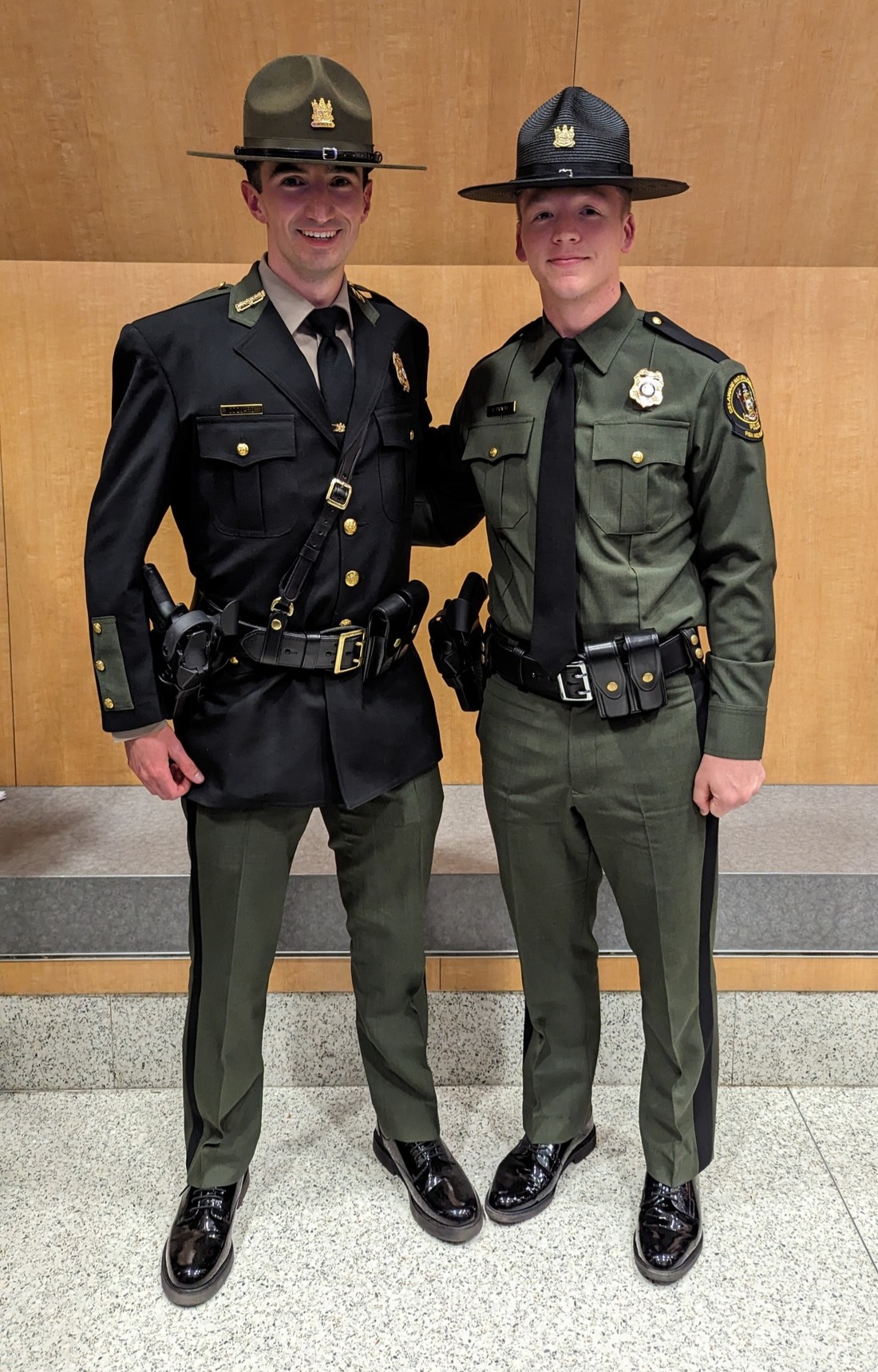
Natural Resources Police job opportunities, when available, are listed on the Delaware Employment Link website.
It’s a demanding, sometimes dangerous, but extremely rewarding career that offers:
Additional benefits:
Learn more about job benefits for state employees.
Applicants must be at least 20 and ½ years of age with an associates degree or higher in criminal justice, natural resources, environmental science, sociology or a related field.
Or they must be at least 20 and ½ years of age, with a high school diploma or equivalent, and six months of experience in each of the following areas:
Natural Resources Police Officer positions are a state job classification organized under an exclusive bargaining representative (labor organization). The labor organization has been elected by employees as their representative for collective bargaining and other work-related purposes.
Selected applicants will be asked to join and pay dues to the labor organization. They may decline and not pay dues or a fee.
Applicants must be legally authorized to work in the United States. DNREC does not provide sponsorship for holders of H-1 B Visas.
Applicants must complete a satisfactory criminal background check. The recruiting agency may require the applicant to pay for the criminal background check as part of the conditional offer of hire.
Upon a conditional offer, the applicant must undergo pre-employment drug testing as part of the hiring process.
The applicant must possess a valid driver’s license (not suspended, revoked or cancelled, or disqualified from driving).
Applicants must pass the DNREC Natural Resources Police Water Confidence Assessment.
To be hired by the Fish and Wildlife Unit, applicants must show proof of boater education (a state-issued card or NASBLA-approved certificate) or successfully complete a NASBLA-approved boating safety course within 90 days of employment.
To be hired by the Environmental Crimes Unit, applicants must possess a Hazardous Material Technician certification or must agree to obtain the Hazardous Material Technician certification within one year of hire.
For admission to the State of Delaware Police Academy, applicants who are made a conditional offer of employment must successfully complete State of Delaware Council on Police Training approved psychiatric/psychological exam, medical examination and a physical ability test to demonstrate fitness for duty.
The physical fitness test includes three elements — sit-ups, push-ups and a 1.5 mile run. Applicants will be given short recovery periods between each test. They will not be allowed a second attempt to pass any test they fail on their first attempt.
The sit-up test is used to measure the muscular endurance of your abdominal muscles. You will be asked to perform as many sit-ups as possible in a one-minute period. Your score will be the total number of correct sit-ups that you are able to perform in one minute. The minimum standards required to pass the sit-up test are as follows:
| Age 20 – 29 | Age 30 – 39 | Age 40 – 49 | Age 50 – 59 | Age 60+ | |
|---|---|---|---|---|---|
| Male | 33 | 30 | 24 | 19 | 15 |
| Female | 24 | 20 | 14 | 10 | 3 |
The pushup test is used to measure the muscular endurance of your upper body. These muscles include your anterior deltoid, pectoralis major, and triceps. You will be asked to perform as many push-ups as possible within a one-minute period. Your score will be the total number of correct pushups that you are able to perform in one minute. Female applicants may perform modified pushups. The minimum standards required to pass the pushup test are as follows:
| Age 20 – 29 | Age 30 – 39 | Age 40 – 49 | Age 50 – 59 | Age 60+ | |
|---|---|---|---|---|---|
| Male | 22 | 17 | 11 | 9 | 6 |
| Female | 10 | 8 | 6 | N/A | N/A |
| Female Modified |
17 | 11 | 6 | 6 | 2 |
The 1.5 mile run test is used to measure your aerobic capacity. You will then be asked to run 1.5 miles as quickly as possible. The minimum finishing times required to pass the 1.5 mile run test are as follows:
| Age 20 – 29 | Age 30 – 39 | Age 40 – 49 | Age 50 – 59 | Age 60+ | |
|---|---|---|---|---|---|
| Male | 14:06 | 14:34 | 15:32 | 17:30 | 19:10 |
| Female | 16:46 | 17:38 | 19:43 | 21:57 | 22:44 |
The water confidence assessment is made up of three elements – swimming, treading water and diving. The inability to complete any of the portions of the test as described will result in a failure being recorded.
This test will be used to verify that the participant has some basic swimming skills. For this portion of the testing, the participant, wearing only a bathing suit, will begin in the shallow end of the swimming pool. The participant may employ any desired swimming stroke or combination of swimming strokes for the completion of the assessment. The participant may use the end walls of the pool for the completion of turns but may NOT use the sides or the bottom of the pool for the attainment of rest periods during the event. This assessment is untimed.
This test will be used to verify the participant’s ability to tread water for a minimum of five (5) minutes. For this portion of the testing the participant will disassociate from the pool edge and will tread in water at least seven (7) feet deep, for a minimum of five (5) minutes. Treading water is defined as pumping your arms and/or legs, maintaining an upright position, and keeping your head above water. Floating is not permitted.
The participant may NOT use the edges of the pool for the attainment of rest periods or contact the bottom of the pool during the event.
This test will be used to verify the participant’s ability to dive and retrieve an object at a minimum depth of seven (7) feet. For this portion of the testing, the participant will begin in a least seven (7) feet of water and no deeper than twelve (12) feet of water. The participant may have physical contact with the pool edge at the start of this event. At the audible start signal, the participant sill disassociate themselves from the pool edge, tread water and perform a head first surface dive in at least seven (7) feet of water and no deeper than twelve (12) feet of water and retrieve an object.
The participant will have a maximum of three attempts to retrieve the object from the bottom of the pool.
Related Topics: careers, employm, ent, Health and Safety, law enforcement, natural resources police, office of the secretary, police, public safety, recruitment
Delaware's Governor
State Agencies
Elected Officials
General Assembly
Delaware Courts
State Employees
Cities & Towns
Delaware State Code
State Regulations
Business First Steps
Phone Directory
Locations Directory
Public Meetings
Voting & Elections
Transparency
Health Insurance
Tax Center
Personal Income Tax
Privacy Policy
Weather & Travel
Contact Us
Corporations
Franchise Tax
Gross Receipts Tax
Withholding Tax
Delaware Topics
Help Center
Mobile Apps
E-mail / Text Alerts
Social Media


Built by the Government Information Center
©MMXXVI Delaware.gov